

30 Other Ways to Say “Do You Mind?” helps you find polite English phrases to ask for permission, show respect, and communicate naturally in everyday situations.
The phrase “Do you mind?” helps you request permission before taking an action that affects another person. Using respectful communication, politeness, and consideration shows that you value someone’s time, feelings, and preferences.
For example, “Do you mind if I sit here?” works in shared spaces, while “If you’re comfortable sharing, may I ask…?” respects personal boundaries.
In professional conversations, workplace communication, meetings, and emails, “Would it be alright if I shared a suggestion?” sounds polished and courteous. Learning 30 alternatives helps you ask for help, manage interruptions, discuss borrowing things, and make polite requests with confidence.
These English phrases improve your communication skills and help you choose appropriate wording for friends, colleagues, and family members in both formal and informal situations.
Quick Answer
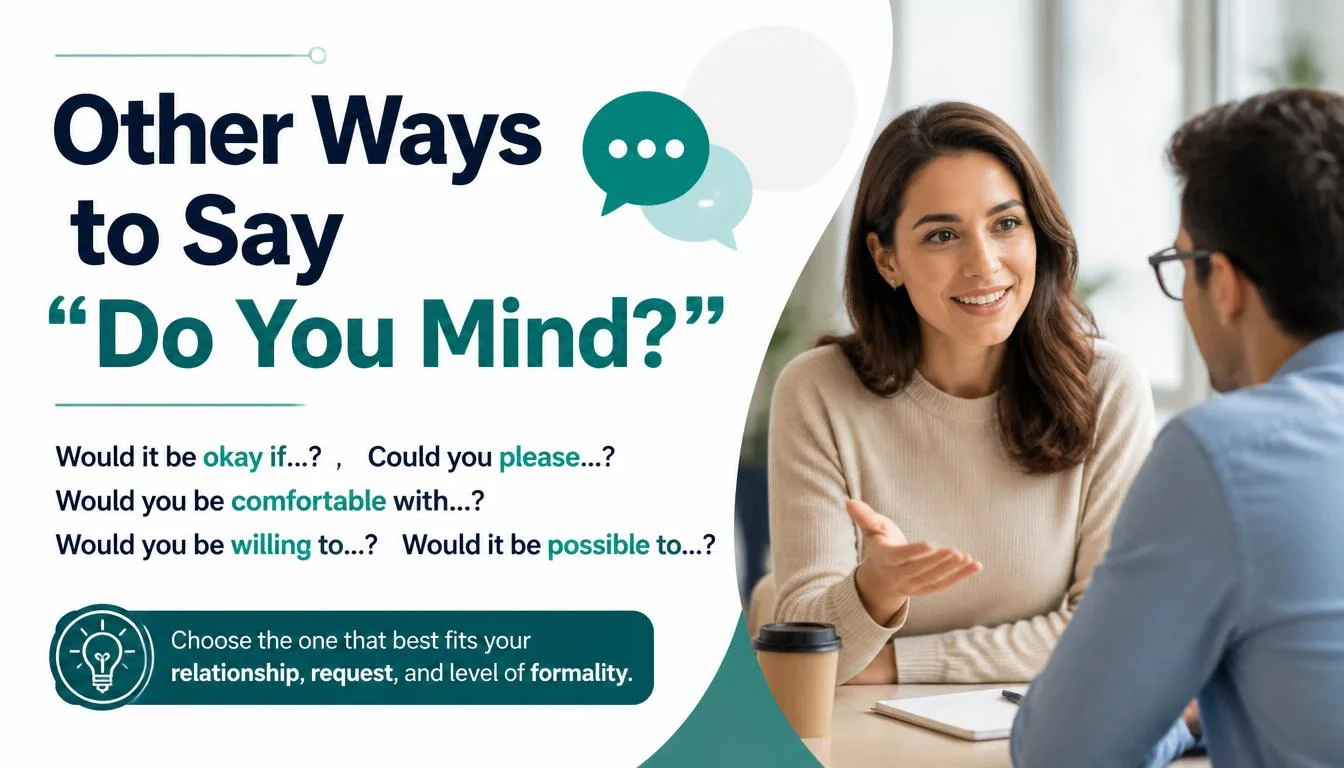
The best alternatives to “Do you mind?” include “Would it be okay if…?”, “Could you please…?”, “Would you be comfortable with…?”, “Would you be willing to…?”, and “Would it be possible to…?” Choose the one that best fits your relationship, request, and level of formality.
What Does “Do You Mind?” Mean?
“Do you mind?” is a common expression used to ask whether someone objects to something, feels bothered by a request, or is comfortable with a particular action. People often use it to show politeness, respect, and consideration before asking someone to do something. For example, saying, “Do you mind opening the window?” gives the other person an opportunity to express their preference. Depending on your tone and the situation, the phrase can sound friendly, formal, or slightly direct. Choosing a suitable alternative can make your request feel more natural and considerate.
Is It Professional or Polite to Say “Do You Mind?”
Yes, “Do you mind?” is generally polite and professional when you use it with a friendly tone and appropriate wording. It’s useful in workplace conversations, emails, meetings, and everyday interactions because it acknowledges the other person’s comfort and willingness. However, the expression can sometimes sound abrupt if you say it without context or use it repeatedly. For professional communication, alternatives such as “Would you be comfortable with…?”, “Could I ask you to…?”, and “Would it be possible to…?” can sound more considerate. The best choice depends on your relationship with the person, the request, and the level of formality you need.
Advantages and Disadvantages of Saying “Do You Mind?”
Advantages
- Shows consideration: Asking “Do you mind?” gives people an opportunity to express their preferences before you proceed.
- Sounds conversational: The phrase works naturally in everyday discussions with friends, family members, and coworkers.
- Encourages consent: It allows someone to communicate whether they’re comfortable with your request or proposed action.
Disadvantages
- Can sound abrupt: Without a warm tone or enough context, the question may feel demanding rather than considerate.
- May create confusion: Some people interpret “No, I don’t mind” differently from what the speaker expects, especially in quick conversations.
- Can feel repetitive: Using the same phrase for every request may make your communication sound less personal or expressive.
Synonyms for “Do You Mind?”
- Would You Mind If…?
- Would It Be Okay If…?
- Is It Okay If…?
- Would You Be Comfortable With…?
- Could I Ask You To…?
- Would You Be Willing To…?
- May I…?
- Could I…?
- Would It Be Possible To…?
- Would You Be Able To…?
- Could You Please…?
- Would You Mind Helping Me…?
- Is It Too Much Trouble To…?
- Would It Bother You If…?
- Would You Object To…?
- Do You Have Any Objection To…?
- Would You Be So Kind As To…?
- Could I Trouble You To…?
- Would You Allow Me To…?
- Is There Any Chance I Could…?
- Would You Be Okay With…?
- Would You Have a Moment To…?
- Can I Check Something With You?
- Would You Prefer If I…?
- Would You Mind If I Asked…?
- Could You Spare a Moment To…?
- Would It Inconvenience You If…?
- Is This a Good Time To…?
- Would You Be Open To…?
- If You Don’t Mind, Could You…?
1. Would You Mind If…?
Meaning: This phrase asks whether someone is comfortable with an action you want to take.
Definition: A polite question used to seek permission before doing something that might affect another person.
Detailed Explanation: “Would you mind if…?” sounds thoughtful because it recognizes that your actions may influence someone else’s comfort or plans. It’s particularly useful when asking permission to borrow something, change a plan, or enter someone’s personal space. Remember that the usual grammatical pattern is “Would you mind if I opened the window?”
Scenario Example: “Would you mind if I joined you for lunch?”
Best Use: Use it with friends, coworkers, acquaintances, or anyone whose preferences you want to respect.
Tone: Polite, considerate, and friendly.
2. Would It Be Okay If…?
Meaning: Asking whether a proposed action is acceptable.
Definition: A conversational expression used to request permission or approval.
Detailed Explanation: This alternative feels natural and approachable. It works well when you want to avoid sounding overly formal while still respecting someone’s wishes. It also encourages an honest response without making the request feel like an obligation.
Scenario Example: “Would it be okay if I submitted the report tomorrow morning?”
Best Use: Everyday conversations, workplace requests, and discussions about scheduling.
Tone: Friendly, respectful, and relaxed.
3. Is It Okay If…?
Meaning: Checking whether someone agrees with what you want to do.
Definition: A simple question that asks for permission or confirmation.
Detailed Explanation: This phrase is shorter and more casual than “Would it be okay if…?” It’s helpful when speaking with people you know or when you need a quick answer. For sensitive requests, adding a brief explanation can make it sound more thoughtful.
Scenario Example: “Is it okay if I use your charger for a few minutes?”
Best Use: Informal conversations, quick workplace questions, and requests between friends.
Tone: Casual, direct, and polite.
4. Would You Be Comfortable With…?
Meaning: Asking whether someone feels comfortable with a particular suggestion or action.
Definition: A considerate expression that focuses on another person’s comfort and boundaries.
Detailed Explanation: This wording is especially helpful when discussing personal preferences, changes, or potentially sensitive subjects. It communicates that you care about the other person’s feelings rather than simply seeking agreement. Give the person room to say no without pressure.
Scenario Example: “Would you be comfortable with discussing this during our next meeting?”
Best Use: Sensitive conversations, professional discussions, and personal boundaries.
Tone: Empathetic, respectful, and thoughtful.
5. Could I Ask You To…?
Meaning: Politely asking someone to complete a task or provide assistance.
Definition: A courteous expression used to introduce a request.
Detailed Explanation: This alternative is useful when you need someone’s help but don’t want to sound demanding. It works particularly well in professional communication because it introduces the request gently. Be clear about the task so the other person understands what you need.
Scenario Example: “Could I ask you to review this document before the meeting?”
Best Use: Emails, workplace conversations, and requests for assistance.
Tone: Professional, courteous, and respectful.
6. Would You Be Willing To…?
Meaning: Asking whether someone is prepared to help or participate.
Definition: A polite question about another person’s willingness to take an action.
Detailed Explanation: This expression recognizes that helping is a choice. It works well when the request requires effort, time, or voluntary participation. Because it doesn’t assume agreement, it can help create a more respectful conversation.
Scenario Example: “Would you be willing to share your notes from yesterday’s lecture?”
Best Use: Teamwork, collaboration, volunteering, and requests involving extra effort.
Tone: Respectful, collaborative, and considerate.
7. May I…?
Meaning: Asking for permission to do something.
Definition: A concise expression used to request authorization or consent.
Detailed Explanation: “May I…?” is a classic way to make a respectful request. It sounds slightly more formal than “Can I…?” and works well when addressing someone you don’t know well. A complete question helps the listener understand exactly what you’re asking permission to do.
Scenario Example: “May I ask you a quick question about the assignment?”
Best Use: Formal conversations, classrooms, meetings, and professional settings.
Tone: Polite, formal, and respectful.
8. Could I…?
Meaning: Asking whether you can do something.
Definition: A short, courteous question that requests permission or assistance.
Detailed Explanation: This phrase is flexible and easy to use in everyday communication. It can introduce a request without sounding forceful. If the situation requires extra sensitivity, explain why you’re asking or acknowledge the other person’s availability.
Scenario Example: “Could I borrow your notebook for a moment?”
Best Use: Everyday requests, office conversations, and friendly interactions.
Tone: Neutral, polite, and approachable.
9. Would It Be Possible To…?
Meaning: Asking whether a particular action or arrangement can be made.
Definition: A polite expression used to inquire about feasibility.
Detailed Explanation: This alternative is useful when your request involves scheduling, arrangements, or a possible change to an existing plan. It focuses on whether something can be done rather than expecting immediate agreement. That makes it particularly suitable for professional messages.
Scenario Example: “Would it be possible to move our meeting to Thursday?”
Best Use: Business emails, scheduling requests, and formal arrangements.
Tone: Professional, diplomatic, and courteous.
10. Would You Be Able To…?
Meaning: Asking whether someone can complete a task or provide help.
Definition: A considerate question about a person’s ability or availability.
Detailed Explanation: This expression is helpful when you don’t want to assume that someone has the time or resources to assist you. It leaves room for the other person to explain any limitations. For better results, include a clear deadline when the request involves work.
Scenario Example: “Would you be able to send me the updated presentation by noon?”
Best Use: Workplace communication, project coordination, and requests with deadlines.
Tone: Professional, considerate, and clear.
11. Could You Please…?
Meaning: Politely asking someone to do something.
Definition: A courteous request that uses “please” to soften a direct question.
Detailed Explanation: “Could you please…?” is simple, familiar, and effective. It works well when you need a clear answer or action without adding unnecessary words. However, remember that a polite expression can still sound demanding if the surrounding message feels impatient.
Scenario Example: “Could you please forward the meeting notes when you have a chance?”
Best Use: Work emails, customer communication, and everyday requests.
Tone: Polite, direct, and professional.
12. Would You Mind Helping Me…?
Meaning: Asking whether someone is willing to assist you.
Definition: A courteous expression that seeks help while acknowledging the other person’s choice.
Detailed Explanation: This alternative works especially well when you need guidance or assistance with a task. It sounds more personal than a general instruction because it invites the other person to help. You can make it warmer by briefly explaining why their assistance would matter.
Scenario Example: “Would you mind helping me organize these files before the presentation?”
Best Use: Asking coworkers, classmates, friends, or family members for help.
Tone: Warm, cooperative, and polite.
13. Is It Too Much Trouble To…?
Meaning: Asking whether a request would create too much inconvenience.
Definition: A considerate expression that recognizes the effort involved in helping.
Detailed Explanation: This phrase shows awareness that the other person may already have responsibilities. It’s appropriate when your request requires additional effort, but avoid using it for every small favor. Excessive apologetic language can make ordinary communication feel unnecessarily uncomfortable.
Scenario Example: “Is it too much trouble to check the figures one more time?”
Best Use: Requests involving extra effort or an inconvenience.
Tone: Thoughtful, humble, and considerate.
14. Would It Bother You If…?
Meaning: Asking whether an action would upset or inconvenience someone.
Definition: A question used to check whether a proposed action might cause discomfort.
Detailed Explanation: This wording is helpful when your request could affect another person’s environment, routine, or preferences. It encourages you to consider how your actions might feel to someone else. Use a gentle tone because the word “bother” can sound negative in some contexts.
Scenario Example: “Would it bother you if I took this phone call outside?”
Best Use: Shared spaces, personal conversations, and situations involving possible inconvenience.
Tone: Considerate, cautious, and conversational.
15. Would You Object To…?
Meaning: Asking whether someone would oppose a suggestion or action.
Definition: A question that invites someone to express disagreement or an objection.
Detailed Explanation: This phrase is useful when discussing changes, proposals, or decisions. It acknowledges that the other person may have a different opinion. However, it sounds more formal than many everyday alternatives and may feel overly serious for a simple favor.
Scenario Example: “Would you object to starting the discussion a little earlier?”
Best Use: Meetings, negotiations, planning, and discussions about changes.
Tone: Formal, diplomatic, and measured.
See More: 30 Other Ways to Say ‘Hang in There’ with Examples
16. Do You Have Any Objection To…?
Meaning: Asking whether someone has a reason to oppose something.
Definition: A direct question used to identify concerns or disagreement.
Detailed Explanation: This expression works when you want to check for possible objections before moving forward. It can encourage discussion and help prevent misunderstandings. However, it may sound stiff in casual conversations, so choose a warmer alternative when speaking with friends.
Scenario Example: “Do you have any objection to sharing the draft with the rest of the team?”
Best Use: Formal meetings, planning discussions, and decision-making.
Tone: Formal, direct, and professional.
17. Would You Be So Kind As To…?
Meaning: Asking someone to do something in a particularly courteous way.
Definition: A formal expression used to make a respectful request.
Detailed Explanation: This phrase emphasizes courtesy and can be appropriate in carefully worded business correspondence. However, depending on the context, it may sound old-fashioned or overly formal. For everyday requests, “Could you please…?” usually feels more natural.
Scenario Example: “Would you be so kind as to provide a copy of the signed agreement?”
Best Use: Formal correspondence, official requests, and traditional business communication.
Tone: Very polite, formal, and refined.
18. Could I Trouble You To…?
Meaning: Asking someone for help while acknowledging the effort involved.
Definition: A courteous expression that presents a request as a possible inconvenience.
Detailed Explanation: This wording communicates humility and consideration. It’s suitable when you need someone to perform an additional task or spend time helping you. Still, it can sound overly apologetic for routine requests, so use it when the extra effort genuinely matters.
Scenario Example: “Could I trouble you to print two copies of the report?”
Best Use: Formal requests, professional favors, and situations involving extra effort.
Tone: Respectful, humble, and formal.
19. Would You Allow Me To…?
Meaning: Asking for permission to do something.
Definition: A formal expression that seeks another person’s approval.
Detailed Explanation: This alternative is useful when you want to emphasize respect for someone’s authority, space, or decision. It can sound appropriate in official settings, but it’s often too formal for ordinary conversations. Use it when permission is genuinely important.
Scenario Example: “Would you allow me to explain my perspective before we decide?”
Best Use: Formal discussions, presentations, and situations involving permission.
Tone: Respectful, formal, and deferential.
20. Is There Any Chance I Could…?
Meaning: Asking whether something might be possible.
Definition: A gentle question that presents a request without assuming the answer will be yes.
Detailed Explanation: This phrase is useful when making a request that may be difficult to accommodate. It communicates flexibility and leaves room for the other person to decline. You can make the request more effective by explaining your reason briefly and respectfully.
Scenario Example: “Is there any chance I could exchange my shift with someone next week?”
Best Use: Scheduling changes, favors, and requests requiring flexibility.
Tone: Hopeful, polite, and slightly tentative.
21. Would You Be Okay With…?
Meaning: Checking whether someone agrees with or accepts a suggestion.
Definition: A conversational question that asks about another person’s comfort or approval.
Detailed Explanation: This phrase sounds friendly without becoming overly casual. It works well when discussing plans, shared responsibilities, or changes that affect more than one person. It also invites feedback instead of treating your suggestion as a final decision.
Scenario Example: “Would you be okay with splitting the presentation into two sections?”
Best Use: Team discussions, friendships, and collaborative planning.
Tone: Friendly, considerate, and cooperative.
22. Would You Have a Moment To…?
Meaning: Asking whether someone has a little time to help or talk.
Definition: A polite question about someone’s availability.
Detailed Explanation: This alternative respects the other person’s schedule before introducing a request. It’s especially useful when you need a conversation with a busy coworker or supervisor. If the matter isn’t urgent, offering to meet later makes the request even more considerate.
Scenario Example: “Would you have a moment to discuss my project feedback?”
Best Use: Workplace conversations, meetings, and requests for someone’s attention.
Tone: Professional, respectful, and thoughtful.
23. Can I Check Something With You?
Meaning: Asking whether someone is available to clarify a question or idea.
Definition: A conversational expression used to request someone’s attention or input.
Detailed Explanation: This phrase is less formal than “Do you mind?” and feels natural when you need clarification. It also suggests that you value the other person’s knowledge or opinion. If you’re interrupting someone, check whether they have time before continuing.
Scenario Example: “Can I check something with you about the instructions for tomorrow?”
Best Use: Quick questions, teamwork, study sessions, and informal professional discussions.
Tone: Friendly, natural, and collaborative.
24. Would You Prefer If I…?
Meaning: Asking which option someone would feel more comfortable with.
Definition: A question used to understand another person’s preference before taking action.
Detailed Explanation: This expression is particularly helpful when more than one approach is available. It shows that you want to accommodate the other person’s needs rather than make assumptions. For grammatically smoother wording, you can also say, “Would you prefer it if I…?”
Scenario Example: “Would you prefer it if I sent the files by email instead?”
Best Use: Planning, workplace communication, and situations involving personal preferences.
Tone: Considerate, accommodating, and polite.
25. Would You Mind If I Asked…?
Meaning: Checking whether someone is comfortable answering a question.
Definition: A polite expression used before asking something that may feel personal or sensitive.
Detailed Explanation: This phrase gives people a chance to decide whether they want to answer. It’s useful when discussing private matters, requesting feedback, or asking for information that someone may not want to share. Respect their decision if they prefer not to respond.
Scenario Example: “Would you mind if I asked how you prepared for the interview?”
Best Use: Sensitive conversations, personal questions, and requests for advice.
Tone: Gentle, respectful, and tactful.
26. Could You Spare a Moment To…?
Meaning: Asking someone to give you a little of their time.
Definition: A courteous expression used to request brief attention or assistance.
Detailed Explanation: This alternative acknowledges that the other person has their own responsibilities. It works well when you need a short conversation or a quick review of something important. If the task requires more time than expected, be honest about that before they agree.
Scenario Example: “Could you spare a moment to look over my application?”
Best Use: Office conversations, academic help, and brief professional requests.
Tone: Polite, considerate, and slightly formal.
27. Would It Inconvenience You If…?
Meaning: Asking whether an action would cause difficulty or disruption.
Definition: A formal question used to consider the practical impact of a request.
Detailed Explanation: This expression is appropriate when your request might affect another person’s schedule, responsibilities, or arrangements. It demonstrates awareness of their circumstances. Because it sounds formal, simpler wording such as “Would that work for you?” may be better in casual conversations.
Scenario Example: “Would it inconvenience you if we moved our appointment to Friday?”
Best Use: Scheduling changes, professional arrangements, and requests involving potential disruption.
Tone: Formal, considerate, and diplomatic.
28. Is This a Good Time To…?
Meaning: Checking whether someone is available before beginning a conversation or making a request.
Definition: A question that considers another person’s timing and availability.
Detailed Explanation: This phrase is particularly effective when you don’t want to interrupt someone. It lets them indicate whether they can talk now or would prefer another time. You can also mention how long the conversation will take to make your request clearer.
Scenario Example: “Is this a good time to discuss the changes to our project?”
Best Use: Phone calls, workplace discussions, important conversations, and meetings.
Tone: Thoughtful, respectful, and professional.
29. Would You Be Open To…?
Meaning: Asking whether someone is willing to consider an idea or possibility.
Definition: A polite expression used to explore interest in a suggestion without demanding agreement.
Detailed Explanation: This alternative works well when proposing new ideas or suggesting a different approach. It encourages an open conversation and allows the other person to express reservations. It’s especially helpful when collaboration matters more than getting an immediate yes.
Scenario Example: “Would you be open to trying a different approach for the next campaign?”
Best Use: Brainstorming, negotiations, teamwork, and suggesting changes.
Tone: Collaborative, diplomatic, and encouraging.
30. If You Don’t Mind, Could You…?
Meaning: Politely asking someone to do something while recognizing their freedom to decline.
Definition: A courteous expression that softens a request by acknowledging the other person’s preferences.
Detailed Explanation: This phrase combines a gentle introduction with a clear request. It works well when you want to sound considerate without making your message too formal. However, use it sincerely rather than assuming that adding polite words makes every request easy to accept.
Scenario Example: “If you don’t mind, could you send me the notes after class?”
Best Use: Everyday favors, friendly conversations, and polite workplace requests.
Tone: Warm, courteous, and considerate.
FAQs
1. What does “Do You Mind?” mean?
“Do you mind?” is a polite expression used to ask for permission or check whether someone feels comfortable with a request.
2. Is “Do You Mind?” polite?
Yes, “Do you mind?” is generally polite when you use a respectful tone. However, your wording and the situation also matter.
3. What is another way to say “Do You Mind?”
You can say “Would it be okay if…?”, “Would you mind if…?”, or “Is it alright if…?” to ask politely.
4. How can I ask for permission professionally?
Use phrases such as “May I…?”, “Would it be possible to…?”, or “Would it be alright if I shared a suggestion?” in professional conversations.
5. What is a casual alternative to “Do You Mind?”
You can say “Is it cool if…?”, “Is it okay if…?”, or “Mind if I…?” when talking with friends.
6. How do I ask someone for a favor politely?
Try “Could you help me with something?” or “Would you be able to help me?” These expressions sound considerate and friendly.
7. How can I ask a personal question respectfully?
Use “If you’re comfortable sharing, may I ask…?” This phrase respects the other person’s privacy and personal boundaries.
8. Can I use these alternatives in emails?
Yes. Phrases such as “Would you mind reviewing this?” and “Would it be possible to discuss this?” work well in professional emails.
9. What is the difference between “Do you mind?” and “Would you mind?”
Both phrases can express a polite request. “Would you mind?” often sounds softer or more formal, depending on the context.
10. Why should I learn different ways to say “Do You Mind?”
Learning alternative phrases improves your communication skills and helps you sound more natural, respectful, and confident in different situations.
Conclusion
Choosing the right alternative to “Do you mind?” makes your requests sound more thoughtful and respectful. Whether you’re speaking with friends, asking family for help, or communicating with colleagues, phrases like “Would it be okay if…?”, “Could I ask you something?”, and “Would you mind helping me?” can make conversations smoother. Practice these 30 alternatives to strengthen your English communication skills, express consideration, and choose words that fit each situation.