

From my experience and coaching work with professionals, I have learned that writing with the right tone affects how messages are received.
In 2026, workplace communication is more conversational, so many professionals prefer language that feels clear, respectful, and empathetic instead of overly formal or impersonal. The phrase At Your Convenience remains polite, but it may sound outdated or vague in some situations.
30 Other Ways to Say ‘At Your Convenience’ in an Email can help you find alternative ways to say the same idea, maintain a professional tone, and show genuine care for clients and colleagues.
When finding words, I like exploring phrases that express thoughts humanely and strengthen the overall tone. A thoughtful phrase can imply no strict deadline, respects real schedules, and allows people to move forward without stress.
These helpful tips make it easier to use meaningful language with ease while staying responsible and clear. An incredibly simple human approach lets someone choose their own convenience, respects their energy, and gives you 30+ examples and ways to explore this style. I also remind myself that thoughtful alternatives can make professional communication feel warmer.
Quick Answer
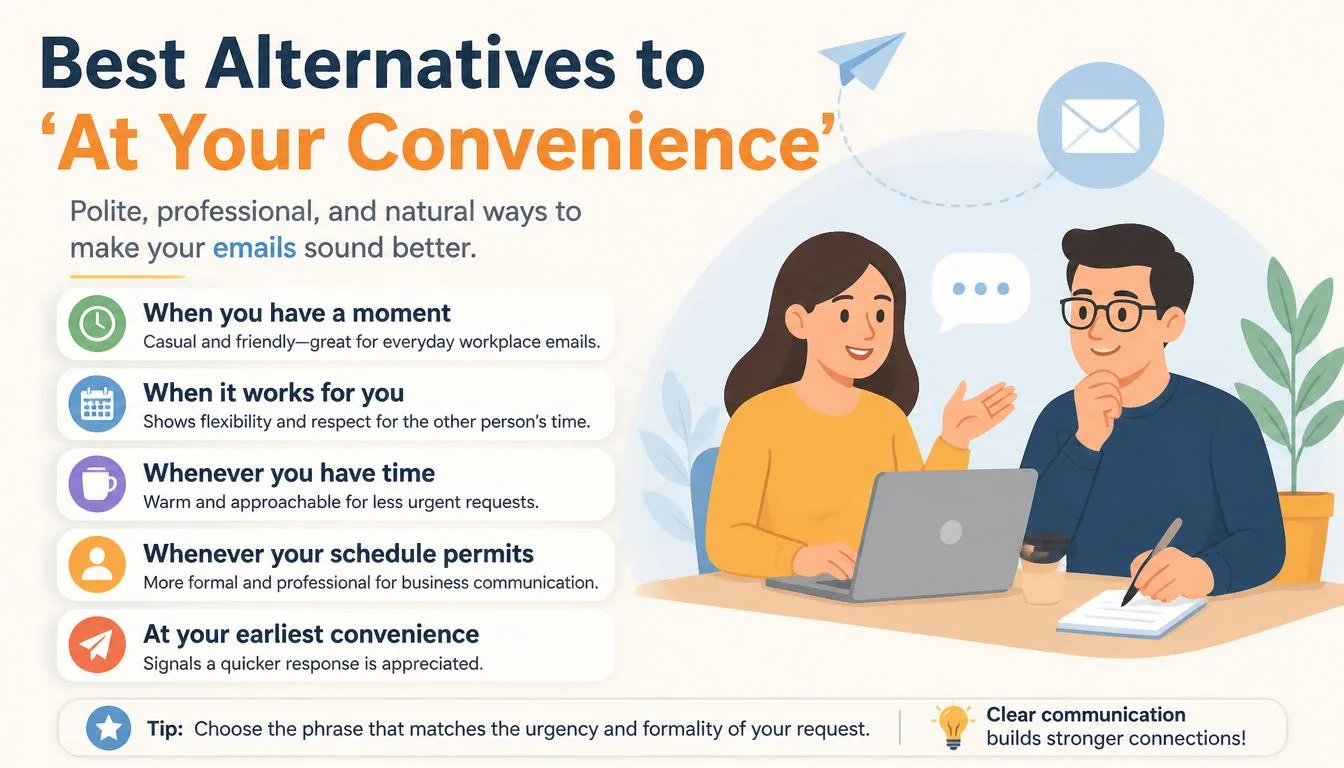
If you want a warmer or more natural way to say “at your convenience” in an email, choose a phrase that matches how flexible the request really is. For a friendly workplace message, try “when you have a moment,” “when it works for you,” or “whenever you have time.” For formal communication, “whenever your schedule permits” or “at a time that suits you” can sound more polished. If you need a quicker response, “at your earliest convenience” signals that you would appreciate prompt action without sounding demanding.
What Does “At Your Convenience” Mean?
“At your convenience” means whenever it is comfortable, suitable, or practical for the other person. It gives the recipient flexibility instead of demanding an immediate response or action. In an email, you might use it when asking someone to review a document, schedule a meeting, provide information, or complete a task. The phrase communicates respect for the recipient’s time and availability.
Is It Professional or Polite to Say “At Your Convenience”?
Yes, “at your convenience” is both professional and polite. It works especially well in business emails because it avoids sounding demanding. However, the phrase can sometimes feel formal or slightly impersonal when used too often. Choosing a more specific alternative can make your email sound warmer while still respecting the other person’s schedule.
Advantages and Disadvantages of Saying “At Your Convenience”
Advantages
1. It Respects the Recipient’s Time
The phrase gives the other person freedom to respond or act when their schedule allows.
2. It Sounds Professional
“At your convenience” works well in business correspondence, client emails, workplace messages, and formal requests.
3. It Avoids Pressure
It suggests that the matter does not require an immediate response, which can make a request feel more considerate.
Disadvantages
1. It Can Sound Formal
In a friendly workplace or casual professional relationship, the phrase may feel slightly stiff.
2. It May Be Too Vague
The recipient might not know whether you expect a response today, this week, or later.
3. It Can Sound Repetitive
Using the same phrase in every email can make your communication feel generic rather than personal.
Synonyms for “At Your Convenience”
- Whenever You Have a Moment
- When You Have Time
- When It Works for You
- Whenever It’s Convenient for You
- At a Time That Suits You
- When Your Schedule Allows
- At Your Earliest Convenience
- When You Get a Chance
- Whenever You’re Available
- When You’re Free
- At a Time That Works Best for You
- When You Have a Chance
- Whenever You Find It Convenient
- When It’s Convenient for You
- At Your Preferred Time
- Whenever Your Schedule Permits
- When You’re Able
- When You Have a Free Moment
- Whenever You’re Ready
- At a Time of Your Choosing
- When You Can
- Whenever You Have the Opportunity
- When Your Schedule Permits
- At Your Leisure
- When You Have Some Time
- Whenever Works Best for You
- At a Time That’s Convenient for You
- When You’re Available to Do So
- Whenever You’re in a Position to Do So
- When You Have the Time to Review It
1. Whenever You Have a Moment
Meaning: This means the person can respond when they have a little free time.
Definition: “Whenever you have a moment” is a friendly way to ask someone to do something without creating pressure.
Detailed Explanation: This alternative feels more natural and conversational than “at your convenience.” It works particularly well when the request is small or does not require much effort.
Scenario Example: “Whenever you have a moment, could you review the attached proposal?”
Best Use: Use it for quick reviews, small requests, and workplace emails.
Tone: Friendly, polite, and relaxed.
2. When You Have Time
Meaning: It means the recipient can complete the request when they have enough time.
Definition: “When you have time” is a simple expression that acknowledges someone’s busy schedule.
Detailed Explanation: This is one of the easiest alternatives to use because it sounds direct without being demanding.
Scenario Example: “Please send me the updated figures when you have time.”
Best Use: Use it for routine workplace requests.
Tone: Simple, respectful, and professional.
3. When It Works for You
Meaning: This means the person can choose a time that fits their schedule.
Definition: It gives the recipient flexibility to decide when to respond or act.
Detailed Explanation: This phrase is especially useful when coordinating meetings, calls, or other activities that involve another person’s availability.
Scenario Example: “Let me know when it works for you, and we can arrange a quick call.”
Best Use: Use it for meetings, calls, and scheduling.
Tone: Flexible, warm, and professional.
4. Whenever It’s Convenient for You
Meaning: It means the recipient can respond whenever doing so is convenient.
Definition: This phrase directly emphasizes the other person’s convenience.
Detailed Explanation: It stays close to the original expression while sounding slightly more conversational.
Scenario Example: “Whenever it’s convenient for you, please send over the final document.”
Best Use: Use it for formal and semi-formal emails.
Tone: Polite, considerate, and professional.
5. At a Time That Suits You
Meaning: This means the recipient can choose a suitable time.
Definition: It gives the other person control over when something happens.
Detailed Explanation: This is useful when you want to sound respectful without being overly formal.
Scenario Example: “I’d be happy to discuss the project at a time that suits you.”
Best Use: Use it when arranging conversations or meetings.
Tone: Respectful and accommodating.
6. When Your Schedule Allows
Meaning: It means whenever the recipient’s schedule gives them enough time.
Definition: This phrase recognizes that the person may have competing responsibilities.
Detailed Explanation: It sounds thoughtful because it directly acknowledges that the recipient may be busy.
Scenario Example: “Please review the report when your schedule allows.”
Best Use: Use it with busy managers, executives, clients, or colleagues.
Tone: Professional and considerate.
7. At Your Earliest Convenience
Meaning: It means as soon as it is reasonably convenient for the recipient.
Definition: This phrase politely asks for relatively prompt action while still allowing flexibility.
Detailed Explanation: Unlike “at your convenience,” this expression suggests that you would appreciate a response sooner rather than later.
Scenario Example: “Please confirm the meeting details at your earliest convenience.”
Best Use: Use it when a response is important or somewhat time-sensitive.
Tone: Formal, respectful, and slightly urgent.
8. When You Get a Chance
Meaning: It means whenever the recipient gets some free time.
Definition: This is an informal way to give someone flexibility.
Detailed Explanation: It sounds natural in everyday professional communication and is less stiff than traditional business language.
Scenario Example: “When you get a chance, could you take a look at the presentation?”
Best Use: Use it with colleagues and familiar professional contacts.
Tone: Casual, friendly, and polite.
9. Whenever You’re Available
Meaning: It means whenever the person has time or is free.
Definition: This phrase leaves the timing completely open.
Detailed Explanation: It is particularly useful when you need to coordinate with someone but do not want to impose a specific schedule.
Scenario Example: “Please call me whenever you’re available.”
Best Use: Use it for calls, meetings, and discussions.
Tone: Flexible and professional.
See More: 30 Other Ways to Say ‘In This Paragraph’ (With Examples)
10. When You’re Free
Meaning: It means when the person has some available time.
Definition: “When you’re free” is a straightforward way to give someone scheduling flexibility.
Detailed Explanation: It is shorter and more conversational than “at your convenience.”
Scenario Example: “Let’s discuss the changes when you’re free.”
Best Use: Use it with coworkers and people you communicate with regularly.
Tone: Friendly and informal.
11. At a Time That Works Best for You
Meaning: It means the recipient can choose the time that suits them best.
Definition: This expression places the decision entirely with the other person.
Detailed Explanation: It is an excellent choice when you want to sound accommodating and genuinely considerate.
Scenario Example: “I’m happy to arrange the meeting at a time that works best for you.”
Best Use: Use it for appointments, interviews, calls, and meetings.
Tone: Warm, professional, and accommodating.
12. When You Have a Chance
Meaning: It means when the recipient gets an opportunity to do something.
Definition: This phrase allows someone to respond without pressure.
Detailed Explanation: It works well for small tasks that are useful but not immediately urgent.
Scenario Example: “When you have a chance, please check the updated schedule.”
Best Use: Use it for routine requests and internal emails.
Tone: Friendly and relaxed.
13. Whenever You Find It Convenient
Meaning: It means whenever the recipient considers the timing suitable.
Definition: It gives the person complete freedom over when to respond.
Detailed Explanation: This version maintains the respectful meaning of the original phrase while adding a slightly more personal touch.
Scenario Example: “Whenever you find it convenient, I’d appreciate your thoughts on the proposal.”
Best Use: Use it for professional requests requiring thoughtful feedback.
Tone: Polite and formal.
14. When It’s Convenient for You
Meaning: It means when the task fits comfortably into the recipient’s schedule.
Definition: This expression politely leaves the timing up to the other person.
Detailed Explanation: It is clear and natural while maintaining a professional tone.
Scenario Example: “Please let me know when it’s convenient for you to discuss this further.”
Best Use: Use it for meetings, discussions, and requests.
Tone: Professional, courteous, and flexible.
15. At Your Preferred Time
Meaning: It means at whatever time the recipient prefers.
Definition: This phrase allows someone to choose their ideal timing.
Detailed Explanation: It works particularly well when scheduling because it makes the recipient’s preference the priority.
Scenario Example: “We can arrange the call at your preferred time.”
Best Use: Use it for appointments, consultations, and meetings.
Tone: Professional and accommodating.
16. Whenever Your Schedule Permits
Meaning: It means whenever the person’s schedule allows them to act.
Definition: This expression acknowledges that the recipient may have other commitments.
Detailed Explanation: It has a polished business tone and can work well in formal correspondence.
Scenario Example: “Please review the attached contract whenever your schedule permits.”
Best Use: Use it with clients, senior professionals, or formal contacts.
Tone: Formal and respectful.
17. When You’re Able
Meaning: It means whenever the person is able to complete the task.
Definition: This phrase gives the recipient flexibility based on their circumstances.
Detailed Explanation: It can sound especially considerate when you know someone has several responsibilities.
Scenario Example: “Please send the information when you’re able.”
Best Use: Use it for flexible requests that are not urgent.
Tone: Gentle, respectful, and understanding.
18. When You Have a Free Moment
Meaning: It means whenever the recipient has a short period of free time.
Definition: This is a friendly request that recognizes someone’s busy schedule.
Detailed Explanation: It is ideal for small tasks and quick questions that should not interrupt someone’s work.
Scenario Example: “When you have a free moment, could you review this email?”
Best Use: Use it for brief reviews and quick workplace requests.
Tone: Friendly and considerate.
19. Whenever You’re Ready
Meaning: It means the person can proceed when they feel prepared.
Definition: This phrase gives someone permission to choose when to move forward.
Detailed Explanation: It is useful when there is no strict deadline and you want to avoid creating unnecessary pressure.
Scenario Example: “Whenever you’re ready, we can move ahead with the next phase.”
Best Use: Use it for projects, decisions, and collaborative work.
Tone: Supportive and relaxed.

20. At a Time of Your Choosing
Meaning: It means the recipient can select the time themselves.
Definition: This formal expression gives complete control over scheduling to the other person.
Detailed Explanation: It is more formal than most alternatives and can work well when communicating with clients or senior professionals.
Scenario Example: “I would be happy to meet at a time of your choosing.”
Best Use: Use it in formal business correspondence.
Tone: Formal, respectful, and accommodating.
21. When You Can
Meaning: It means whenever the recipient is able to do something.
Definition: This short phrase communicates flexibility without unnecessary formality.
Detailed Explanation: It works best when the request is straightforward and the recipient already understands what needs to be done.
Scenario Example: “Please send me the revised file when you can.”
Best Use: Use it for casual professional communication.
Tone: Simple, friendly, and flexible.
22. Whenever You Have the Opportunity
Meaning: It means whenever the person gets a suitable opportunity.
Definition: This phrase allows the recipient to act when circumstances permit.
Detailed Explanation: It sounds thoughtful and works well when the request does not have a strict deadline.
Scenario Example: “Whenever you have the opportunity, I’d appreciate your feedback.”
Best Use: Use it for feedback, reviews, and non-urgent requests.
Tone: Polite and professional.
23. When Your Schedule Permits
Meaning: It means when the recipient’s schedule gives them enough time.
Definition: This phrase recognizes the other person’s existing commitments.
Detailed Explanation: It is a polished alternative that works particularly well in formal workplace communication.
Scenario Example: “Please contact me when your schedule permits.”
Best Use: Use it with senior colleagues, clients, and business contacts.
Tone: Formal and considerate.
24. At Your Leisure
Meaning: It means whenever the person has the time and inclination to do something.
Definition: “At your leisure” gives someone freedom to complete a task without immediate pressure.
Detailed Explanation: Although polite, this phrase can sound somewhat old-fashioned or formal, so it is best used selectively.
Scenario Example: “Please review the attached materials at your leisure.”
Best Use: Use it when the request is clearly non-urgent.
Tone: Formal and relaxed.
25. When You Have Some Time
Meaning: It means whenever the recipient has enough free time.
Definition: This phrase politely recognizes that the person may be busy.
Detailed Explanation: It sounds natural and approachable, making it useful for everyday workplace communication.
Scenario Example: “When you have some time, I’d like to discuss the new project.”
Best Use: Use it for conversations, reviews, and routine requests.
Tone: Friendly and professional.
26. Whenever Works Best for You
Meaning: It means the recipient can choose whatever timing suits them best.
Definition: This expression emphasizes flexibility.
Detailed Explanation: It is especially useful when arranging a meeting or call because it gives the recipient control over the timing.
Scenario Example: “We can schedule the meeting whenever works best for you.”
Best Use: Use it for scheduling and collaboration.
Tone: Warm, flexible, and conversational.
27. At a Time That’s Convenient for You
Meaning: It means at any time that fits comfortably into the recipient’s schedule.
Definition: This is a direct and polite alternative to “at your convenience.”
Detailed Explanation: It preserves the original meaning while sounding a little more explicit.
Scenario Example: “I’d be glad to speak with you at a time that’s convenient for you.”
Best Use: Use it for formal and professional emails.
Tone: Polite, professional, and respectful.
28. When You’re Available to Do So
Meaning: It means whenever the recipient is available to complete the requested action.
Definition: This phrase provides flexibility while clearly connecting availability to a specific task.
Detailed Explanation: It is useful when you want to maintain a formal tone without sounding demanding.
Scenario Example: “Please send the completed form when you’re available to do so.”
Best Use: Use it for formal requests and administrative communication.
Tone: Formal and courteous.
29. Whenever You’re in a Position to Do So
Meaning: It means whenever the recipient is able or prepared to complete the task.
Definition: This expression recognizes that circumstances may affect someone’s ability to act.
Detailed Explanation: It is more formal and should be used when flexibility genuinely matters.
Scenario Example: “Please provide the additional information whenever you’re in a position to do so.”
Best Use: Use it for formal or sensitive professional requests.
Tone: Formal, considerate, and understanding.
See More: 30 Other Ways to Say ‘Bless You’ When Someone Sneezes
30. When You Have the Time to Review It
Meaning: It means the recipient can review something whenever they have enough time.
Definition: This phrase directly identifies the requested action while leaving the timing flexible.
Detailed Explanation: It is more specific than “at your convenience,” which makes it useful when you are sending a document, proposal, report, or other material for review.
Scenario Example: “Please look over the attached proposal when you have the time to review it.”
Best Use: Use it when requesting document reviews, feedback, or approval.
Tone: Professional, considerate, and clear.
FAQs
1. What does “At Your Convenience” mean in an email?
“At Your Convenience” means the recipient can do something at a time that works best for them. It is a polite way to show flexibility and avoid creating unnecessary pressure.
2. Is “At Your Convenience” professional?
Yes, “At Your Convenience” is generally professional and respectful. However, it can sometimes sound slightly formal, outdated, or vague, especially in modern workplace communication.
3. Is “At Your Convenience” polite?
Yes, the phrase is considered polite because it gives the other person freedom to choose a suitable time. It can be useful when you want to respect their schedule and energy.
4. What are some professional alternatives to “At Your Convenience”?
You can say “when you have a moment,” “when you have time,” “when it works for you,” “whenever you’re available,” or “at a time that suits you.” The best choice depends on your relationship and the situation.
5. Can I use “At Your Convenience” with clients?
Yes. “At Your Convenience” can work well with clients when you want to sound courteous and flexible. Still, a more conversational alternative may feel warmer in some client emails.
6. Does “At Your Convenience” mean there is no deadline?
Not always. The phrase usually suggests that the recipient has flexibility, but it does not automatically remove a deadline. If timing matters, give a clear deadline instead.
7. Is “At Your Convenience” too formal for coworkers?
It can be. With close colleagues, phrases such as “when you get a chance” or “when you have a moment” may sound more natural and conversational.
8. How can I make “At Your Convenience” sound warmer?
Choose language that combines respect and genuine care. For example, “Whenever you have a chance, please take a look” gives the recipient flexibility while maintaining a friendly tone.
9. Should I use “At Your Convenience” in every professional email?
No. Repeating the same phrase can make your writing feel routine or impersonal. Exploring alternative ways to express the idea can make your communication more natural and thoughtful.
10. What is the best alternative to “At Your Convenience”?
There is no single best alternative for every situation. “When it works for you” is a strong modern option because it sounds clear, polite, flexible, and conversational without being too formal.
Conclusion
“At Your Convenience” remains a useful and polite expression for professional emails, especially when you want to give someone flexibility. However, modern workplace communication often benefits from language that feels more clear, natural, respectful, and conversational.
Choosing thoughtful alternatives helps you match your tone to the person and situation. Whether you are writing to a client, colleague, manager, or professional contact, the right phrase can make your message feel less impersonal while still showing professionalism, consideration, and genuine care.