


30 Other Ways to Say “Don’t Give Up” helps you find kind words to offer gentle support, hope, and encouragement during difficult times.
“Don’t give up” and “never give up” are powerful phrases that express determination, perseverance, and courage. However, being too direct can create pressure when someone needs understanding instead.
Using softer alternatives, such as “Take it one step at a time,” “I’m here with you,” and “never lose hope,” helps you share the same message with friends, students, coworkers, and athletes. These natural ways of offering emotional reassurance, emotional support, and everyday encouragement can make hard times easier to face.
The right phrases help people stay motivated, build confidence, develop resilience, and focus on overcoming challenges. Expressions like “keep going,” “keep trying,” “keep moving forward,” and “staying strong” encourage persistence, continuous effort, and mental strength.
These other expressions provide meaningful alternatives for showing motivation, encouragement, and determination to succeed, helping someone make forward progress without relying on empty promises.
Quick Answer
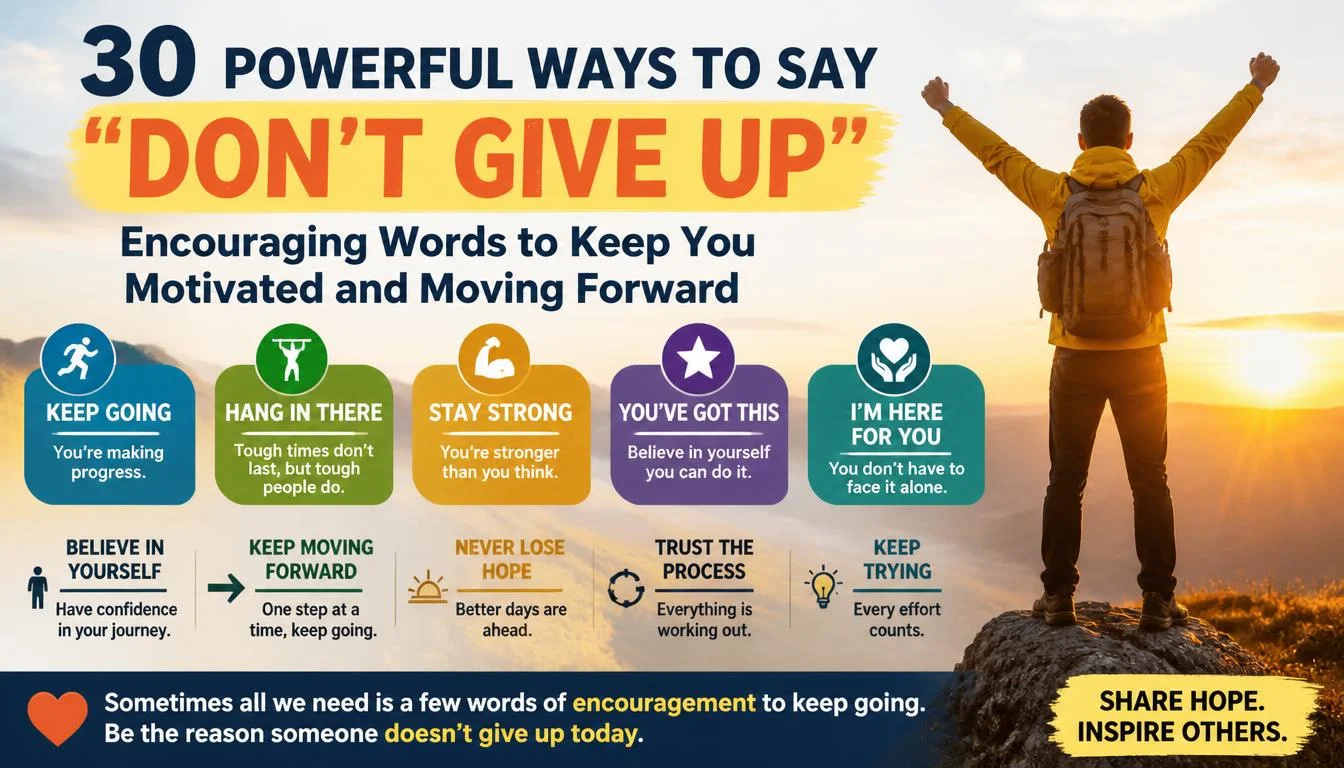
You can say “don’t give up” in many encouraging ways, such as “Keep going,” “Hang in there,” “Stay strong,” “You’ve got this,” “Believe in yourself,” “Keep moving forward,” “Never lose hope,” “Trust the process,” “Keep trying,” and “I’m here for you.” These alternatives help you express hope, confidence, and emotional support when encouraging friends, family members, or coworkers through difficult times.
What Does “Don’t Give Up” Mean?
“Don’t give up” means continuing to try even when something feels difficult, disappointing, or overwhelming. It encourages someone to stay hopeful, remain patient, and keep working toward their goals despite setbacks. People often use this phrase to support friends, family members, coworkers, and anyone facing a challenging situation. Its central message is simple: you still have a reason to keep trying, even when progress feels slow.
Is It Professional or Polite to Say “Don’t Give Up”?
Yes, “don’t give up” can be both professional and polite when you use it with genuine care. It works well when encouraging a coworker, motivating a team member, or reassuring someone who is struggling with a difficult task. However, the phrase may sound dismissive if the person feels exhausted or overwhelmed and needs understanding more than advice. In professional situations, consider alternatives such as “Keep moving forward,” “Trust the process,” or “Your efforts will make a difference.” These expressions offer encouragement while respecting the person’s feelings and circumstances.
Advantages of Saying “Don’t Give Up”
1. It Offers Emotional Support
The phrase reminds someone that they aren’t alone during difficult moments. It can provide reassurance when disappointment makes a situation feel hopeless.
2. It Encourages Persistence
“Don’t give up” motivates people to continue working toward their goals. It reminds them that setbacks don’t always mean failure.
3. It Builds Confidence
When spoken sincerely, these words can help someone recognize their abilities and believe in their potential to overcome challenges.
Disadvantages of Saying “Don’t Give Up”
1. It May Feel Dismissive
Someone who is struggling might feel that the phrase overlooks their pain, exhaustion, or frustration.
2. It Can Create Pressure
Encouraging someone to continue without acknowledging their limits may make them feel guilty about resting or changing direction.
3. It May Sound Repetitive
Using the same expression repeatedly can make your support feel less personal. A thoughtful alternative can communicate greater understanding.
Synonyms for “Don’t Give Up”
- Keep Going
- Hang in There
- Stay Strong
- Keep Pushing Forward
- You’ve Got This
- Believe in Yourself
- Keep Your Head Up
- Take It One Step at a Time
- Never Lose Hope
- Keep Fighting
- You’re Stronger Than You Think
- Don’t Lose Heart
- Keep Moving Forward
- Trust the Process
- Stay Positive
- Keep Trying
- You’re Making Progress
- This Too Shall Pass
- Hold On a Little Longer
- Don’t Let Setbacks Define You
- Give Yourself Time
- Focus on How Far You’ve Come
- Keep Your Dreams Alive
- You Can Get Through This
- Take a Deep Breath and Continue
- Every Small Step Counts
- Learn From the Setback
- Your Efforts Will Pay Off
- Keep Believing in Better Days
- I’m Here for You
1. Keep Going
Meaning: Continue making an effort instead of stopping because things have become difficult.
Definition: “Keep going” is an encouraging expression that motivates someone to continue a task, pursue a goal, or move through a challenging experience.
Detailed Explanation: This alternative is simple, natural, and versatile. It communicates support without making the situation sound more complicated than it needs to be. Use it when someone needs a gentle reminder that progress often comes from consistent effort. It works particularly well when the person is already trying their best and needs reassurance to continue.
Scenario Example: Your friend has spent weeks preparing for an important examination but feels discouraged by practice test results.
Example: “I know these practice tests are frustrating, but keep going. You’re learning something valuable each time.”
Best Use: Everyday conversations, studying, personal goals, fitness routines, and work projects.
Tone: Encouraging, friendly, positive, and supportive.
2. Hang in There
Meaning: Remain patient and strong during a difficult situation.
Definition: “Hang in there” is an informal expression that encourages someone to endure temporary difficulties without losing hope.
Detailed Explanation: This phrase feels warm and conversational. It acknowledges that someone may be having a rough time while gently reminding them that the situation can improve. Unlike a forceful command, it sounds like a caring friend offering reassurance. However, when someone faces a serious problem, pair it with empathy rather than using it as your only response.
Scenario Example: A coworker is overwhelmed by several deadlines and feels unsure about finishing everything on time.
Example: “I know this week has been exhausting. Hang in there, and let me know if I can help with anything.”
Best Use: Casual conversations, stressful workdays, difficult weeks, and supportive text messages.
Tone: Warm, informal, compassionate, and reassuring.
3. Stay Strong
Meaning: Maintain courage and emotional strength during hardship.
Definition: “Stay strong” encourages someone to face difficulties with resilience and continue believing in their ability to cope.
Detailed Explanation: This expression is especially meaningful when someone experiences disappointment, personal struggles, or uncertainty. It reminds them that difficult circumstances don’t erase their inner strength. Still, staying strong doesn’t mean hiding emotions or refusing help. You can make the phrase more compassionate by acknowledging the person’s feelings and letting them know that asking for support is okay.
Scenario Example: Your friend is dealing with a painful personal setback and finds it difficult to remain hopeful.
Example: “I know things are incredibly hard right now. Stay strong, and remember that you don’t have to handle everything alone.”
Best Use: Personal challenges, emotional support, family difficulties, and difficult transitions.
Tone: Caring, heartfelt, resilient, and reassuring.
4. Keep Pushing Forward
Meaning: Continue working toward your goals despite obstacles.
Definition: “Keep pushing forward” encourages someone to maintain momentum and take action even when progress feels difficult.
Detailed Explanation: This phrase emphasizes determination and forward movement. It’s particularly helpful when someone encounters professional setbacks, academic difficulties, or unexpected obstacles. Rather than suggesting that success will come immediately, it reminds them to focus on the next achievable step. Use it when someone needs motivation to move beyond frustration and continue making progress.
Scenario Example: A teammate’s project has encountered several technical problems, delaying the expected completion date.
Example: “We’ve faced a few unexpected challenges, but keep pushing forward. We’ll work through the remaining issues together.”
Best Use: Workplace encouragement, academic goals, challenging projects, and long-term plans.
Tone: Motivational, determined, confident, and energetic.
5. You’ve Got This
Meaning: You have the ability to handle the situation successfully.
Definition: “You’ve got this” is a friendly expression that builds confidence and encourages someone to trust their abilities.
Detailed Explanation: This alternative works well when someone doubts themselves before an important event. It communicates confidence without requiring a lengthy motivational speech. Because it sounds natural and upbeat, it’s especially effective in texts, conversations with friends, and supportive workplace messages. For a more personal touch, mention a specific skill or strength that makes you believe in them.
Scenario Example: Your friend feels nervous before giving their first presentation at work.
Example: “You’ve prepared carefully, and you know your material. You’ve got this!”
Best Use: Interviews, examinations, presentations, competitions, and new challenges.
Tone: Upbeat, confident, friendly, and motivating.
6. Believe in Yourself
Meaning: Trust your abilities, judgment, and potential.
Definition: “Believe in yourself” encourages someone to develop confidence in their capacity to face challenges and achieve meaningful goals.
Detailed Explanation: People sometimes lose confidence after criticism, mistakes, or repeated disappointments. This phrase reminds them that one difficult experience doesn’t determine their entire future. It’s most effective when you connect your encouragement to something genuine, such as their preparation, creativity, or past achievements. That personal detail can make your message feel more sincere and convincing.
Scenario Example: A student wants to enter a competition but worries that other participants are more talented.
Example: “You’ve worked hard to prepare for this competition. Believe in yourself and give it your best.”
Best Use: Personal growth, academic challenges, career decisions, and confidence-building conversations.
Tone: Empowering, sincere, optimistic, and supportive.
7. Keep Your Head Up
Meaning: Remain hopeful when facing disappointment or difficulties.
Definition: “Keep your head up” is an informal expression that encourages someone to maintain confidence and avoid becoming overwhelmed by setbacks.
Detailed Explanation: This phrase offers gentle encouragement when something hasn’t gone as planned. It reminds the person that a disappointing result doesn’t define their worth or future potential. Because the expression is casual and familiar, it fits everyday conversations particularly well. To make it more empathetic, acknowledge what went wrong before encouraging the person to look ahead.
Scenario Example: Your friend didn’t receive a job offer after several successful interview rounds.
Example: “I know you really wanted that position, and it’s disappointing. Keep your head up; another opportunity may be a better fit.”
Best Use: Rejection, disappointment, unsuccessful applications, and everyday setbacks.
Tone: Friendly, hopeful, comforting, and encouraging.
8. Take It One Step at a Time
Meaning: Focus on one manageable action instead of worrying about everything at once.
Definition: “Take it one step at a time” encourages someone to approach a difficult situation gradually and patiently.
Detailed Explanation: When a problem feels overwhelming, thinking about the entire journey can make it seem impossible. This phrase helps someone shift their attention toward a smaller, more achievable goal. It also reminds them that progress doesn’t have to happen all at once. Use it when someone needs calm reassurance rather than intense motivation.
Scenario Example: A colleague feels overwhelmed by a large project with multiple complicated stages.
Example: “You don’t have to solve everything today. Take it one step at a time, and let’s start with the first task.”
Best Use: Complex projects, personal challenges, studying, and stressful life changes.
Tone: Calm, patient, practical, and reassuring.
9. Never Lose Hope
Meaning: Continue believing that circumstances can improve.
Definition: “Never lose hope” encourages someone to maintain optimism even when the outcome remains uncertain.
Detailed Explanation: This expression offers emotional comfort when someone has experienced disappointment or faces a long period of uncertainty. It reminds them that the present situation may not represent the final outcome. However, avoid promising that everything will definitely work out. Genuine encouragement leaves room for uncertainty while helping someone recognize possible paths forward.
Scenario Example: A friend has applied for several positions without receiving an offer and feels discouraged about their career.
Example: “I know the job search has been difficult, but never lose hope. Your skills and persistence still matter.”
Best Use: Long-term goals, career struggles, personal setbacks, and uncertain situations.
Tone: Hopeful, heartfelt, uplifting, and compassionate.
10. Keep Fighting
Meaning: Continue confronting a challenge with determination.
Definition: “Keep fighting” is a motivational expression that encourages someone to resist discouragement and continue working through adversity.
Detailed Explanation: The phrase communicates strength and determination, especially when someone faces a demanding challenge. It can motivate a team, support a friend working toward a goal, or encourage someone through a difficult period. However, the word “fighting” may feel too intense in sensitive situations. Consider the person’s emotional state before using it, and remember that taking a break can also be a sign of strength.
Scenario Example: An athlete is struggling to recover their confidence after several disappointing performances.
Example: “You’ve worked too hard to let a few bad performances define you. Keep fighting, and focus on your next opportunity.”
Best Use: Sports, demanding goals, competitions, and situations requiring determination.
Tone: Bold, energetic, resilient, and motivational.
11. You’re Stronger Than You Think
Meaning: You have more strength and ability than you currently recognize.
Definition: This expression reminds someone that they may possess the resilience needed to face a challenge, even when they feel uncertain.
Detailed Explanation: During difficult times, people often underestimate their ability to cope. This phrase gently challenges that self-doubt and encourages them to remember previous moments when they overcame obstacles. It’s particularly effective when you support it with a genuine example of their resilience. Avoid using it to suggest that someone should suppress their emotions or manage every problem alone.
Scenario Example: Your sibling doubts their ability to manage a major change in their personal life.
Example: “You’ve handled difficult changes before, even when they seemed impossible at first. You’re stronger than you think.”
Best Use: Personal transitions, confidence struggles, emotional setbacks, and meaningful conversations.
Tone: Compassionate, empowering, reassuring, and sincere.
12. Don’t Lose Heart
Meaning: Don’t let disappointment destroy your courage or hope.
Definition: “Don’t lose heart” encourages someone to remain hopeful and determined despite discouraging experiences.
Detailed Explanation: This expression sounds thoughtful and slightly more formal than “hang in there.” It works well when someone has invested significant effort in a goal but hasn’t seen the results they expected. The phrase acknowledges discouragement without treating it as a reason to stop. Pair it with practical reassurance to help the person see what they can do next.
Scenario Example: A small business owner is disappointed because their new service isn’t attracting many customers.
Example: “Building a customer base takes time. Don’t lose heart; your feedback and experience can help you improve.”
Best Use: Business challenges, creative projects, academic goals, and professional setbacks.
Tone: Thoughtful, encouraging, composed, and hopeful.
13. Keep Moving Forward
Meaning: Continue making progress instead of remaining stuck in the past.
Definition: “Keep moving forward” encourages someone to learn from difficulties and focus on future opportunities.
Detailed Explanation: This phrase is useful when someone feels trapped by a mistake, rejection, or disappointing outcome. It doesn’t require them to forget what happened. Instead, it encourages them to recognize the experience, learn from it, and take another step. The wording also works in professional settings because it emphasizes progress without sounding overly emotional.
Scenario Example: A colleague is struggling to regain confidence after a project fails to meet its original targets.
Example: “We learned a lot from this project. Let’s apply those lessons, adjust our approach, and keep moving forward.”
Best Use: Workplace communication, personal growth, recovery from mistakes, and long-term goals.
Tone: Constructive, professional, optimistic, and forward-looking.
14. Trust the Process
Meaning: Be patient and continue following a thoughtful plan.
Definition: “Trust the process” encourages someone to believe in consistent effort, gradual improvement, and a reasonable approach to achieving a goal.
Detailed Explanation: Progress often takes longer than people expect. This expression reminds someone that meaningful results may develop through small, repeated actions rather than immediate breakthroughs. It works particularly well when a person has a clear plan but feels frustrated by slow results. Still, trusting the process doesn’t mean ignoring evidence. Encourage them to review their approach when something isn’t working.
Scenario Example: A student follows a study schedule but worries because their grades haven’t improved yet.
Example: “You’re building stronger study habits every week. Trust the process, track your progress, and adjust your methods when needed.”
Best Use: Training, studying, skill development, fitness, and long-term projects.
Tone: Patient, reassuring, practical, and confident.
15. Stay Positive
Meaning: Maintain a hopeful and constructive attitude during challenges.
Definition: “Stay positive” encourages someone to focus on possibilities and useful actions rather than becoming consumed by negative expectations.
Detailed Explanation: This phrase can help when someone needs encouragement to approach a difficult situation with a fresh perspective. However, positivity shouldn’t mean pretending that problems don’t exist. People need space to express frustration and disappointment, too. A thoughtful message acknowledges their concerns while helping them identify something constructive they can do next.
Scenario Example: Your teammate feels discouraged after receiving critical feedback on a presentation.
Example: “The feedback gives us a few things to improve. Stay positive, and let’s use it to make the next presentation stronger.”
Best Use: Team projects, academic challenges, professional development, and everyday disappointments.
Tone: Optimistic, supportive, constructive, and friendly.
See More: 30 Other Ways to Say ‘Thinking of You’ with Examples
16. Keep Trying
Meaning: Continue making an effort even when your first attempts don’t succeed.
Definition: “Keep trying” encourages persistence, experimentation, and learning through repeated attempts.
Detailed Explanation: Not every attempt produces the result you want. This phrase reminds someone that mistakes and unsuccessful efforts can provide useful information. It works especially well when a person is learning a new skill or working through a problem with several possible solutions. For a more supportive message, recognize what they’ve already learned and encourage them to try a different approach when necessary.
Scenario Example: A beginner is learning to code and feels frustrated by repeated errors in their program.
Example: “Debugging takes practice, and every error teaches you something. Keep trying, and you’ll gradually understand what’s going wrong.”
Best Use: Learning, skill development, creative work, problem-solving, and new experiences.
Tone: Patient, encouraging, practical, and motivating.
17. You’re Making Progress
Meaning: Your efforts are producing improvement, even if the results seem small.
Definition: “You’re making progress” recognizes gradual development and encourages someone to appreciate the improvements they’ve achieved.
Detailed Explanation: People sometimes overlook their progress because they focus entirely on the final goal. This phrase redirects their attention toward the steps they’ve already completed. It’s particularly reassuring when improvement feels slow or difficult to measure. Whenever possible, mention a specific change you’ve noticed, such as better organization, stronger skills, or increased confidence.
Scenario Example: A student feels discouraged because learning a new language is taking longer than expected.
Example: “You’re understanding more vocabulary and speaking with greater confidence. You’re making progress, even if you don’t notice it every day.”
Best Use: Education, professional development, rehabilitation goals, fitness routines, and personal growth.
Tone: Affirming, encouraging, supportive, and sincere.
18. This Too Shall Pass
Meaning: Difficult circumstances are temporary and may eventually change.
Definition: “This too shall pass” is a familiar expression that reminds someone that painful or challenging periods don’t necessarily last forever.
Detailed Explanation: The phrase offers comfort when someone feels overwhelmed by a temporary setback or difficult season. It encourages perspective without demanding immediate action. However, avoid assuming that a serious problem will resolve itself or disappear quickly. A caring message can acknowledge the person’s pain while reminding them that they don’t have to face the situation alone.
Scenario Example: Your friend is struggling emotionally after a disappointing personal experience.
Example: “I know this hurts right now, and you don’t have to pretend otherwise. This too shall pass, and I’ll be here while you work through it.”
Best Use: Emotional setbacks, disappointing experiences, stressful periods, and personal challenges.
Tone: Gentle, reflective, comforting, and hopeful.
19. Hold On a Little Longer
Meaning: Continue enduring a difficult moment while looking for a way forward.
Definition: “Hold on a little longer” encourages someone to remain patient and hopeful when a challenging situation feels especially difficult.
Detailed Explanation: This expression can feel deeply personal because it recognizes that someone may be close to feeling overwhelmed. It offers encouragement without demanding that they solve everything immediately. Use it thoughtfully, particularly when a person needs reassurance and companionship. In serious situations, focus on listening and offering practical support rather than expecting them to endure hardship indefinitely.
Scenario Example: A friend feels discouraged during the final weeks of a demanding academic term.
Example: “I know you’re exhausted with exams approaching. Hold on a little longer, and remember to give yourself time to rest.”
Best Use: Temporary periods of stress, demanding schedules, difficult projects, and supportive conversations.
Tone: Tender, reassuring, patient, and compassionate.
20. Don’t Let Setbacks Define You
Meaning: Don’t allow mistakes or disappointments to determine your sense of worth.
Definition: This expression reminds someone that a difficult experience is only one part of their story, not a complete measure of their abilities or character.
Detailed Explanation: A setback can make someone question their identity, especially when they’ve worked hard toward an important goal. This phrase separates the disappointing outcome from the person’s overall value. It encourages learning without turning one mistake into a permanent judgment. To make the message more meaningful, remind them of their strengths and the options still available to them.
Scenario Example: A talented professional makes a mistake during an important presentation and begins doubting their competence.
Example: “One difficult presentation doesn’t erase your experience or skills. Don’t let setbacks define you; use this moment to learn and improve.”
Best Use: Career setbacks, academic disappointments, personal mistakes, and confidence-building conversations.
Tone: Empowering, thoughtful, reassuring, and constructive.
21. Give Yourself Time
Meaning: Allow yourself enough time to recover, learn, or make progress.
Definition: “Give yourself time” encourages patience with your own development instead of expecting immediate results.
Detailed Explanation: Some challenges require rest, reflection, practice, or emotional adjustment. This phrase reminds someone that improvement doesn’t follow the same timeline for everyone. It can be especially comforting when a person feels behind or compares their progress with other people’s achievements. Rather than urging them to push harder, it recognizes that patience can be an important part of moving forward.
Scenario Example: A friend feels frustrated because they’re still adjusting to a new job several weeks after starting.
Example: “You’re learning a lot of new things at once. Give yourself time to settle in and build confidence.”
Best Use: Learning new skills, starting a job, adjusting to change, and recovering from disappointment.
Tone: Gentle, patient, understanding, and compassionate.
22. Focus on How Far You’ve Come
Meaning: Recognize your achievements instead of concentrating only on what’s left to do.
Definition: This expression encourages someone to appreciate their progress and remember the effort they’ve already invested.
Detailed Explanation: When people focus exclusively on their remaining goals, they can overlook how much they’ve accomplished. This phrase helps them take a broader view of their journey. It’s particularly effective for long-term projects and personal development because it makes improvement easier to recognize. Mentioning a specific milestone can make the encouragement more genuine.
Scenario Example: A colleague feels discouraged because a large project still has several tasks remaining.
Example: “Think about everything we’ve completed since the project began. Focus on how far you’ve come, and let’s tackle the next stage together.”
Best Use: Long-term goals, workplace projects, education, fitness, and personal development.
Tone: Reflective, positive, appreciative, and motivating.
23. Keep Your Dreams Alive
Meaning: Continue believing in your ambitions and working toward meaningful goals.
Definition: “Keep your dreams alive” encourages someone to preserve their hopes and remain open to opportunities despite setbacks.
Detailed Explanation: Dreams can lose their appeal when progress becomes difficult or other people express doubt. This phrase reminds someone that an obstacle doesn’t automatically make their ambition impossible. It encourages them to stay connected to what matters while considering realistic steps toward their goals. The message is strongest when it supports both hope and practical action.
Scenario Example: Your friend wants to start a creative business but feels discouraged by the challenges of getting started.
Example: “You’ve always wanted to build something of your own. Keep your dreams alive, and start with one manageable step toward that goal.”
Best Use: Career ambitions, creative projects, entrepreneurship, education, and personal aspirations.
Tone: Inspirational, hopeful, heartfelt, and encouraging.
24. You Can Get Through This
Meaning: You have the potential and resources to navigate the current difficulty.
Definition: “You can get through this” reassures someone that they may be able to manage a difficult experience with time, support, and practical steps.
Detailed Explanation: This phrase offers comfort when someone feels overwhelmed by circumstances they didn’t expect. It communicates belief in their ability to cope without requiring them to feel confident immediately. For an even more supportive message, offer specific help or remind them that they don’t have to face everything alone.
Scenario Example: A friend feels overwhelmed while managing family responsibilities and a demanding work schedule.
Example: “You’ve got a lot on your plate right now. You can get through this, and I’m happy to help where I can.”
Best Use: Personal challenges, stressful transitions, family responsibilities, and emotional support.
Tone: Reassuring, caring, confident, and compassionate.
25. Take a Deep Breath and Continue
Meaning: Pause briefly, regain your composure, and resume when you’re ready.
Definition: This expression encourages someone to manage immediate stress before returning to a difficult task.
Detailed Explanation: Sometimes, people don’t need a dramatic motivational speech. They need a moment to breathe, think clearly, and decide what to do next. This phrase recognizes the value of pausing without treating a break as failure. It works best when the person is frustrated or nervous and can benefit from a calm reminder to approach the challenge gradually.
Scenario Example: A coworker becomes flustered after encountering an unexpected problem during a meeting.
Example: “Let’s pause for a moment, take a deep breath, and continue. We can work through the problem one part at a time.”
Best Use: Stressful meetings, presentations, difficult tasks, and moments of frustration.
Tone: Calm, practical, reassuring, and supportive.
26. Every Small Step Counts
Meaning: Even modest efforts can contribute to meaningful progress.
Definition: “Every small step counts” reminds someone that small actions matter when working toward a larger goal.
Detailed Explanation: Big goals can feel intimidating when people believe they must make rapid progress. This phrase helps them appreciate smaller achievements, such as completing one task, practicing for ten minutes, or asking for help. It shifts the focus from perfection to consistency. Use it when someone needs encouragement to recognize that modest progress is still progress.
Scenario Example: A student struggles to prepare for a major examination because the syllabus feels overwhelming.
Example: “You don’t have to finish the entire syllabus tonight. Every small step counts, so let’s begin with one topic.”
Best Use: Studying, habit-building, fitness goals, personal development, and large projects.
Tone: Encouraging, patient, practical, and optimistic.
27. Learn From the Setback
Meaning: Use a disappointing experience to understand what could be improved.
Definition: “Learn from the setback” encourages someone to reflect on a difficulty and use its lessons to make better decisions in the future.
Detailed Explanation: Mistakes and unsuccessful attempts can reveal weaknesses in a plan, gaps in knowledge, or opportunities for improvement. This phrase helps someone view disappointment as information rather than a final judgment. However, give the person time to process their feelings before immediately turning the experience into a lesson. A little empathy can make practical advice much easier to accept.
Scenario Example: A team misses an important deadline because its original schedule underestimated the workload.
Example: “Missing the deadline was frustrating, but we can learn from the setback and build a more realistic timeline next time.”
Best Use: Workplace feedback, failed projects, academic mistakes, and problem-solving.
Tone: Constructive, thoughtful, practical, and encouraging.
28. Your Efforts Will Pay Off
Meaning: Your hard work may lead to valuable results over time.
Definition: “Your efforts will pay off” expresses confidence that consistent work can produce meaningful benefits.
Detailed Explanation: This phrase recognizes the time and energy someone has invested in a goal. It can help them remain motivated when results aren’t immediately visible. However, no one can guarantee a particular outcome, so it’s wise to avoid promising success when circumstances remain uncertain. You can make the message more balanced by recognizing their progress and encouraging them to adjust their approach when necessary.
Scenario Example: A colleague has spent months learning new skills to qualify for a more advanced role.
Example: “You’ve invested a lot of time in developing these skills. Keep building on what you’ve learned; your efforts can open new opportunities.”
Best Use: Career development, education, skill-building, fitness, and long-term projects.
Tone: Appreciative, motivating, confident, and supportive.
29. Keep Believing in Better Days
Meaning: Continue hoping for more positive experiences in the future.
Definition: This expression encourages someone to remain open to improvement and future possibilities during a difficult period.
Detailed Explanation: When life feels disappointing, it can become difficult to imagine a better situation. This phrase offers hope without demanding that someone feel happy immediately. It acknowledges that the present may be difficult while leaving room for change. Use it with empathy, especially when someone needs emotional reassurance rather than instructions or quick solutions.
Scenario Example: A friend feels discouraged after several personal disappointments within a short period.
Example: “You’ve been dealing with so much lately. Keep believing in better days, and remember that you deserve support along the way.”
Best Use: Emotional support, personal setbacks, difficult transitions, and heartfelt messages.
Tone: Gentle, hopeful, comforting, and sincere.
30. I’m Here for You
Meaning: You can rely on me for support, understanding, or companionship.
Definition: “I’m here for you” is a caring expression that assures someone they don’t have to face a difficult situation alone.
Detailed Explanation: Sometimes, the most helpful alternative to “don’t give up” isn’t another motivational phrase. It’s a reminder that someone cares enough to listen, help, or simply stay nearby. This expression focuses on emotional connection rather than telling the person how to feel. To make it especially meaningful, offer a specific form of support, such as listening to their concerns or helping with a practical task.
Scenario Example: Your friend has been struggling with a difficult personal decision and feels unsure about what to do next.
Example: “I know things feel uncertain right now. I’m here for you if you want to talk, think through your options, or simply have some company.”
Best Use: Close friendships, family conversations, emotional struggles, and personal messages.
Tone: Loving, empathetic, reassuring, and deeply supportive.
Frequently Asked Questions
1. What is another way to say “Don’t Give Up”?
You can say “Keep going,” “Stay strong,” “Hang in there,” or “Believe in yourself.” These phrases encourage someone to continue despite challenges.
2. What is a more encouraging way to say “Never Give Up”?
Try “Keep moving forward,” “You’ve got this,” or “Never lose hope.” These expressions inspire confidence and determination.
3. How Can I Say “Don’t Give Up” to a Friend?
You can say, “I’m here for you,” “You can get through this,” or “Take it one step at a time.” These words offer emotional support and reassurance.
4. What Is a Professional Way to Say “Don’t Give Up”?
In professional settings, use “Keep moving forward,” “Trust the process,” or “Your efforts will pay off.” These expressions encourage persistence while maintaining a respectful tone.
5. How Do You Encourage Someone Who Feels Discouraged?
Acknowledge their feelings before offering encouragement. Say something like, “I know this is difficult, but you’ve made progress, and I’m here to help.”
6. What Is a Short Phrase for “Don’t Give Up”?
“Keep going,” “Stay strong,” “Keep trying,” and “You’ve got this” are short, memorable alternatives suitable for texts and everyday conversations.
7. How Can I Motivate Myself During Difficult Times?
Focus on small, manageable goals and recognize your progress. Remind yourself that setbacks are part of learning and that you can adjust your approach when necessary.
8. Is “Don’t Give Up” Polite to Say?
Yes, “don’t give up” is generally polite and supportive. However, consider the person’s feelings and circumstances because they may need understanding, practical help, or rest rather than motivation.
9. What Is Another Way to Say “Keep Fighting”?
You can say “Stay strong,” “Keep pushing forward,” “Face the challenge,” or “Keep believing in yourself.” Choose an expression that suits the person’s situation and emotional needs.
10. How Can I Encourage Someone Without Putting Pressure on Them?
Offer reassurance without demanding immediate progress. Say “Give yourself time,” “Every small step counts,” or “I’m here for you.” These phrases communicate support while respecting personal limits.
Conclusion
Finding the right words can make encouragement feel more personal and meaningful. These 30 other ways to say “don’t give up” help you express hope, perseverance, confidence, and emotional support in different situations. Whether you’re encouraging a friend, supporting a coworker, or motivating yourself, choose words that recognize the challenge and offer genuine reassurance. Sometimes, a simple “Keep going” is enough. Other times, reminding someone “I’m here for you” can make all the difference.