

Explore 30 Other Ways to Say ‘Thanks in Advance’ with practical examples for professional emails, polite requests, and everyday communication.
In professional communication, academic settings, and digital messages, “thanks in advance” expresses gratitude before someone completes a requested action. It’s common in formal emails, workplace messages, and requests for assistance.
However, its tone may sound presumptuous because it can imply that the recipient has already agreed to help. The best wording depends on your relationship with the recipient and the context of your request. Choose alternatives that show genuine appreciation while respecting the other person’s time and willingness to help.
Good email etiquette means using polite language without creating unnecessary pressure. When contacting a supervisor, client, or busy colleague, phrases such as “I’d appreciate your help” or “Thank you for considering my request” sound more considerate.
These professional alternatives communicate gratitude while leaving the decision open. By choosing the right tone, using respectful wording, and making your request clear, you can build stronger professional relationships and improve your written communication.
Quick Answer
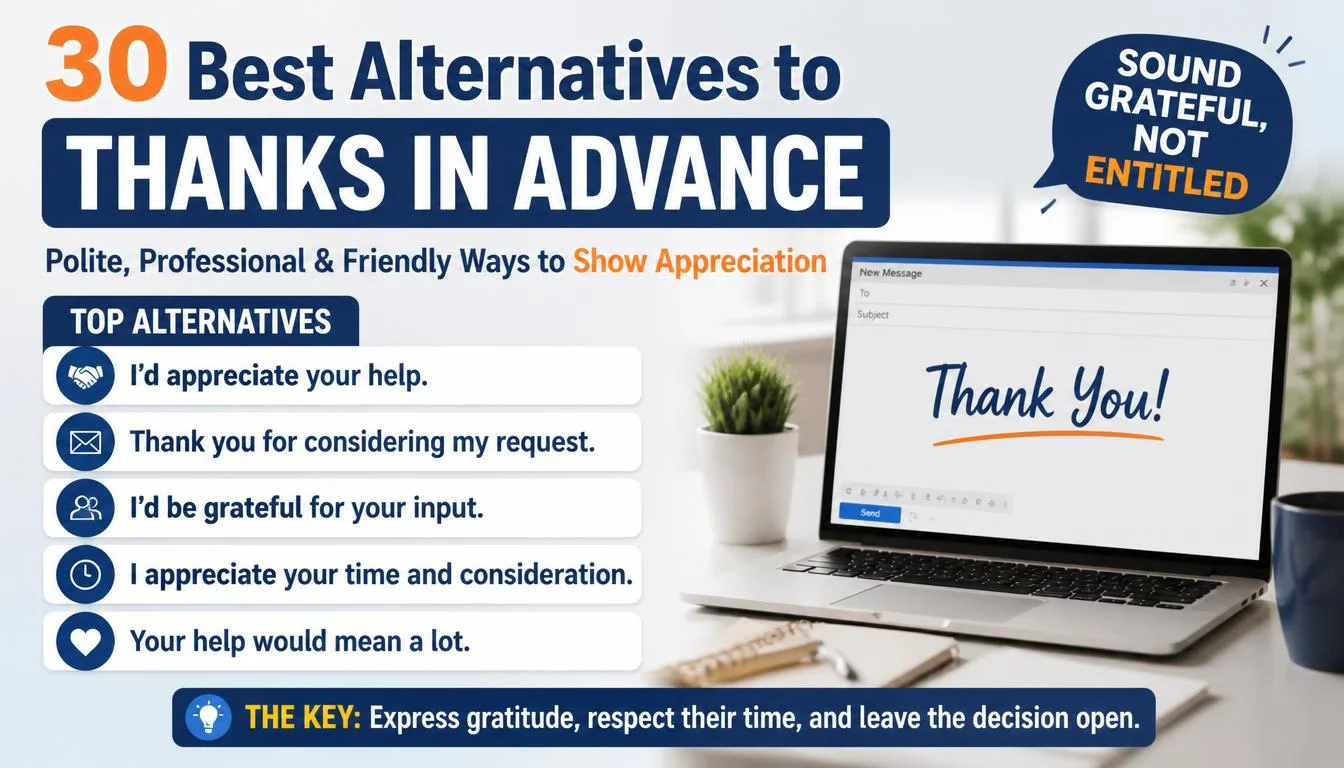
The best alternatives to “thanks in advance” include “I’d appreciate your help,” “Thank you for considering my request,” “I’d be grateful for your input,” and “I appreciate your time and consideration.” These phrases help you express gratitude without making someone feel obligated to help. For professional emails, choose wording that respects the recipient’s time and leaves the decision open. For friends or close colleagues, warmer options like “Your help would mean a lot” or “Thanks for considering it” feel more natural. The key is to match your words to the request and show appreciation without assuming the other person has already agreed.
What Does “Thanks in Advance” Mean?
“Thanks in advance” means expressing gratitude to someone before they complete a requested action or provide assistance. People commonly use this phrase in professional emails, workplace messages, academic requests, and everyday conversations. It shows that you appreciate someone’s time and effort ahead of receiving their help. For example, you might write, “Please review the attached report when you have a moment. Thanks in advance for your feedback.” Although the phrase is widely understood, some readers may interpret it as an expectation rather than a sincere expression of gratitude. Choosing a more thoughtful alternative can make your request sound warmer, more respectful, and more natural.
Is It Professional or Polite to Say “Thanks in Advance”?
Yes, “thanks in advance” is generally professional and polite when you use it in the right context. It works well in routine workplace emails, requests for information, and messages to people with whom you already have a comfortable working relationship. However, the phrase can occasionally sound presumptuous because it thanks someone before they have agreed to help. This may be especially noticeable when you’re contacting a senior manager, a busy client, or someone you don’t know well. Alternatives such as “I appreciate your time and consideration,” “Thank you for considering my request,” and “I’d be grateful for your help” communicate appreciation while leaving the recipient room to decide. The best choice depends on your relationship, the size of your request, and the tone you want to convey.
Advantages and Disadvantages of Saying “Thanks in Advance”
Advantages
- Expresses appreciation: The phrase communicates gratitude before someone spends time or effort helping you.
- Keeps messages concise: It provides a quick, familiar way to end an email or request without adding unnecessary words.
- Encourages a positive tone: When used thoughtfully, it can make a request feel friendly and appreciative.
Disadvantages
- May sound presumptuous: Some readers might feel you expect their help before they have agreed to provide it.
- Can feel impersonal: Because the phrase is so common, it may not fully express genuine appreciation for a specific person’s effort.
- May create unintended pressure: Someone receiving the message might feel obligated to say yes, even when they lack the time or resources.
Synonyms for “Thanks in Advance”
- I Appreciate Your Help
- Thank You for Your Time and Consideration
- I’m Grateful for Your Assistance
- I Appreciate Your Support
- Thank You for Considering My Request
- Your Help Would Mean a Lot
- I’d Be Grateful for Your Help
- Many Thanks for Your Help
- I Appreciate Your Time
- Thank You for Your Attention to This Matter
- I’m Thankful for Your Support
- I Appreciate Your Efforts
- Thank You for Taking the Time
- Your Assistance Is Greatly Appreciated
- I’m Looking Forward to Your Help
- I Appreciate Your Cooperation
- Thanks So Much for Your Help
- I’m Grateful for Your Time
- Thank You for Your Understanding
- I Appreciate You Looking Into This
- I’d Really Appreciate Your Input
- Thank You for Your Consideration
- I’m Thankful for Your Time and Effort
- I Appreciate Your Willingness to Help
- Thanks for Giving This Your Attention
- I’d Be Thankful for Any Assistance
- Your Support Is Much Appreciated
- Thank You for Helping Me Out
- I Appreciate Your Help With This
- Thanks for Considering It
1. I Appreciate Your Help
Meaning
“I appreciate your help” expresses sincere gratitude for someone’s assistance, whether they have already helped you or you are requesting their support.
Definition
A polite expression that communicates recognition and gratitude for another person’s time, effort, or willingness to assist.
Detailed Explanation
This alternative sounds warm, natural, and respectful. Unlike “thanks in advance,” it focuses on the value of someone’s help rather than assuming they will provide it. You can use it in professional emails, team conversations, or personal messages. When making a request, phrase it conditionally or as an expression of appreciation to avoid implying that the recipient has already agreed.
Scenario Example
“Could you review the presentation before Thursday? I appreciate your help with making the final changes.”
Best Use
Use this phrase when asking colleagues, managers, friends, or clients for reasonable assistance.
Tone
Warm, appreciative, professional, and conversational.
2. Thank You for Your Time and Consideration
Meaning
This phrase thanks someone for taking the time to review, think about, or evaluate your request.
Definition
A courteous expression of gratitude that recognizes someone’s time and thoughtful consideration before they make a decision.
Detailed Explanation
“Thank you for your time and consideration” is particularly useful when you need someone to review a proposal, evaluate an opportunity, or consider a formal request. It respects the recipient’s freedom to decide without suggesting that they must agree. The wording sounds more formal than “thanks in advance,” making it suitable for professional correspondence and communication with people you don’t know well.
Scenario Example
“I’ve attached my proposal for your review. Thank you for your time and consideration.”
Best Use
Use it when contacting hiring managers, business partners, professors, clients, or senior colleagues.
Tone
Formal, respectful, polished, and considerate.
3. I’m Grateful for Your Assistance
Meaning
This phrase communicates sincere appreciation for someone’s willingness or effort to help with a task.
Definition
A courteous statement expressing gratitude for another person’s assistance or anticipated support.
Detailed Explanation
“I’m grateful for your assistance” sounds slightly more formal and heartfelt than “I appreciate your help.” It works especially well when someone is helping you solve a problem, complete a project, or manage a complicated task. If you’re asking for help, make the request clear first so your gratitude doesn’t sound like an assumption.
Scenario Example
“Could you help me confirm these figures before the meeting? I’m grateful for your assistance with this report.”
Best Use
Use this expression in business emails, academic requests, formal messages, and conversations involving substantial effort.
Tone
Sincere, professional, appreciative, and respectful.
4. I Appreciate Your Support
Meaning
“I appreciate your support” expresses gratitude for someone’s encouragement, cooperation, or practical help.
Definition
An expression of thanks that recognizes the assistance, encouragement, or backing someone provides.
Detailed Explanation
Support can mean more than completing a specific task. It may involve sharing advice, helping a team meet a deadline, offering encouragement, or standing behind an important decision. This phrase is flexible enough for workplace emails and personal messages. When you use it in a request, explain what kind of support you need to make your message more specific and meaningful.
Scenario Example
“We’re preparing for the product launch next week. I appreciate your support as we work through the final details.”
Best Use
Use it when requesting collaboration, encouragement, resources, or help with a shared goal.
Tone
Warm, encouraging, professional, and appreciative.
5. Thank You for Considering My Request
Meaning
This phrase thanks someone for taking your request seriously and considering whether they can fulfill it.
Definition
A polite expression of gratitude that acknowledges another person’s willingness to evaluate a request without assuming the outcome.
Detailed Explanation
This alternative is especially helpful when you want to remain respectful and avoid putting pressure on the recipient. It acknowledges that the person may need time to think or might not be able to help. That makes it a strong choice for requests involving approval, scheduling, resources, or special accommodations.
Scenario Example
“I’d like to request an extension until Monday to complete the assignment. Thank you for considering my request.”
Best Use
Use it when requesting permission, an extension, a meeting, a favor, or a business decision.
Tone
Courteous, formal, respectful, and non-demanding.
6. Your Help Would Mean a Lot
Meaning
This phrase tells someone that their assistance would be personally valuable to you.
Definition
A warm expression that communicates how much you would value another person’s help.
Detailed Explanation
“Your help would mean a lot” feels more personal than a standard business thank-you. It communicates that the person’s contribution matters to you, not merely that you need a task completed. The conditional word “would” also leaves the recipient room to decide whether they can help. Use it sincerely, particularly when asking someone you trust.
Scenario Example
“Could you look over my application before I submit it? Your help would mean a lot.”
Best Use
Use it when asking a friend, mentor, trusted colleague, or supportive team member for assistance.
Tone
Heartfelt, friendly, sincere, and personal.
7. I’d Be Grateful for Your Help
Meaning
This phrase expresses gratitude for assistance that you are politely requesting.
Definition
A respectful statement that communicates appreciation for help someone may choose to provide.
Detailed Explanation
“I’d be grateful for your help” is an excellent alternative when you want to sound polite without assuming the recipient’s agreement. It works in professional emails because it combines a clear request with a considerate tone. The phrase also sounds natural in academic and personal situations. Add a brief explanation of what you need so the recipient can understand the request quickly.
Scenario Example
“Could you share the updated schedule when you have a chance? I’d be grateful for your help.”
Best Use
Use it for workplace requests, academic correspondence, professional introductions, or assistance from someone with limited time.
Tone
Polite, considerate, professional, and sincere.
8. Many Thanks for Your Help
Meaning
“Many thanks for your help” expresses strong appreciation for assistance.
Definition
A friendly expression of gratitude that emphasizes how much you value someone’s help.
Detailed Explanation
This phrase is a slightly more expressive alternative to “thanks in advance.” It works particularly well in email closings and brief messages. However, when requesting help that hasn’t been agreed upon, you may want to use “I’d appreciate your help” instead. That wording makes your gratitude clear without implying that the person has already committed.
Scenario Example
“Please let me know if you can send the revised document today. Many thanks for your help.”
Best Use
Use it in friendly workplace emails, routine correspondence, and messages to people you know.
Tone
Friendly, appreciative, positive, and professional.
9. I Appreciate Your Time
Meaning
This phrase recognizes that someone’s time is valuable and expresses gratitude for their attention.
Definition
A courteous statement acknowledging the time another person spends reading, reviewing, discussing, or responding to something.
Detailed Explanation
Time is a valuable resource, especially for busy professionals. Saying “I appreciate your time” shows that you recognize the effort involved in reviewing your message or considering your request. It can also make a short email feel more thoughtful. If you need a specific action, mention it before using this phrase so the recipient knows what you’re asking.
Scenario Example
“Would you be available to discuss the proposal this afternoon? I appreciate your time.”
Best Use
Use it when requesting a meeting, feedback, a review, or a brief conversation.
Tone
Respectful, professional, concise, and considerate.
10. Thank You for Your Attention to This Matter
Meaning
This phrase thanks someone for giving a particular issue or request their attention.
Definition
A formal expression of gratitude that acknowledges another person’s attention to an important matter.
Detailed Explanation
This wording is appropriate when your message concerns a specific issue that requires review or action. It appears frequently in formal business communication, administrative correspondence, and requests involving deadlines. However, it may sound stiff in casual conversations. For a warmer tone, try “I appreciate you looking into this” or “Thank you for taking a look.”
Scenario Example
“Please review the attached invoice and let me know if any corrections are needed. Thank you for your attention to this matter.”
Best Use
Use it for formal requests, administrative matters, invoice questions, and business correspondence.
Tone
Formal, direct, respectful, and businesslike.
11. I’m Thankful for Your Support
Meaning
This phrase expresses heartfelt gratitude for someone’s encouragement, help, or continued support.
Definition
A statement that communicates appreciation for the positive assistance or encouragement another person provides.
Detailed Explanation
“I’m thankful for your support” often feels more personal than a standard business closing. It can acknowledge someone’s ongoing contribution to a project or their encouragement during a challenging period. If you use it before receiving assistance, make the request clear and avoid suggesting that the person has already agreed.
Scenario Example
“We’re working toward the final deadline, and I’m glad to have your input. I’m thankful for your support.”
Best Use
Use it with supportive colleagues, mentors, friends, or people who have contributed to an ongoing effort.
Tone
Warm, heartfelt, appreciative, and encouraging.
12. I Appreciate Your Efforts
Meaning
This phrase recognizes the work, energy, or commitment someone puts into a task.
Definition
An expression of gratitude that acknowledges another person’s effort toward a particular goal.
Detailed Explanation
Sometimes the most meaningful way to express appreciation is to recognize the effort involved, not just the final result. This phrase is helpful when someone must research a problem, coordinate with others, or complete a demanding assignment. It sounds more specific when you explain which efforts you value. When requesting future work, consider saying “I’d appreciate your efforts in helping us complete this” to make the request clearer.
Scenario Example
“Could you help coordinate the final revisions with the design team? I appreciate your efforts in keeping everything organized.”
Best Use
Use it when acknowledging detailed work, team contributions, or tasks that require extra time and energy.
Tone
Professional, respectful, encouraging, and appreciative.
13. Thank You for Taking the Time
Meaning
This phrase thanks someone for setting aside time to help, listen, review, or respond.
Definition
A polite expression of gratitude for the time someone dedicates to a request or activity.
Detailed Explanation
“Thank you for taking the time” is a versatile phrase that sounds thoughtful without becoming overly formal. It works well when asking someone to read a document, explain a process, or provide feedback. To avoid implying that the person has already completed the task, you can say, “Thank you for considering taking the time to review this.” Choose the shorter version when someone has already helped you.
Scenario Example
“Would you mind reviewing my draft before Friday? Thank you for taking the time to consider it.”
Best Use
Use it when requesting feedback, arranging a meeting, or asking someone to review important information.
Tone
Thoughtful, polite, appreciative, and professional.
14. Your Assistance Is Greatly Appreciated
Meaning
This phrase communicates that someone’s assistance is highly valued.
Definition
A formal expression that emphasizes appreciation for help or support.
Detailed Explanation
“Your assistance is greatly appreciated” is a useful option when communicating with clients, business partners, or larger teams. It sounds polished and works well in formal emails. However, the passive construction can feel impersonal in a friendly conversation. If you want a more direct and personal tone, try “I really appreciate your help.”
Scenario Example
“Please send the corrected figures when they’re available. Your assistance is greatly appreciated.”
Best Use
Use it in formal workplace emails, customer service messages, and professional requests.
Tone
Formal, polished, respectful, and appreciative.
15. I’m Looking Forward to Your Help
Meaning
This phrase expresses anticipation about receiving someone’s assistance.
Definition
A statement indicating that you expect or hope to receive help in the future.
Detailed Explanation
This expression can work when a person has already agreed to help or when collaboration is an established part of your relationship. However, it can sound presumptuous if you use it before the recipient has agreed. When you’re making a new request, “I’d appreciate your help” is generally more considerate. Use this alternative when cooperation is already expected or mutually understood.
Scenario Example
“As discussed, we’ll work together on the presentation next week. I’m looking forward to your help with the final review.”
Best Use
Use it when coordinating agreed-upon work, shared projects, or ongoing collaboration.
Tone
Positive, anticipatory, collaborative, and professional.
See More: 30 Other Ways to Say ‘Thinking of You’ with Examples
16. I Appreciate Your Cooperation
Meaning
This phrase expresses gratitude for someone’s willingness to work with you or follow an agreed process.
Definition
A professional expression of appreciation for another person’s cooperation or participation.
Detailed Explanation
“I appreciate your cooperation” is common in workplace communication, administrative requests, and situations involving shared responsibilities. It can be effective when several people need to coordinate their efforts. However, it may sound demanding if used to close a request that someone has not agreed to fulfill. For a softer approach, explain the reason for your request and invite questions.
Scenario Example
“Please submit your updated availability by Wednesday so we can finalize the schedule. I appreciate your cooperation.”
Best Use
Use it when coordinating schedules, gathering information, or communicating shared workplace expectations.
Tone
Professional, direct, formal, and cooperative.
17. Thanks So Much for Your Help
Meaning
This phrase expresses enthusiastic gratitude for someone’s assistance.
Definition
An informal, warm expression of appreciation that emphasizes how much you value someone’s help.
Detailed Explanation
“Thanks so much for your help” sounds friendly and natural. It’s especially effective when you already have a comfortable relationship with the recipient. In some contexts, it can also work before a request, but “Thanks so much for considering it” is more appropriate when the person hasn’t agreed. Choose your wording based on whether you’re acknowledging completed help or asking for future assistance.
Scenario Example
“Could you send me the meeting notes when you get a chance? Thanks so much for your help!”
Best Use
Use it with teammates, familiar clients, friends, or colleagues who communicate casually.
Tone
Friendly, warm, enthusiastic, and conversational.
18. I’m Grateful for Your Time
Meaning
This phrase communicates appreciation for the time someone spends considering or assisting with your request.
Definition
A thoughtful expression of gratitude that recognizes the value of another person’s time.
Detailed Explanation
“I’m grateful for your time” sounds sincere and slightly more personal than “I appreciate your time.” It works particularly well when someone has a busy schedule or when your request requires careful attention. In a formal message, it can communicate respect without adding unnecessary words. For a new request, consider pairing it with “Thank you for considering my request” to avoid implying that help is guaranteed.
Scenario Example
“Would you be willing to discuss my project proposal next week? I’m grateful for your time and consideration.”
Best Use
Use it when contacting managers, mentors, interviewers, clients, or busy professionals.
Tone
Sincere, thoughtful, respectful, and professional.
19. Thank You for Your Understanding
Meaning
This phrase expresses gratitude for someone’s patience, flexibility, or willingness to understand a situation.
Definition
A courteous statement recognizing another person’s understanding of a request, explanation, change, or difficulty.
Detailed Explanation
“Thank you for your understanding” is useful when you need to explain a delay, request flexibility, or communicate a change in plans. However, it can sound as though you’ve already decided how the recipient should respond. When the situation is uncertain, “I appreciate your consideration” leaves more room for their perspective. Use this phrase when understanding or flexibility is reasonably expected within the relationship.
Scenario Example
“I may need until Tuesday to finish the report because I’m waiting for the final figures. Thank you for your understanding.”
Best Use
Use it when discussing delays, scheduling changes, workplace adjustments, or unexpected circumstances.
Tone
Polite, reassuring, considerate, and professional.
20. I Appreciate You Looking Into This
Meaning
This phrase thanks someone for investigating an issue or checking information on your behalf.
Definition
A direct expression of appreciation for another person’s effort to examine or resolve a particular matter.
Detailed Explanation
This alternative feels natural because it identifies the action you’re asking someone to take. It’s useful when you need a colleague to check a report, investigate an error, or follow up on a problem. The wording recognizes their effort without sounding overly formal. If they haven’t agreed to investigate the issue, you can soften the request by asking, “Could you look into this when you have a chance?”
Scenario Example
“The figures in the spreadsheet don’t match the latest report. I appreciate you looking into this and helping us identify the issue.”
Best Use
Use it for troubleshooting, customer service requests, research, and workplace follow-ups.
Tone
Professional, natural, appreciative, and collaborative.
21. I’d Really Appreciate Your Input
Meaning
This phrase expresses gratitude for someone’s opinions, suggestions, or feedback.
Definition
A polite statement indicating that another person’s ideas or perspective would be valuable.
Detailed Explanation
“I’d really appreciate your input” works especially well when you want feedback rather than someone to complete a task for you. It acknowledges the recipient’s knowledge and experience. The word “really” adds warmth without making the message overly emotional. This phrase is often more effective than “thanks in advance” because it clearly explains what kind of help you need.
Scenario Example
“I’m deciding between two approaches for the project. I’d really appreciate your input before I finalize the plan.”
Best Use
Use it when asking for opinions, reviewing ideas, brainstorming, or seeking professional advice.
Tone
Collaborative, respectful, warm, and professional.
22. Thank You for Your Consideration
Meaning
This phrase thanks someone for thoughtfully reviewing a request or possibility.
Definition
A formal expression of gratitude for the attention and judgment someone gives to a request or proposal.
Detailed Explanation
“Thank you for your consideration” is particularly useful when the recipient must make a decision. It communicates respect without suggesting that the person owes you a favorable answer. You’ll often see it in applications, business proposals, formal requests, and professional correspondence. For a warmer tone, add a brief sentence explaining why you value their time or judgment.
Scenario Example
“I’d welcome the opportunity to join the project team. Thank you for your consideration.”
Best Use
Use it when requesting an opportunity, approval, a partnership, or a formal decision.
Tone
Formal, courteous, professional, and respectful.
23. I’m Thankful for Your Time and Effort
Meaning
This phrase expresses gratitude for both the time someone spends and the work they contribute.
Definition
A sincere expression of appreciation that recognizes the time and effort involved in helping with a task.
Detailed Explanation
This alternative works when you want to recognize that a request involves more than a quick response. It acknowledges the attention, energy, and commitment required to complete the work. The phrase sounds especially thoughtful when you mention the specific contribution you value. If you’re asking for help, make sure the wording leaves the recipient free to decline.
Scenario Example
“Would you be able to review the proposal and flag any issues? I’m thankful for your time and effort in helping us prepare.”
Best Use
Use it for detailed reviews, project assistance, research, and tasks that require meaningful effort.
Tone
Sincere, appreciative, thoughtful, and professional.
24. I Appreciate Your Willingness to Help
Meaning
This phrase recognizes someone’s readiness or openness to provide assistance.
Definition
An expression of gratitude for another person’s willingness to offer help or support.
Detailed Explanation
“I appreciate your willingness to help” is especially useful when someone has offered assistance but hasn’t completed the task yet. It acknowledges their generosity without focusing only on the final result. If the person hasn’t offered help, use a question first to avoid making assumptions. This phrase is a thoughtful option when building positive working relationships.
Scenario Example
“Would you be available to help me prepare for the client meeting? I appreciate your willingness to help.”
Best Use
Use it when someone volunteers support, offers guidance, or is considering helping with a project.
Tone
Warm, respectful, appreciative, and encouraging.
25. Thanks for Giving This Your Attention
Meaning
This phrase thanks someone for focusing on a particular request, issue, or task.
Definition
A polite expression of appreciation for another person’s attention to something that needs review or action.
Detailed Explanation
This wording is useful when you want to draw attention to a matter without sounding overly formal. It can work well in emails about reports, scheduling, project updates, or minor problems. However, it may sound slightly directive if the recipient hasn’t agreed to review the issue. You can make it softer by asking them to take a look when their schedule allows.
Scenario Example
“Could you review the updated guidelines before our next meeting? Thanks for giving this your attention.”
Best Use
Use it for routine business requests, team communications, and follow-ups that need someone’s attention.
Tone
Professional, concise, appreciative, and direct.
26. I’d Be Thankful for Any Assistance
Meaning
This phrase communicates gratitude for whatever help someone may be able to offer.
Definition
A polite expression indicating that any available assistance would be appreciated.
Detailed Explanation
“I’d be thankful for any assistance” is helpful when you aren’t sure what kind of support the recipient can provide. It leaves room for different solutions rather than demanding one specific outcome. This wording works well when asking for information, guidance, or help with an unfamiliar process. To make the request easier to answer, explain what you’ve already tried and identify the areas where support would help most.
Scenario Example
“I’m trying to locate the correct application form. I’d be thankful for any assistance you can provide.”
Best Use
Use it when requesting guidance, resources, information, or help from someone unfamiliar with your situation.
Tone
Humble, polite, flexible, and appreciative.
27. Your Support Is Much Appreciated
Meaning
This phrase expresses gratitude for the support someone provides or may provide.
Definition
A courteous statement acknowledging the value of another person’s assistance, encouragement, or cooperation.
Detailed Explanation
“Your support is much appreciated” is a polished alternative suitable for professional emails and group messages. It works particularly well when acknowledging the contribution of several people. Although the phrase is positive, it can sound generic if you don’t explain what the support involves. Mentioning a specific contribution makes your gratitude feel more genuine and personal.
Scenario Example
“We’re finalizing the event schedule this week. Your support is much appreciated as we coordinate the remaining details.”
Best Use
Use it in team updates, business correspondence, project communications, and messages to collaborators.
Tone
Professional, appreciative, polished, and encouraging.
28. Thank You for Helping Me Out
Meaning
This phrase expresses gratitude when someone assists you with a task, problem, or favor.
Definition
An informal expression of appreciation for practical assistance or a favor.
Detailed Explanation
“Thank you for helping me out” sounds relaxed and friendly. It’s a natural choice when someone helps you solve a problem, explains something confusing, or takes a small task off your hands. In a request, however, it may sound as though the person has already agreed to help. To avoid that implication, ask the question first and use “I’d really appreciate it if you could help me out.”
Scenario Example
“Could you cover the first 15 minutes of the meeting while I finish another call? Thanks for helping me out!”
Best Use
Use it with friends, teammates, familiar coworkers, and people you communicate with casually.
Tone
Casual, friendly, warm, and grateful.
29. I Appreciate Your Help With This
Meaning
This phrase expresses gratitude for someone’s assistance with a specific task or situation.
Definition
A direct expression of appreciation that connects someone’s help to a particular matter.
Detailed Explanation
“I appreciate your help with this” is a practical alternative because it’s short, clear, and easy to adapt. It works in many professional settings, especially when the surrounding message already explains the task. If the person hasn’t agreed to help, you can phrase it as “I’d appreciate your help with this” to make the request less presumptive. That small change can make your email sound more considerate.
Scenario Example
“Could you double-check the client details before I send the contract? I’d appreciate your help with this.”
Best Use
Use it in workplace emails, project requests, routine follow-ups, and messages to colleagues.
Tone
Clear, professional, natural, and appreciative.
30. Thanks for Considering It
Meaning
This phrase thanks someone for thinking about your request or deciding whether they can help.
Definition
A concise expression of gratitude that recognizes someone’s willingness to consider a suggestion, favor, or opportunity.
Detailed Explanation
“Thanks for considering it” is a friendly, flexible way to close a request without implying that the recipient must agree. It’s especially helpful when you’re asking for a favor or proposing an idea that may not be practical for the other person. Because it leaves the decision open, it can feel more considerate than “thanks in advance.” For formal communication, use “Thank you for considering my request.”
Scenario Example
“Would you be interested in joining our team for the upcoming presentation? Thanks for considering it!”
Best Use
Use it when asking for a favor, proposing an idea, inviting participation, or requesting a decision.
Tone
Friendly, considerate, concise, and respectful.
Frequently Asked Questions
1. What does “thanks in advance” mean?
“Thanks in advance” means expressing gratitude before someone completes a requested task or provides assistance.
2. Is “thanks in advance” professional?
Yes, it’s generally professional and polite in routine emails. However, it may sound presumptuous if the recipient hasn’t agreed to help.
3. What is the best alternative to “thanks in advance”?
“I’d appreciate your help” is a versatile alternative because it sounds polite, natural, and respectful.
4. How can I say “thanks in advance” in a formal email?
Use “Thank you for your time and consideration” or “Thank you for considering my request” for formal correspondence.
5. Is “thanks in advance” rude?
Not necessarily. However, it can sound demanding when your wording implies that someone must fulfill your request.
6. How do I thank someone before they help me?
You can say “I’d be grateful for your help” or “I appreciate your consideration.” Both express appreciation without assuming agreement.
7. What can I say instead of “thanks in advance” to my boss?
Try “I’d appreciate your guidance” or “Thank you for considering my request.” These phrases maintain a respectful, professional tone.
8. Can I use “thanks in advance” with clients?
Yes, but consider your relationship with the client and the size of your request. “I appreciate your time and consideration” may sound more courteous.
9. What is a friendly alternative to “thanks in advance”?
“Thanks so much for considering it” is a warm, conversational option for friends and colleagues.
10. When should I avoid saying “thanks in advance”?
Avoid it when making a significant request, contacting someone unfamiliar, or asking for help that requires considerable time or effort. Choose wording that leaves the recipient free to decline.
Conclusion
Choosing the right alternative to “thanks in advance” can make your emails sound more natural, polite, and professional. Phrases such as “I’d appreciate your help,” “Thank you for considering my request,” and “I appreciate your time and consideration” express gratitude without creating unnecessary pressure. Before sending a message, consider your audience, the size of your request, and the tone you want to convey. A little thoughtful wording can strengthen professional relationships and make your appreciation feel genuine.