
Explore 30 Other Ways to Say ‘See You Later’ to discover friendly, natural, and polite farewell phrases for everyday conversations, professional messages, and future meetings.
See you later is a common way to say goodbye when you expect to meet again or talk again. In daily life, people use different farewell expressions depending on the situation, relationship, and level of formality.
Phrases such as see you soon, catch you later, talk to you later, and take care work well in casual conversations, friendly chats, and text messages. These natural expressions help you sound warm without making a goodbye feel too final.
For formal situations, work settings, and professional communication, choose polite farewell phrases that match the context, tone, and relationship. Expressions used in spoken English, written English, and everyday communication can have different meanings depending on how you use them.
Learning these English phrases improves your communication skills and helps you maintain positive relationships in social interactions and the workplace. The right goodbye expression makes it easier to end a conversation respectfully while leaving room for future contact.
Quick Answer
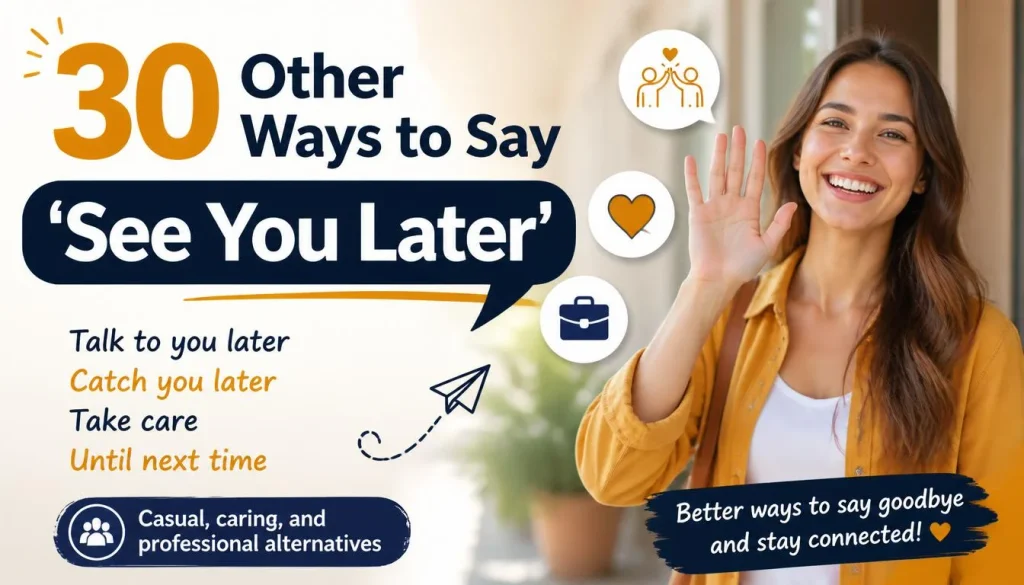
You can say “talk to you later,” “catch you later,” “see you soon,” “take care,” “until next time,” “talk soon,” “keep in touch,” or “goodbye for now.” Choose a casual alternative for friends, a caring expression for loved ones, or a professional farewell for workplace conversations.
What Does “See You Later” Mean?
“See you later” is a casual, friendly expression people use when saying goodbye to someone they expect to see again. It suggests that the conversation or meeting is ending for now, but the connection continues. You can use it in person, over the phone, or in text messages. Depending on your relationship and tone, it can sound relaxed, affectionate, cheerful, or professional. Although it often suggests a future meeting, it doesn’t always mean you’ll see the person later that same day.
Is It Professional or Polite to Say “See You Later”?
Yes, “see you later” is polite and generally appropriate in casual and many professional situations. It’s a natural choice when speaking with coworkers, classmates, clients you know well, or friends. However, the phrase may sound too informal when addressing senior executives, unfamiliar clients, or people in formal business settings. In those situations, alternatives such as “I look forward to seeing you again” or “Have a great rest of your day” may sound more polished. The best choice depends on your relationship, the situation, and the impression you want to leave.
Advantages of Saying “See You Later”
1. It Sounds Friendly and Natural
The phrase feels relaxed and approachable. It helps you end everyday conversations without sounding stiff or overly formal.
2. It Suggests Future Connection
Unlike a final-sounding goodbye, “see you later” implies that you’ll reconnect. This makes it useful when leaving friends, colleagues, or loved ones.
3. It Works in Many Situations
You can use it in face-to-face conversations, phone calls, workplace chats, and text messages. Its flexibility makes it an easy expression to remember.
Disadvantages of Saying “See You Later”
1. It Can Sound Too Casual
In formal meetings, business emails, or conversations with unfamiliar people, the phrase may not communicate the level of professionalism you want.
2. It Can Feel Repetitive
Using the same goodbye every time may make your messages feel routine. A thoughtful alternative can add warmth and personality.
3. It May Suggest an Uncertain Plan
Someone might interpret “later” as a promise to meet again soon. If you don’t have specific plans, a more neutral goodbye may prevent confusion.
Synonyms for “See You Later”
- Talk to You Later
- Catch You Later
- See You Soon
- Until Next Time
- Take Care
- Have a Good One
- Have a Great Day
- Talk Soon
- See You Around
- Until We Meet Again
- Have a Good Rest of Your Day
- Looking Forward to Seeing You Again
- Speak to You Soon
- I’ll Be in Touch
- Keep in Touch
- Have a Wonderful Evening
- Take It Easy
- See You Next Time
- Until We Talk Again
- Have a Safe Trip
- Stay Well
- Wishing You a Great Day Ahead
- I’ll Catch Up With You Later
- See You in a Bit
- Have a Lovely Day
- Until Later
- I’ll Talk to You Again Soon
- Take Good Care of Yourself
- Looking Forward to Catching Up
- Goodbye for Now
1. Talk to You Later
Meaning: A friendly way to end a conversation while suggesting you’ll speak again.
Definition: “Talk to you later” is an informal farewell that emphasizes a future conversation rather than an in-person meeting.
Detailed Explanation: This phrase works especially well in text messages, phone calls, and casual conversations. It’s a natural choice when you expect to reconnect but haven’t decided exactly when. It sounds relaxed without being dismissive.
Scenario Example: You’ve finished chatting with a friend about weekend plans and need to get back to work.
Example: “I’ve got to finish this assignment now. Talk to you later!”
Best Use: Use it with friends, family members, classmates, and familiar coworkers.
Tone: Friendly, casual, and conversational.
2. Catch You Later
Meaning: A relaxed way of saying goodbye to someone you’ll probably see or speak with again.
Definition: “Catch you later” is an informal expression that communicates a temporary farewell.
Detailed Explanation: This phrase sounds playful and easygoing. It’s especially common among friends and people who share a comfortable relationship. Because it’s informal, it may not suit a formal business email or a conversation with an unfamiliar client.
Scenario Example: You’re leaving the office after talking with a coworker about a project you’ll continue tomorrow.
Example: “Thanks for your help with the presentation. Catch you later!”
Best Use: Use it with friends, teammates, and coworkers you know well.
Tone: Casual, upbeat, and friendly.
3. See You Soon
Meaning: A warm goodbye that suggests you’ll meet again before too long.
Definition: “See you soon” expresses an expectation or hope of seeing someone again in the near future.
Detailed Explanation: This alternative feels slightly warmer than “see you later” because it emphasizes the next meeting. You can use it when plans are already arranged or when you genuinely hope to see someone soon. However, it shouldn’t imply a definite date if no plans exist.
Scenario Example: Your friend is leaving after spending the afternoon at your house.
Example: “I had such a great time today. See you soon!”
Best Use: Use it with friends, relatives, partners, and acquaintances you expect to meet again.
Tone: Warm, optimistic, and affectionate.
4. Until Next Time
Meaning: A thoughtful way to say goodbye until another meeting or conversation.
Definition: “Until next time” is a farewell that acknowledges a future opportunity to reconnect.
Detailed Explanation: This expression sounds a little more reflective than everyday goodbyes. It works well when ending a meaningful conversation, wrapping up an event, or leaving a group gathering. It doesn’t require you to know exactly when you’ll meet again.
Scenario Example: You’re leaving a book club after an enjoyable discussion with other members.
Example: “I loved hearing everyone’s thoughts today. Until next time!”
Best Use: Use it at social gatherings, community events, recurring meetings, and friendly conversations.
Tone: Warm, thoughtful, and slightly sentimental.
5. Take Care
Meaning: A kind goodbye that expresses concern for someone’s well-being.
Definition: “Take care” is a common farewell that encourages someone to look after themselves.
Detailed Explanation: This phrase can communicate genuine affection without becoming overly emotional. It’s useful when someone is going through a difficult period, leaving after a visit, or ending a conversation with someone important to them. It also works in professional settings when delivered naturally.
Scenario Example: Your friend has had a stressful week, and you’re ending your conversation before they head home.
Example: “I hope things get easier this week. Take care of yourself!”
Best Use: Use it with friends, family members, colleagues, and people you want to treat kindly.
Tone: Caring, gentle, and sincere.
6. Have a Good One
Meaning: A casual way to wish someone a pleasant day or enjoyable time.
Definition: “Have a good one” is an informal farewell that usually means “have a good day” or “have a good rest of your day.”
Detailed Explanation: This phrase is short, flexible, and easy to use in everyday interactions. It works when leaving a store, ending a quick chat, or saying goodbye to a coworker. Because it doesn’t specify a particular time, it fits many situations.
Scenario Example: You’re leaving the office kitchen after a quick conversation with a teammate.
Example: “Thanks for sharing those notes. Have a good one!”
Best Use: Use it in casual conversations, friendly workplace exchanges, and everyday interactions.
Tone: Relaxed, cheerful, and informal.
7. Have a Great Day
Meaning: A positive goodbye that wishes someone a pleasant and successful day.
Definition: “Have a great day” is a polite expression used to end conversations on an encouraging note.
Detailed Explanation: This alternative feels welcoming and considerate without suggesting a specific future meeting. It works particularly well in customer service, professional emails, and conversations with acquaintances. Adding the person’s name or a personal detail can make the message feel even more genuine.
Scenario Example: You’ve finished helping a customer and want to end the interaction pleasantly.
Example: “I’m glad we could sort everything out. Have a great day!”
Best Use: Use it with customers, coworkers, neighbors, acquaintances, and friends.
Tone: Positive, polite, and professional-friendly.
8. Talk Soon
Meaning: A brief farewell that suggests you’ll communicate again soon.
Definition: “Talk soon” is an informal expression that indicates an intention or hope to speak again in the near future.
Detailed Explanation: This phrase is especially useful for texts, emails, and phone conversations. It sounds natural when you regularly communicate with someone but don’t need to arrange another conversation immediately. If you want to sound warmer, add a sentence expressing appreciation.
Scenario Example: You’re finishing a phone call with a friend who lives in another city.
Example: “It was lovely catching up with you. Talk soon!”
Best Use: Use it in friendly messages, casual work chats, and conversations with people you regularly contact.
Tone: Friendly, relaxed, and approachable.
9. See You Around
Meaning: A casual goodbye suggesting you may meet again sometime.
Definition: “See you around” is an informal farewell used when you expect to encounter someone again without making specific plans.
Detailed Explanation: This phrase suits people who share a workplace, school, neighborhood, or social circle. It feels less definite than “see you soon,” making it useful when another meeting isn’t scheduled. However, it can sound distant if you’re saying goodbye to someone close.
Scenario Example: You finish talking with a classmate outside the classroom before heading to another lecture.
Example: “Thanks for explaining the homework. See you around!”
Best Use: Use it with classmates, neighbors, acquaintances, and familiar coworkers.
Tone: Casual, easygoing, and neutral.
10. Until We Meet Again
Meaning: A heartfelt farewell that expresses hope for another meeting.
Definition: “Until we meet again” is a more expressive way to say goodbye while acknowledging a future reunion.
Detailed Explanation: This phrase feels more emotional and memorable than an ordinary farewell. It works when someone is moving away, traveling for a long time, or leaving after a meaningful visit. In everyday conversations, it may sound overly dramatic, so reserve it for moments that deserve extra sentiment.
Scenario Example: Your close friend is moving to another country, and you’re saying goodbye at the airport.
Example: “Distance won’t change our friendship. Until we meet again!”
Best Use: Use it for meaningful departures, long-distance goodbyes, and heartfelt messages.
Tone: Sentimental, affectionate, and reflective.
11. Have a Good Rest of Your Day
Meaning: A considerate way to wish someone well for the remaining hours of their day.
Definition: This expression is a polite farewell that acknowledges the day is already underway.
Detailed Explanation: It’s especially appropriate when ending a conversation in the afternoon or after completing a work-related interaction. Unlike “see you later,” it doesn’t suggest another meeting. It focuses instead on leaving the other person with a positive wish.
Scenario Example: You’ve finished a short meeting with a client shortly after lunch.
Example: “Thank you for your time today. Have a good rest of your day!”
Best Use: Use it in professional emails, customer interactions, meetings, and polite everyday conversations.
Tone: Courteous, thoughtful, and professional.
12. Looking Forward to Seeing You Again
Meaning: A warm expression that communicates genuine excitement about another meeting.
Definition: This phrase expresses anticipation of seeing someone again in the future.
Detailed Explanation: It feels more personal than a routine goodbye because it directly communicates that the next meeting matters to you. You can use it after an enjoyable visit, a successful business meeting, or a conversation with someone you value. It’s most effective when you genuinely want to meet again.
Scenario Example: You’ve met a potential business partner and want to end the meeting on a positive note.
Example: “I enjoyed discussing our ideas today. I’m looking forward to seeing you again.”
Best Use: Use it with friends, professional contacts, clients, and people you hope to meet again.
Tone: Warm, sincere, and professionally polished.
13. Speak to You Soon
Meaning: A polite farewell suggesting you’ll have another conversation soon.
Definition: “Speak to you soon” is an expression used to end a conversation while anticipating future communication.
Detailed Explanation: This alternative is particularly useful in workplaces and business correspondence. It sounds slightly more polished than “talk soon” while remaining approachable. You can use it after a phone call, online meeting, or professional message when further communication is expected.
Scenario Example: You’ve finished a planning call with a colleague about an upcoming deadline.
Example: “Thanks for walking me through the next steps. Speak to you soon.”
Best Use: Use it with coworkers, clients, collaborators, and professional acquaintances.
Tone: Polite, friendly, and professional.
14. I’ll Be in Touch
Meaning: A way to reassure someone that you’ll contact them again.
Definition: “I’ll be in touch” communicates an intention to reconnect through a future message, call, or other form of communication.
Detailed Explanation: This expression is useful when you need to follow up with someone rather than arrange an immediate meeting. It sounds confident and professional, particularly after interviews, business discussions, and project updates. Because it suggests that you’ll initiate contact, use it only when you intend to follow through.
Scenario Example: You’ve interviewed a freelancer and need time to review their proposal.
Example: “Thank you for sharing your portfolio. I’ll be in touch once we’ve reviewed everything.”
Best Use: Use it for professional follow-ups, business conversations, project discussions, and planned updates.
Tone: Professional, reassuring, and direct.
15. Keep in Touch
Meaning: A friendly request or suggestion to maintain communication.
Definition: “Keep in touch” encourages two people to stay connected after parting ways.
Detailed Explanation: This phrase is especially meaningful when someone is moving, changing jobs, graduating, or leaving a shared environment. It communicates that you value the relationship beyond your current circumstances. To make it more personal, suggest a specific way to stay connected.
Scenario Example: Your classmate is graduating, and you want to maintain your friendship after college.
Example: “It’s been great studying together. Let’s keep in touch after graduation!”
Best Use: Use it with friends, former coworkers, classmates, and people you want to remain connected with.
Tone: Warm, encouraging, and friendly.
See More: 30 Other Ways to Say ‘Thanks in Advance’ with Examples
16. Have a Wonderful Evening
Meaning: A pleasant goodbye that wishes someone an enjoyable evening.
Definition: This expression is a time-specific farewell used later in the day.
Detailed Explanation: It feels more thoughtful than a generic goodbye because it acknowledges the time of day. You can use it after dinner, at the end of a work shift, or when closing a conversation with a client. It doesn’t promise another meeting, which makes it suitable for both personal and professional settings.
Scenario Example: You’re leaving a restaurant after dinner with friends.
Example: “Thank you for such a lovely evening. Have a wonderful evening!”
Best Use: Use it during evening departures, after social events, and in polite customer interactions.
Tone: Courteous, warm, and gracious.
17. Take It Easy
Meaning: A relaxed goodbye that encourages someone to rest or avoid unnecessary stress.
Definition: “Take it easy” is an informal expression used to wish someone a calm, comfortable time.
Detailed Explanation: This phrase is especially fitting when someone has been working hard, feeling tired, or dealing with a busy schedule. It can express care without making the conversation overly serious. However, it may sound too casual in formal business situations.
Scenario Example: Your friend has been studying for exams all week and finally decides to take a break.
Example: “You’ve worked hard enough today. Take it easy tonight!”
Best Use: Use it with friends, family members, and coworkers you know well.
Tone: Relaxed, supportive, and caring.
18. See You Next Time
Meaning: A friendly farewell that refers to the next expected meeting or event.
Definition: “See you next time” communicates that you’ll likely meet again during another scheduled or recurring occasion.
Detailed Explanation: This expression works particularly well when you regularly attend the same class, meeting, club, or activity. It feels natural because the next encounter is connected to an existing routine. If the next meeting isn’t certain, it can still express a friendly hope of reconnecting.
Scenario Example: You’re leaving your weekly language class after practicing with other students.
Example: “Great practice today, everyone. See you next time!”
Best Use: Use it after classes, recurring meetings, club activities, and regular social gatherings.
Tone: Friendly, upbeat, and familiar.
19. Until We Talk Again
Meaning: A thoughtful goodbye that expresses the hope of another conversation.
Definition: “Until we talk again” is a farewell that emphasizes future communication rather than necessarily meeting in person.
Detailed Explanation: This phrase can be useful when someone lives far away or when you mainly communicate online. It sounds more reflective than “talk soon” and can add emotional warmth to a written message. It may feel formal or sentimental in a quick everyday exchange.
Scenario Example: You’re ending a heartfelt conversation with a friend who lives overseas.
Example: “Thank you for always listening, even from miles away. Until we talk again.”
Best Use: Use it in thoughtful messages, long-distance friendships, and meaningful conversations.
Tone: Reflective, affectionate, and sincere.
20. Have a Safe Trip
Meaning: A caring farewell that wishes someone a safe and comfortable journey.
Definition: “Have a safe trip” is an expression used when someone is about to travel from one place to another.
Detailed Explanation: This alternative adds a practical note of care to your goodbye. It’s appropriate when a friend is heading home, a relative is taking a vacation, or a coworker is traveling for business. You can make it warmer by mentioning their destination or asking them to let you know when they arrive.
Scenario Example: Your sister is leaving for a weekend trip and has a long drive ahead.
Example: “Enjoy your weekend away, and have a safe trip! Let me know when you arrive.”
Best Use: Use it before road trips, flights, vacations, business travel, and other journeys.
Tone: Caring, thoughtful, and reassuring.
21. Stay Well
Meaning: A gentle goodbye that expresses a wish for someone’s continued well-being.
Definition: “Stay well” is a farewell that encourages someone to remain healthy and feel well.
Detailed Explanation: This expression feels calm and sincere, particularly when you haven’t spoken to someone for a while or expect a long gap before reconnecting. It can also suit written messages to people who are going through a difficult time. In very casual conversations, it may sound slightly formal.
Scenario Example: You’re ending a message to a former coworker you haven’t seen in several months.
Example: “It was wonderful hearing your news. Stay well, and I hope we catch up again soon.”
Best Use: Use it in thoughtful messages, occasional correspondence, and conversations where well-being matters.
Tone: Gentle, considerate, and sincere.
22. Wishing You a Great Day Ahead
Meaning: A positive farewell that expresses hope for someone’s upcoming day.
Definition: This phrase offers a friendly wish for a pleasant and productive day.
Detailed Explanation: It works well when ending a morning conversation, sending a professional email, or responding to someone who has shared good news. It emphasizes the other person’s experience rather than your next meeting. Although it’s polite, a shorter phrase may sound more natural in quick, informal chats.
Scenario Example: You’ve answered a client’s questions and are closing your email.
Example: “I’ve attached the updated documents for your review. Wishing you a great day ahead!”
Best Use: Use it in professional emails, customer service, morning messages, and polite conversations.
Tone: Positive, thoughtful, and professional.
23. I’ll Catch Up With You Later
Meaning: A casual way to say you’ll reconnect for another conversation later.
Definition: This phrase communicates an intention to speak with someone again after a short break or at a more convenient time.
Detailed Explanation: It’s useful when you’re busy but don’t want the other person to feel ignored. You can use it when you need to return to work, finish an errand, or postpone a longer conversation. If you have a specific time in mind, mentioning it helps set clear expectations.
Scenario Example: Your friend calls while you’re preparing dinner, and you can’t talk for long.
Example: “I’m in the middle of cooking right now. I’ll catch up with you later tonight!”
Best Use: Use it with friends, family members, and familiar coworkers when you need to reconnect.
Tone: Casual, friendly, and practical.
24. See You in a Bit
Meaning: An informal goodbye that suggests you’ll see someone again shortly.
Definition: “See you in a bit” is a casual expression used when the next meeting is expected relatively soon.
Detailed Explanation: This phrase is best when you have a clear reason to expect another encounter shortly afterward. For example, you might leave a room temporarily, step out during a gathering, or go on a short errand. Since “a bit” is vague, avoid it when someone needs an exact time.
Scenario Example: You’re stepping out of the office to grab coffee before returning to your desk.
Example: “I’m going to grab a coffee. See you in a bit!”
Best Use: Use it with friends, roommates, coworkers, and people you’ll see shortly.
Tone: Casual, lighthearted, and familiar.
25. Have a Lovely Day
Meaning: A warm goodbye that wishes someone a pleasant and enjoyable day.
Definition: “Have a lovely day” is a courteous expression used to leave someone with a positive feeling.
Detailed Explanation: This phrase sounds a little softer and more affectionate than “have a good day.” It works in friendly conversations, thoughtful messages, and customer interactions. It’s also useful when you want to sound kind without suggesting another meeting.
Scenario Example: You’re finishing a friendly conversation with a neighbor before heading home.
Example: “It was so nice chatting with you. Have a lovely day!”
Best Use: Use it with friends, neighbors, colleagues, customers, and acquaintances.
Tone: Warm, cheerful, and gracious.
26. Until Later
Meaning: A brief farewell that suggests you’ll reconnect at a later time.
Definition: “Until later” is a concise expression used to end an interaction while leaving the possibility of another conversation or meeting.
Detailed Explanation: This alternative is simple and flexible. It works when another interaction is likely but doesn’t need to be scheduled precisely. Depending on your delivery, it can sound casual or slightly dramatic. For a warmer message, pair it with a friendly wish.
Scenario Example: You’re leaving a friend’s house to run an errand and expect to return later.
Example: “I’m heading out to pick up a few things. Until later!”
Best Use: Use it in casual conversations, temporary departures, and messages to people you expect to see again.
Tone: Brief, relaxed, and neutral.
27. I’ll Talk to You Again Soon
Meaning: A reassuring farewell that communicates an intention to speak again in the near future.
Definition: This phrase expresses the expectation or hope of another conversation soon.
Detailed Explanation: It feels more complete and explicit than “talk soon.” You can use it when ending a phone call, checking in on a friend, or finishing a conversation with a relative. It communicates continued connection without requiring an immediate plan.
Scenario Example: You’ve finished a long call with a family member who lives far away.
Example: “I’m glad we had time to catch up today. I’ll talk to you again soon.”
Best Use: Use it with family, friends, long-distance contacts, and familiar colleagues.
Tone: Reassuring, warm, and conversational.
28. Take Good Care of Yourself
Meaning: A heartfelt goodbye that encourages someone to look after their health and well-being.
Definition: This expression communicates personal concern for someone’s physical or emotional welfare.
Detailed Explanation: It’s especially meaningful when someone is dealing with stress, illness, a difficult transition, or an extended absence. Compared with “take care,” the longer wording feels more personal and deliberate. Use it when your relationship or the situation makes that extra warmth appropriate.
Scenario Example: Your friend is going through a demanding period and is about to leave town for a few weeks.
Example: “I hope things get easier soon. Take good care of yourself, and remember I’m here if you need me.”
Best Use: Use it with loved ones, close friends, relatives, and people who may need encouragement.
Tone: Compassionate, heartfelt, and supportive.
29. Looking Forward to Catching Up
Meaning: A friendly expression that communicates excitement about another conversation.
Definition: “Looking forward to catching up” indicates that you want to reconnect and hear what’s happening in someone’s life.
Detailed Explanation: This phrase is especially appropriate when you haven’t spoken to someone in a while or have plans to meet again. It feels more personal than a generic goodbye because it shows interest in the other person’s experiences. In professional settings, it can also refer to reviewing progress or exchanging updates.
Scenario Example: You’ve exchanged messages with an old friend and agreed to meet for coffee next week.
Example: “It’s been far too long since we last talked. I’m looking forward to catching up next week!”
Best Use: Use it with old friends, former colleagues, relatives, and professional contacts.
Tone: Warm, interested, and optimistic.
30. Goodbye for Now
Meaning: A gentle farewell that suggests the separation is temporary rather than permanent.
Definition: “Goodbye for now” is an expression used to end a conversation while leaving open the possibility of reconnecting later.
Detailed Explanation: This phrase can feel more meaningful than a simple “goodbye” because it emphasizes that the relationship continues. It’s useful when someone is leaving for an extended period or when you don’t know exactly when you’ll reconnect. It can also sound sentimental in an emotional moment.
Scenario Example: Your close friend is leaving to study in another city, and you want to end the conversation warmly.
Example: “I’ll miss having you nearby, but I’m excited for your new adventure. Goodbye for now!”
Best Use: Use it for temporary separations, long-distance friendships, meaningful departures, and heartfelt messages.
Tone: Affectionate, reflective, and hopeful.
FAQs
1. What does “see you later” mean?
See you later means you expect to meet or talk to someone again. It is a friendly, natural way to end a conversation without making the goodbye feel final.
2. What is another way to say “see you later”?
You can say see you soon, catch you later, talk to you later, until next time, or take care. The best choice depends on your relationship and situation.
3. Is “see you later” formal or informal?
See you later is generally informal and friendly. It works well with friends, family, and familiar coworkers, but more formal expressions may suit business situations better.
4. How do you say “see you later” professionally?
In professional communication, try I look forward to speaking with you again, Until our next meeting, or I hope we can connect again soon. These phrases sound polite and appropriate for workplace conversations.
5. Can I use “catch you later” at work?
Yes, catch you later can work with familiar colleagues in a relaxed workplace. However, choose a more formal goodbye when speaking with clients, senior managers, or unfamiliar business contacts.
6. What is a friendly way to say goodbye?
Take care, see you soon, and talk to you later are friendly options. They help you end conversations warmly while suggesting that you may connect again.
7. Is “see you soon” the same as “see you later”?
Both phrases suggest future contact, but their meanings differ slightly. See you soon suggests that you expect to meet relatively soon, while see you later is more flexible about timing.
8. How can I say “see you later” in a text message?
For text messages, you can use talk later, catch you later, see you soon, or bye for now. These short expressions sound natural in casual digital conversations.
9. What is a polite alternative to “see you later”?
Until next time, take care, and I look forward to seeing you again are polite alternatives. Choose one that matches the tone of your conversation and your relationship with the other person.
10. How do I choose the best alternative to “see you later”?
Consider the situation, your relationship, and the level of formality. Use casual phrases with friends, warm expressions with loved ones, and professional wording in formal emails or business meetings.
Conclusion
Choosing the right alternative to see you later helps you end conversations naturally and leave a positive impression. Whether you prefer see you soon, catch you later, take care, or a more professional farewell, consider your audience and the situation. The best phrase sounds genuine, fits your communication style, and keeps the door open for future conversations. With these 30 alternatives, you can make everyday goodbyes, workplace messages, and friendly chats feel more personal and appropriate.