

These 30 Other Ways to Ask If Someone Received Your Email help you follow up with clear wording while keeping your tone polite and professional.
It is normal for emails to get buried in busy inboxes, so a simple follow up can be better than waiting in silence for another week. When you check whether someone received your message, choose a friendly, respectful, and less pushy approach. Instead of “did you get my email?”, you can ask in a way that feels natural.
These alternatives fit professional situations as well as casual situations. They also help the recipient confirm receipt when there may be an email delivery issue. Clear communication, careful wording, and the right tone can prevent your follow-up from sounding needy, passive-aggressive, or like guilt-tripping someone.
For freelancers, this dilemma can feel very familiar. You send a proposal on Monday, reach Thursday, notice radio silence, and hover over the compose button while trying to figure out what to say. Discussions on r/freelance often show how too soon can feel pushy, while too late may seem careless.
The wrong phrasing can make a simple follow-up uncomfortable, which is why exact scripts, timing windows, delivery checks, and a practical follow-up strategy are useful. Woodpecker research reports a 16% response rate for emails with no follow-up, compared with 27% after one follow-up. That difference shows why follow-up matters.
Quick Answer
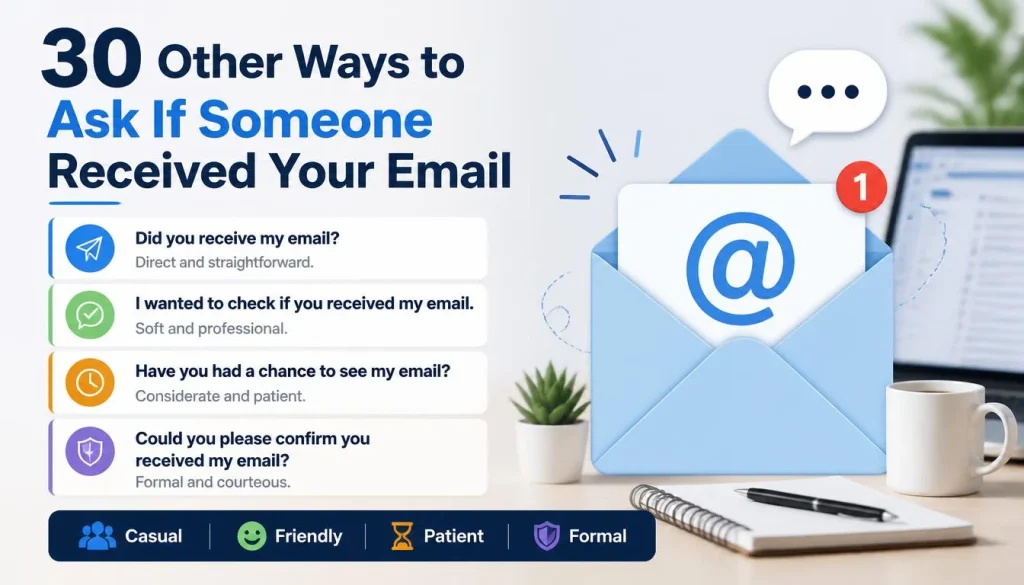
If you want to ask if someone received your email, choose wording that matches your relationship and the situation. For a direct approach, say “Did you receive my email?” For a softer professional follow-up, try “I wanted to check if you received my email.” If you want to sound especially considerate, “Have you had a chance to see my email?” works well because it recognizes that the person may simply be busy. For formal communication, “Could you please confirm you received my email?” is clear and courteous. The best choice depends on whether you want your message to sound casual, friendly, patient, or formal.
What Does “If Someone Received Your Email” Mean?
To ask if someone received your email means checking whether your message successfully reached the intended recipient and, in some cases, whether they had a chance to read it. You may use this question when you have not received a response, when the email contains important information, or when you simply want to make sure nothing was missed. The wording can range from casual and friendly to formal and professional, depending on your relationship with the recipient.
Is It Professional or Polite to Ask If Someone Received Your Email?
Yes, asking if someone received your email can be professional and polite, especially when you phrase the follow-up respectfully. A short message such as “I wanted to check that my email reached you” sounds more considerate than repeatedly asking why someone has not replied. In professional communication, it is usually better to focus on whether the message was received rather than implying that the recipient ignored it.
Advantages and Disadvantages
Advantages
- Prevents misunderstandings: You can confirm that your message reached the correct person.
- Shows consideration: A polite follow-up gives the recipient an opportunity to mention if they missed the email.
- Keeps communication moving: It can help prevent important tasks, decisions, or deadlines from being overlooked.
Disadvantages
- May feel repetitive: Frequent follow-ups can become annoying if the recipient has already received the message.
- Could sound impatient: The wrong wording may suggest that you expect an immediate response.
- May create pressure: Asking too soon can make the recipient feel rushed to reply.
Synonyms for If Someone Received Your Email
- Did You Receive My Email?
- I Wanted to Check If You Received My Email
- Just Checking That My Email Reached You
- Did My Email Come Through?
- I’m Following Up to Make Sure You Received My Email
- I Wanted to Confirm That You Received My Email
- Could You Confirm Receipt of My Email?
- Have You Had a Chance to See My Email?
- Were You Able to Receive My Email?
- I’m Checking That My Message Reached You
- Just Wanted to Make Sure My Email Didn’t Get Missed
- I Wanted to Make Sure You Saw My Email
- Did You Get a Chance to Read My Email?
- I’m Reaching Out to Confirm You Received My Message
- Could You Let Me Know If My Email Reached You?
- I Just Wanted to Follow Up on My Email
- Have You Seen the Email I Sent?
- I Wanted to Check In About the Email I Sent
- Can You Confirm That My Message Came Through?
- Just Checking Whether You Received My Message
- I’m Touching Base to See If You Received My Email
- I Wanted to Follow Up and Make Sure You Saw My Email
- Did My Previous Email Reach You?
- Could You Please Confirm You Received My Email?
- I’m Following Up to Check That My Message Was Received
- I Wanted to Make Sure My Previous Message Was Received
- Have You Had a Chance to Review My Email?
- Just Checking In to See If My Email Came Through
- Could You Let Me Know If You’ve Received My Email?
- I’m Checking In to Make Sure Nothing Got Lost in My Email
1. Did You Receive My Email?
Meaning: This directly asks whether the recipient received your email.
Definition: A straightforward question used to confirm that an email reached the intended person.
Detailed Explanation: This is one of the clearest ways to follow up. It works well when you want a simple answer without adding unnecessary wording. However, because it is direct, the surrounding tone matters.
Scenario Example: “Hi James, did you receive my email about tomorrow’s meeting?”
Best Use: Use it for simple, everyday, or professional follow-ups.
Tone: Direct, polite, and neutral.
2. I Wanted to Check If You Received My Email
Meaning: You are politely checking whether the recipient got your message.
Definition: A softer follow-up that explains why you are contacting someone.
Detailed Explanation: Adding “I wanted to check” makes the question feel less demanding. It gives the recipient context and creates a more conversational tone.
Scenario Example: “I wanted to check if you received my email regarding the project proposal.”
Best Use: Use it for work emails and professional relationships.
Tone: Polite, warm, and professional.
3. Just Checking That My Email Reached You
Meaning: You are making sure your email successfully arrived.
Definition: A friendly expression used to confirm email delivery.
Detailed Explanation: This phrasing sounds relaxed while still being respectful. “Just checking” reduces the feeling of pressure.
Scenario Example: “Just checking that my email reached you before the deadline.”
Best Use: Use it for friendly professional follow-ups.
Tone: Casual, friendly, and considerate.
4. Did My Email Come Through?
Meaning: You are asking whether the email arrived successfully.
Definition: An informal way to check whether a message was received.
Detailed Explanation: “Come through” is natural in everyday English. It is especially useful when you suspect there may have been a delivery or technical issue.
Scenario Example: “Did my email come through with the attached documents?”
Best Use: Use it with coworkers, clients you know well, or friends.
Tone: Casual and natural.
5. I’m Following Up to Make Sure You Received My Email
Meaning: You are following up because you want to confirm receipt.
Definition: A professional follow-up expression that explains the purpose of your message.
Detailed Explanation: This wording works particularly well when some time has passed since the original email. It does not automatically assume the person ignored you.
Scenario Example: “I’m following up to make sure you received my email about the contract.”
Best Use: Use it for formal workplace communication.
Tone: Professional and respectful.
6. I Wanted to Confirm That You Received My Email
Meaning: You want clear confirmation that your email arrived.
Definition: A formal phrase for verifying receipt of an email.
Detailed Explanation: “Confirm” makes this expression slightly more formal. It is useful when the email contains important documents, instructions, or information.
Scenario Example: “I wanted to confirm that you received my email and the attached invoice.”
Best Use: Use it for business and formal correspondence.
Tone: Formal, clear, and courteous.
7. Could You Confirm Receipt of My Email?
Meaning: You are politely asking the recipient to confirm they received your email.
Definition: A concise formal request for confirmation.
Detailed Explanation: This wording is appropriate when you need an explicit acknowledgment. It is especially useful in situations where keeping a record of communication matters.
Scenario Example: “Could you confirm receipt of my email at your earliest convenience?”
Best Use: Use it for formal business communication.
Tone: Formal and courteous.
8. Have You Had a Chance to See My Email?
Meaning: You are asking whether the recipient has had an opportunity to look at your email.
Definition: A considerate way to check whether someone has noticed your message.
Detailed Explanation: This phrase is softer than asking why someone has not responded. It recognizes that the recipient may simply be busy.
Scenario Example: “Have you had a chance to see my email about the upcoming presentation?”
Best Use: Use it when you do not want to sound impatient.
Tone: Patient, friendly, and considerate.
9. Were You Able to Receive My Email?
Meaning: You are asking whether the recipient successfully received your message.
Definition: A polite question focused on successful delivery.
Detailed Explanation: “Were you able to” makes the question sound less demanding. It can also suggest that there may have been a technical problem.
Scenario Example: “Were you able to receive my email with the updated schedule?”
Best Use: Use it for professional or technical situations.
Tone: Polite and professional.
10. I’m Checking That My Message Reached You
Meaning: You want to make sure your message arrived.
Definition: A gentle statement used to verify message delivery.
Detailed Explanation: This expression avoids directly asking whether the person has replied. Instead, it focuses on the communication reaching its destination.
Scenario Example: “I’m checking that my message reached you before I send the final documents.”
Best Use: Use it for professional follow-ups.
Tone: Gentle and professional.
11. Just Wanted to Make Sure My Email Didn’t Get Missed
Meaning: You are checking whether your email was overlooked.
Definition: A friendly way to suggest that an email may have been missed.
Detailed Explanation: This wording gives the recipient an easy explanation for not responding. It avoids directly blaming them for ignoring the message.
Scenario Example: “I just wanted to make sure my email didn’t get missed during your busy week.”
Best Use: Use it when following up after several days.
Tone: Friendly, understanding, and relaxed.
12. I Wanted to Make Sure You Saw My Email
Meaning: You want to know whether the recipient noticed your email.
Definition: A straightforward but considerate follow-up.
Detailed Explanation: This phrase works when receiving the email is not enough and you also want to know whether the person saw it.
Scenario Example: “I wanted to make sure you saw my email about the revised proposal.”
Best Use: Use it for important messages that may need attention.
Tone: Warm and professional.
13. Did You Get a Chance to Read My Email?
Meaning: You are asking whether the recipient had time to read your message.
Definition: A considerate question that focuses on the recipient’s availability.
Detailed Explanation: This is a good option when you understand that someone may be busy. It does not assume that the lack of a response means the email was ignored.
Scenario Example: “Did you get a chance to read my email about the meeting?”
Best Use: Use it with coworkers, clients, and acquaintances.
Tone: Friendly and patient.
14. I’m Reaching Out to Confirm You Received My Message
Meaning: You are contacting someone to verify that your message arrived.
Definition: A polished expression for confirming receipt.
Detailed Explanation: “Reaching out” creates a professional but approachable tone. It is useful when you want your follow-up to sound intentional rather than demanding.
Scenario Example: “I’m reaching out to confirm you received my message regarding the application.”
Best Use: Use it in professional emails and formal follow-ups.
Tone: Polished and courteous.
15. Could You Let Me Know If My Email Reached You?
Meaning: You are politely asking for confirmation.
Definition: A courteous request for the recipient to verify email delivery.
Detailed Explanation: This wording invites a simple response without putting pressure on the person to answer the contents of the original email immediately.
Scenario Example: “Could you let me know if my email reached you? I attached the requested files.”
Best Use: Use it when you need confirmation but want to remain gentle.
Tone: Polite and considerate.
See More: 30 Other Ways to ‘Acknowledge an Email From Your Boss’
16. I Just Wanted to Follow Up on My Email
Meaning: You are contacting someone again about an earlier email.
Definition: A general follow-up phrase that does not directly ask whether the email was received.
Detailed Explanation: This is useful when you want to reopen the conversation naturally. You can add a specific question afterward if necessary.
Scenario Example: “I just wanted to follow up on my email about the proposed meeting time.”
Best Use: Use it for professional follow-ups.
Tone: Professional and neutral.
17. Have You Seen the Email I Sent?
Meaning: You are asking whether the recipient has seen your message.
Definition: A direct question about whether someone noticed an email.
Detailed Explanation: This expression is simple and natural. It can be softened with “just” or “I wanted to check” if you are concerned about sounding too direct.
Scenario Example: “Have you seen the email I sent yesterday about the report?”
Best Use: Use it with people you communicate with regularly.
Tone: Direct and conversational.
18. I Wanted to Check In About the Email I Sent
Meaning: You are following up about a previous message.
Definition: A gentle expression for reopening an email conversation.
Detailed Explanation: This wording does not immediately pressure the recipient for a response. It leaves room to discuss whether they received or reviewed the message.
Scenario Example: “I wanted to check in about the email I sent earlier this week.”
Best Use: Use it when a softer follow-up is appropriate.
Tone: Warm, professional, and relaxed.
19. Can You Confirm That My Message Came Through?
Meaning: You are asking whether your message successfully arrived.
Definition: A conversational request for confirmation.
Detailed Explanation: “Came through” sounds natural and works well when you are unsure whether a technical problem affected delivery.
Scenario Example: “Can you confirm that my message came through with the attachment?”
Best Use: Use it with coworkers, clients, or familiar contacts.
Tone: Friendly and straightforward.
20. Just Checking Whether You Received My Message
Meaning: You are simply confirming receipt.
Definition: A brief and polite follow-up used to verify delivery.
Detailed Explanation: The phrase is short without sounding abrupt. “Just checking” makes it feel less like a demand for an immediate response.
Scenario Example: “Just checking whether you received my message about Friday’s appointment.”
Best Use: Use it for short follow-up emails or messages.
Tone: Casual and polite.
21. I’m Touching Base to See If You Received My Email
Meaning: You are checking in about whether your email arrived.
Definition: A professional expression for following up with someone.
Detailed Explanation: “Touching base” is commonly used in workplace communication. It creates a friendly bridge between the original email and your follow-up.
Scenario Example: “I’m touching base to see if you received my email about the project timeline.”
Best Use: Use it in workplace communication.
Tone: Professional and friendly.
22. I Wanted to Follow Up and Make Sure You Saw My Email
Meaning: You are politely checking whether the recipient noticed your email.
Definition: A combined follow-up and confirmation phrase.
Detailed Explanation: This version is useful when your original email contained information that you do not want the recipient to overlook. It remains considerate while making the purpose clear.
Scenario Example: “I wanted to follow up and make sure you saw my email about the updated deadline.”
Best Use: Use it for important professional communication.
Tone: Thoughtful and professional.
23. Did My Previous Email Reach You?
Meaning: You are asking whether an earlier email arrived.
Definition: A direct question about the successful delivery of a previous email.
Detailed Explanation: Mentioning “previous email” clearly connects the follow-up to an earlier message. It works especially well when you have exchanged several emails.
Scenario Example: “Did my previous email reach you regarding the documents?”
Best Use: Use it when referring to a specific earlier email.
Tone: Clear and professional.
24. Could You Please Confirm You Received My Email?
Meaning: You are politely requesting confirmation.
Definition: A formal and courteous request for acknowledgment.
Detailed Explanation: Adding “please” makes the request more courteous. This is particularly appropriate when the email contains important business information.
Scenario Example: “Could you please confirm you received my email and the attached proposal?”
Best Use: Use it for formal workplace communication.
Tone: Polite, formal, and respectful.
25. I’m Following Up to Check That My Message Was Received
Meaning: You are checking whether your message successfully arrived.
Definition: A formal follow-up phrase focused on message receipt.
Detailed Explanation: This option sounds professional without suggesting that the recipient has done anything wrong. It is suitable when you need confirmation for an important communication.
Scenario Example: “I’m following up to check that my message was received regarding the application.”
Best Use: Use it for formal correspondence and business matters.
Tone: Formal and professional.
26. I Wanted to Make Sure My Previous Message Was Received
Meaning: You want to verify that an earlier message arrived.
Definition: A courteous expression for confirming receipt of previous communication.
Detailed Explanation: This wording is especially useful when the original email was sent several days ago. It sounds patient and avoids assuming that the recipient deliberately failed to respond.
Scenario Example: “I wanted to make sure my previous message was received before following up with the next steps.”
Best Use: Use it for polite professional reminders.
Tone: Considerate and professional.
27. Have You Had a Chance to Review My Email?
Meaning: You are asking whether the recipient has looked over your email.
Definition: A polite question about whether someone has reviewed previously sent information.
Detailed Explanation: This goes beyond simple receipt. It gently asks whether the person has had time to consider the contents of your email.
Scenario Example: “Have you had a chance to review my email about the proposed changes?”
Best Use: Use it when you need feedback or a decision.
Tone: Patient and professional.
28. Just Checking In to See If My Email Came Through
Meaning: You are casually confirming email delivery.
Definition: A relaxed follow-up expression that checks whether an email arrived.
Detailed Explanation: This wording feels conversational and low-pressure. It is useful when you have a friendly relationship with the recipient.
Scenario Example: “Just checking in to see if my email came through with the photos.”
Best Use: Use it with coworkers, friends, and familiar contacts.
Tone: Friendly, casual, and warm.
29. Could You Let Me Know If You’ve Received My Email?
Meaning: You are asking the recipient to confirm receipt.
Definition: A courteous request for confirmation that an email has arrived.
Detailed Explanation: This phrase balances professionalism with warmth. It works well when you need a clear acknowledgment without sounding demanding.
Scenario Example: “Could you let me know if you’ve received my email regarding the appointment?”
Best Use: Use it for professional and semi-formal communication.
Tone: Courteous and respectful.
30. I’m Checking In to Make Sure Nothing Got Lost in My Email
Meaning: You are checking whether your email may have been missed.
Definition: A gentle follow-up that suggests the message might have been overlooked rather than intentionally ignored.
Detailed Explanation: This is a thoughtful choice when you want to avoid putting blame on the recipient. It recognizes that busy inboxes can cause important messages to disappear from view.
Scenario Example: “I’m checking in to make sure nothing got lost in my email regarding next week’s schedule.”
Best Use: Use it when following up after a busy period.
Tone: Warm, understanding, and non-confrontational.
Frequently Asked Questions
1. How can I politely ask if someone received my email?
You can say, “I wanted to check if you received my email.” It sounds polite, professional, and less demanding than asking why they have not replied.
2. Is “Did you get my email?” professional?
Yes, “Did you get my email?” is clear and natural, but it can sound direct. For formal communication, “Could you please confirm you received my email?” may sound more courteous.
3. How long should I wait before asking if someone received my email?
The right timing depends on the situation. For routine professional emails, waiting a few business days is often reasonable. If the matter is urgent, you can follow up sooner.
4. How do I follow up without sounding needy?
Focus on confirmation rather than demanding a response. For example, “I just wanted to make sure my email reached you” keeps the message friendly and low-pressure.
5. What is a good phrase for a professional email?
“I wanted to confirm that you received my email” is a useful professional option. It is clear, respectful, and appropriate for workplace communication.
6. How can I ask if someone saw my email?
You can say, “Have you had a chance to see my email?” This wording is considerate because it recognizes that the recipient may simply be busy.
7. Should I mention my previous email when following up?
Yes. Mentioning the subject, topic, or date of the previous email can help the recipient quickly find it, especially when their inbox is busy.
8. What should I say if I think my email was missed?
Try “I just wanted to make sure my previous email didn’t get missed.” This wording avoids blaming the recipient and gives them an easy way to respond.
9. Can I ask for confirmation of email receipt?
Yes. “Could you please confirm receipt of my email?” is a formal and straightforward way to request acknowledgement.
10. What is the best way to follow up on an unanswered email?
Keep the follow-up short, specific, and polite. Mention the earlier email, briefly explain why you are checking in, and make it easy for the recipient to respond.
Conclusion
Knowing 30 Other Ways to Ask If Someone Received Your Email gives you more flexibility when following up. You do not always need to ask directly whether someone received your message. A thoughtful phrase such as “I wanted to check if you received my email” or “Have you had a chance to review my email?” can sound more natural and considerate.
The key is to match your wording and tone to the situation. Whether you are contacting a coworker, client, freelancer, or friend, a calm and respectful follow-up can keep communication moving without creating unnecessary pressure.