
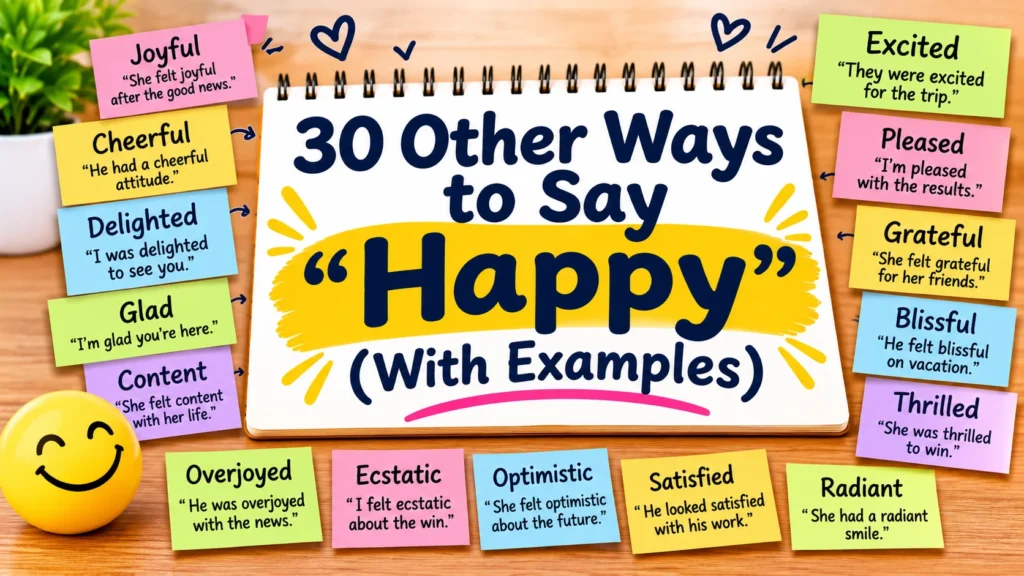

The word “happy” is one of the most common ways to express positive feelings, but sometimes it doesn’t fully capture what you want to say. You might feel excited about good news, grateful for someone’s kindness, delighted by a special moment, or simply content with how things are going. Using different expressions can help you communicate these emotions more clearly and make your writing sound less repetitive.
Choosing the right alternative also depends on the situation. For example, “thrilled” expresses strong excitement, while “content” describes a peaceful feeling of satisfaction. Similarly, words like “cheerful,” “overjoyed,” “elated,” and “delighted” can add different shades of meaning to your conversations. These alternatives help you express your feelings in a way that feels natural, genuine, and appropriate.
In this guide, you’ll discover 30 other ways to say “happy”, complete with simple meanings and practical examples. Whether you’re writing a personal message, preparing a professional email, or having an everyday conversation, these expressions will help you find the right words. You’ll also learn how to describe happiness in different situations without relying on the same familiar adjective every time.
What Does “Happy” Mean?
The word “happy” describes a positive emotional state in which someone feels pleasure, joy, satisfaction, or contentment. It can refer to a temporary feeling, such as being happy about good news, or a more lasting sense of well-being. For example, saying “I’m happy to see you” expresses pleasure at meeting someone, while “She feels happy with her progress” communicates satisfaction and pride. Depending on the situation, “happy” can express excitement, gratitude, peace, relief, or general satisfaction.
Is It Professional or Polite to Say “Happy”?
Yes, “happy” is both professional and polite in most everyday and workplace situations. You can use it in emails, meetings, conversations, and personal messages. For example, “I’m happy to help” is a friendly and professional way to offer assistance. However, if you want to express a more specific feeling, alternatives such as pleased, delighted, satisfied, or thrilled may communicate your meaning more clearly. Choosing the right word also helps your message sound natural and sincere.
Advantages of Using “Happy”
- Easy to understand: The word is familiar and communicates a positive feeling without confusing the reader.
- Suitable for many situations: You can use it when discussing personal experiences, professional achievements, celebrations, and relationships.
- Creates a friendly impression: It helps your messages sound welcoming, positive, and approachable.
Disadvantages of Using “Happy”
- Can sound repetitive: Using the same word too often may make your writing feel less expressive.
- Doesn’t explain the exact emotion: Happiness can mean excitement, relief, satisfaction, or contentment, but the word alone may not show which feeling you mean.
- May sound too general: In emotional or professional writing, a more specific alternative can make your message more meaningful.
30 Alternatives to “Happy”
Here is a complete list of 30 alternatives to “happy.” Each word communicates a slightly different feeling, so choose one that matches the situation and the emotion you want to express.
- Joyful
- Cheerful
- Delighted
- Pleased
- Glad
- Content
- Satisfied
- Thrilled
- Elated
- Ecstatic
- Jubilant
- Overjoyed
- Blissful
- Upbeat
- Positive
- Grateful
- Thankful
- Optimistic
- Radiant
- Merry
- Jolly
- Carefree
- At Ease
- Fulfilled
- On Cloud Nine
- In High Spirits
- Beaming
- Gleeful
- Buoyant
- Tickled Pink
1. Joyful
Meaning: Feeling or expressing great happiness and pleasure.
Definition: Joyful describes a person, moment, or experience filled with genuine happiness.
Detailed Explanation: This is one of the warmest alternatives to “happy.” It expresses a deeper sense of joy and often describes meaningful moments, personal achievements, or time spent with loved ones. It works well when you want your words to communicate sincere happiness rather than a passing positive mood.
Scenario Examples:
- “She felt joyful when her family gathered for her birthday.”
- “It was a joyful moment when the team finally achieved its goal.”
Best Use: Use joyful when describing meaningful celebrations, special memories, and moments of genuine happiness.
Tone: Warm, heartfelt, positive, and uplifting.
2. Cheerful
Meaning: Noticeably happy, positive, and pleasant.
Definition: Cheerful describes someone who shows happiness through a positive attitude or friendly behavior.
Detailed Explanation: Choose this word when describing someone who brings positive energy into a room or approaches everyday situations with a pleasant attitude. Unlike “joyful,” which can express deep happiness, “cheerful” often describes an outward mood. It is a natural choice for compliments and friendly conversations.
Scenario Examples:
- “Her cheerful personality makes everyone feel welcome.”
- “He greeted his coworkers with a cheerful smile.”
Best Use: Use cheerful when describing someone’s personality, attitude, expression, or friendly behavior.
Tone: Friendly, lighthearted, welcoming, and positive.
3. Delighted
Meaning: Feeling great pleasure or happiness about something.
Definition: Delighted describes a strong feeling of happiness caused by something enjoyable or pleasing.
Detailed Explanation: This word is especially useful when responding to good news or expressing appreciation. It sounds slightly more polished than “happy” and works well in professional and personal communication. For example, saying you’re delighted to meet someone communicates warmth and genuine pleasure.
Scenario Examples:
- “I’m delighted to hear that you got the new job.”
- “We were delighted with the results of the project.”
Best Use: Use delighted in thank-you messages, professional emails, celebrations, and positive responses.
Tone: Polite, warm, appreciative, and enthusiastic.
4. Pleased
Meaning: Feeling satisfied or happy about something.
Definition: Pleased describes a positive feeling that comes from satisfaction, approval, or enjoyment.
Detailed Explanation: This alternative is particularly useful in professional situations. It communicates happiness without sounding overly emotional. You can use it when acknowledging good results, appreciating someone’s work, or expressing satisfaction with an arrangement. It is a simple way to sound positive and respectful.
Scenario Examples:
- “I’m pleased with the progress we’ve made.”
- “She was pleased to receive such thoughtful feedback.”
Best Use: Use pleased in workplace emails, formal conversations, feedback, and polite responses.
Tone: Professional, calm, courteous, and positive.
5. Glad
Meaning: Feeling happy or relieved about something.
Definition: Glad describes a pleasant feeling of happiness, satisfaction, or relief.
Detailed Explanation: This is one of the most natural everyday alternatives to “happy.” It works particularly well when expressing appreciation, relief, or pleasure about an event. Phrases such as “I’m glad you came” and “I’m glad I could help” sound friendly without feeling overly formal.
Scenario Examples:
- “I’m glad we had the chance to talk.”
- “She was glad to hear that everyone arrived safely.”
Best Use: Use glad in everyday conversations, friendly messages, and casual professional communication.
Tone: Natural, warm, relaxed, and sincere.
6. Content
Meaning: Feeling peaceful and satisfied with what you have.
Definition: Content describes a calm sense of happiness that comes from accepting and appreciating your situation.
Detailed Explanation: Unlike words that express excitement, “content” communicates quiet satisfaction. It is useful when describing a peaceful lifestyle, a comfortable situation, or a feeling of fulfillment. You can use it when someone doesn’t need anything more to feel satisfied with the present moment.
Scenario Examples:
- “She feels content with the simple life she has built.”
- “After spending time with his family, he felt content.”
Best Use: Use content when describing peaceful happiness, personal satisfaction, and appreciation for everyday life.
Tone: Calm, thoughtful, peaceful, and reflective.
7. Satisfied
Meaning: Feeling pleased because something meets your expectations or needs.
Definition: Satisfied describes a positive feeling that comes from achieving a desired result or receiving something worthwhile.
Detailed Explanation: This alternative focuses on fulfillment and expectations rather than excitement. It is especially useful in professional communication, customer feedback, and discussions about personal goals. For example, you might feel satisfied after completing a difficult task or reaching an important milestone.
Scenario Examples:
- “I’m satisfied with the final version of the report.”
- “She felt satisfied after completing her training.”
Best Use: Use satisfied when discussing achievements, results, services, decisions, or completed goals.
Tone: Practical, confident, composed, and positive.
8. Thrilled
Meaning: Extremely excited and happy.
Definition: Thrilled describes a strong feeling of excitement and happiness about something.
Detailed Explanation: Choose this word when ordinary happiness doesn’t fully express your excitement. It is particularly useful when sharing wonderful news, celebrating an opportunity, or reacting to an achievement. It makes your message sound energetic and shows that the situation means a lot to you.
Scenario Examples:
- “I’m thrilled to be part of this new project.”
- “She was thrilled when she received the scholarship.”
Best Use: Use thrilled when announcing exciting news, celebrating achievements, or expressing enthusiasm.
Tone: Energetic, excited, expressive, and enthusiastic.
9. Elated
Meaning: Feeling extremely happy and excited.
Definition: Elated describes a powerful feeling of happiness, often following a major success or positive event.
Detailed Explanation: This word is stronger than ordinary happiness and is often used for moments of achievement or great relief. It can describe how someone feels after receiving wonderful news, winning a competition, or reaching a long-awaited goal. It adds emotional depth to your writing.
Scenario Examples:
- “He was elated after hearing that his application had been accepted.”
- “The entire team felt elated after winning the final match.”
Best Use: Use elated when describing major achievements, exciting news, and moments of great personal success.
Tone: Strong, celebratory, emotional, and enthusiastic.
10. Ecstatic
Meaning: Feeling overwhelming happiness and excitement.
Definition: Ecstatic describes an extremely intense feeling of joy or excitement.
Detailed Explanation: This alternative is ideal when someone feels happier than words can easily express. It is often used for life-changing news, special celebrations, and unforgettable achievements. Because it communicates very strong emotion, it is best reserved for situations that genuinely deserve such enthusiasm.
Scenario Examples:
- “She was ecstatic when she learned she had been accepted into university.”
- “We were ecstatic to welcome our new family member.”
Best Use: Use ecstatic when expressing overwhelming happiness about major personal events or wonderful news.
Tone: Excited, emotional, celebratory, and expressive.
11. Jubilant
Meaning: Showing great happiness, especially during a celebration or victory.
Definition: Jubilant describes someone who feels or expresses intense happiness and triumph.
Detailed Explanation: This word is particularly suitable for moments of collective celebration. It can describe a team celebrating a victory, a family sharing good news, or a crowd reacting to a major achievement. It sounds more expressive and formal than “happy.”
Scenario Examples:
- “The jubilant crowd cheered as the team lifted the trophy.”
- “Her family was jubilant when she graduated.”
Best Use: Use jubilant when describing celebrations, victories, milestones, and shared achievements.
Tone: Festive, energetic, triumphant, and joyful.
12. Overjoyed
Meaning: Extremely happy because of something wonderful.
Definition: Overjoyed describes a powerful feeling of happiness that is difficult to contain.
Detailed Explanation: This word communicates heartfelt excitement and is especially useful for emotional moments. You might feel overjoyed when someone you love succeeds, when you receive life-changing news, or when a long-awaited wish comes true. It makes your message feel personal and sincere.
Scenario Examples:
- “I was overjoyed to see my old friends again.”
- “Her parents were overjoyed when she shared the news.”
Best Use: Use overjoyed when describing meaningful personal news, family celebrations, and emotional reunions.
Tone: Heartfelt, emotional, enthusiastic, and affectionate.
13. Blissful
Meaning: Extremely happy, peaceful, and content.
Definition: Blissful describes a deep feeling of happiness combined with peace and comfort.
Detailed Explanation: Unlike words that focus on excitement, “blissful” often suggests a peaceful and almost perfect moment. It works well when describing relaxing experiences, loving relationships, quiet mornings, or special memories. It helps communicate happiness that feels calm and deeply satisfying.
Scenario Examples:
- “They enjoyed a blissful afternoon by the lake.”
- “She felt blissful spending time with her family.”
Best Use: Use blissful when describing peaceful experiences, loving moments, and deep personal contentment.
Tone: Gentle, romantic, peaceful, and heartfelt.
14. Upbeat
Meaning: Positive, cheerful, and hopeful.
Definition: Upbeat describes someone or something that has an optimistic and energetic attitude.
Detailed Explanation: This alternative is useful when describing a person’s mood or approach to life. It suggests that someone remains positive and enthusiastic, even when facing challenges. It can also describe music, conversations, or messages that create a lively atmosphere.
Scenario Examples:
- “She remained upbeat throughout the busy workday.”
- “His upbeat attitude encouraged the whole team.”
Best Use: Use upbeat when describing positive attitudes, encouraging messages, and lively conversations.
Tone: Energetic, optimistic, friendly, and encouraging.
15. Positive
Meaning: Showing optimism, confidence, or a hopeful attitude.
Definition: Positive describes a person or attitude that focuses on favorable possibilities and constructive outcomes.
Detailed Explanation: This word is useful when you want to describe someone’s outlook rather than their exact emotional state. A positive person may feel happy, hopeful, or confident about what lies ahead. It works well in workplace communication, personal encouragement, and everyday conversations.
Scenario Examples:
- “She has a positive attitude toward new challenges.”
- “Let’s keep a positive mindset as we work through this project.”
Best Use: Use positive when discussing attitudes, outlooks, teamwork, and encouraging situations.
Tone: Supportive, optimistic, constructive, and professional.
16. Grateful
Meaning: Feeling thankful and appreciative.
Definition: Grateful describes the feeling of appreciation for something good that someone has done or something valuable in your life.
Detailed Explanation: Happiness and gratitude often go together, but they are not exactly the same. “Grateful” is useful when your happiness comes from recognizing someone’s kindness, support, or generosity. It makes your message feel more personal because it explains why something matters to you.
Scenario Examples:
- “I’m grateful to have such supportive friends.”
- “She felt grateful for the opportunity to learn from experienced colleagues.”
Best Use: Use grateful in thank-you messages, personal reflections, appreciation notes, and professional acknowledgments.
Tone: Heartfelt, humble, sincere, and appreciative.
17. Thankful
Meaning: Feeling pleased and appreciative because of something good.
Definition: Thankful describes a feeling of gratitude for help, kindness, opportunities, or positive experiences.
Detailed Explanation: This word is especially useful when you want to acknowledge the people or circumstances that bring happiness into your life. It is close in meaning to “grateful” and sounds natural in both personal and professional communication. It helps turn a general positive statement into a more thoughtful expression of appreciation.
Scenario Examples:
- “I’m thankful for your kindness and support.”
- “We are thankful to have such a wonderful team.”
Best Use: Use thankful when expressing appreciation for help, relationships, opportunities, and meaningful experiences.
Tone: Warm, sincere, humble, and appreciative.
18. Optimistic
Meaning: Hopeful and confident about the future.
Definition: Optimistic describes someone who expects positive outcomes or believes that things can improve.
Detailed Explanation: This word focuses more on hope than immediate happiness. It is useful when describing someone who looks forward to future opportunities and approaches challenges with confidence. You can use it to recognize a person’s positive outlook or encourage someone during a difficult period.
Scenario Examples:
- “She feels optimistic about her career opportunities.”
- “The team remains optimistic about the project’s success.”
Best Use: Use optimistic when discussing future plans, personal goals, challenges, and hopeful attitudes.
Tone: Encouraging, hopeful, confident, and thoughtful.
19. Radiant
Meaning: Showing happiness or beauty in a bright, noticeable way.
Definition: Radiant describes someone whose happiness or positive energy seems to shine outwardly.
Detailed Explanation: This word is especially useful when describing someone’s expression, smile, or overall appearance. It suggests that happiness is visible and naturally affects the people around them. It can make a compliment feel warm and personal, particularly during celebrations or special occasions.
Scenario Examples:
- “She looked radiant on her wedding day.”
- “His face was radiant with happiness after receiving the award.”
Best Use: Use radiant when describing happy expressions, beautiful smiles, and people who visibly show joy.
Tone: Warm, affectionate, admiring, and expressive.
20. Merry
Meaning: Cheerful, joyful, and full of happiness.
Definition: Merry describes a cheerful mood, often associated with celebration and enjoyment.
Detailed Explanation: This word is commonly used during holidays, festive occasions, and joyful gatherings. It has a traditional and friendly quality that makes it suitable for greetings and celebrations. While it is not used as frequently as “happy” in everyday speech, it adds a cheerful touch to your writing.
Scenario Examples:
- “Everyone enjoyed a merry evening filled with laughter.”
- “The children were merry during the holiday celebration.”
Best Use: Use merry in festive messages, holiday greetings, and descriptions of cheerful gatherings.
Tone: Festive, cheerful, friendly, and lighthearted.
21. Jolly
Meaning: Cheerful, happy, and full of good humor.
Definition: Jolly describes someone who shows happiness through laughter, friendliness, and an upbeat personality.
Detailed Explanation: This alternative has a relaxed and playful feeling. It is useful when describing someone who enjoys making others laugh or brings a cheerful mood to a gathering. It can also describe a fun atmosphere where people feel comfortable and enjoy themselves.
Scenario Examples:
- “Our grandfather is always jolly during family gatherings.”
- “They had a jolly time singing and sharing stories.”
Best Use: Use jolly when describing cheerful people, playful conversations, and enjoyable social occasions.
Tone: Playful, friendly, warm, and lighthearted.
22. Carefree
Meaning: Free from worry, stress, or responsibility.
Definition: Carefree describes a relaxed state in which someone feels free from concerns or anxiety.
Detailed Explanation: This word does not mean exactly the same thing as “happy,” but it can describe a situation that creates a relaxed and enjoyable feeling. It is especially useful when talking about peaceful holidays, childhood memories, or moments when you can forget your worries. It communicates freedom and ease rather than strong excitement.
Scenario Examples:
- “We spent a carefree afternoon walking along the beach.”
- “She remembered those carefree days with a smile.”
Best Use: Use carefree when describing relaxed experiences, peaceful moments, and enjoyable times without pressure.
Tone: Relaxed, nostalgic, peaceful, and easygoing.
23. At Ease
Meaning: Feeling comfortable, relaxed, and free from worry.
Definition: At ease describes a calm emotional state in which someone feels comfortable and untroubled.
Detailed Explanation: This expression is useful when happiness comes from feeling safe, welcome, or comfortable. It is not a direct synonym for every meaning of “happy,” but it works when describing peaceful situations and reassuring interactions. It can also show that someone’s kindness helped you feel comfortable.
Scenario Examples:
- “Her friendly manner made everyone feel at ease.”
- “I felt at ease after discussing my concerns with the team.”
Best Use: Use at ease when describing comfort, relief, welcoming environments, and peaceful interactions.
Tone: Calm, reassuring, gentle, and considerate.
24. Fulfilled
Meaning: Feeling satisfied because something important or meaningful has been achieved.
Definition: Fulfilled describes a deep sense of satisfaction that comes from living according to your values or reaching meaningful goals.
Detailed Explanation: This word expresses a deeper kind of happiness than temporary excitement. It is often used when discussing personal growth, meaningful work, relationships, or long-term achievements. It communicates that someone feels their efforts and experiences have real value.
Scenario Examples:
- “She feels fulfilled by the work she does for her community.”
- “He felt fulfilled after completing a project that mattered to him.”
Best Use: Use fulfilled when describing personal purpose, meaningful achievements, and long-term satisfaction.
Tone: Reflective, meaningful, mature, and positive.
25. On Cloud Nine
Meaning: Extremely happy and excited.
Definition: On cloud nine is an informal expression used to describe a state of great happiness.
Detailed Explanation: This phrase is useful when you want to express excitement in a natural and conversational way. It often describes the feeling that follows wonderful news, a special achievement, or a memorable personal event. It adds personality to your message and makes your happiness sound enthusiastic.
Scenario Examples:
- “She was on cloud nine after getting her dream job.”
- “I’ve been on cloud nine since the family reunion.”
Best Use: Use on cloud nine in casual conversations, personal messages, and stories about exciting experiences.
Tone: Playful, expressive, cheerful, and enthusiastic.
26. In High Spirits
Meaning: Feeling cheerful, enthusiastic, and positive.
Definition: In high spirits describes someone who is in a very good mood and shows happiness or excitement.
Detailed Explanation: This phrase works well when describing someone’s overall mood, especially during a celebration or enjoyable gathering. It suggests that a person feels energetic and positive. It can also describe a group of people who are enjoying themselves together.
Scenario Examples:
- “Everyone was in high spirits during the graduation celebration.”
- “She arrived at the office in high spirits after her holiday.”
Best Use: Use in high spirits when describing cheerful moods, celebrations, and positive group experiences.
Tone: Friendly, lively, cheerful, and sociable.
27. Beaming
Meaning: Showing great happiness through a bright smile or expression.
Definition: Beaming describes someone who visibly expresses happiness, usually through a wide and genuine smile.
Detailed Explanation: This word is particularly effective when describing how happiness appears on someone’s face. It creates a clear picture of a person who feels proud, excited, or deeply pleased. You can use it to make descriptions of emotional moments more vivid.
Scenario Examples:
- “She was beaming with pride after her daughter graduated.”
- “He stood beside his new car, beaming with happiness.”
Best Use: Use beaming when describing smiles, proud moments, joyful reactions, and visible excitement.
Tone: Warm, affectionate, expressive, and positive.
28. Gleeful
Meaning: Showing great happiness, excitement, or delight.
Definition: Gleeful describes someone who expresses happiness with excitement, often in a playful way.
Detailed Explanation: This alternative is useful when describing lively reactions, playful celebrations, or moments of great amusement. It often suggests a visible sense of delight. It can be particularly effective in storytelling when you want readers to imagine someone’s enthusiastic reaction.
Scenario Examples:
- “The children were gleeful when they opened their presents.”
- “He gave a gleeful laugh after winning the friendly competition.”
Best Use: Use gleeful when describing playful excitement, happy reactions, and joyful celebrations.
Tone: Playful, energetic, expressive, and cheerful.
29. Buoyant
Meaning: Cheerful, confident, and positive despite difficulties.
Definition: Buoyant describes a person or mood that remains positive, energetic, and hopeful.
Detailed Explanation: This word is useful when someone’s happiness comes from confidence and resilience. It suggests that they can maintain a positive attitude even when circumstances are challenging. It can also describe a lively atmosphere or an optimistic outlook.
Scenario Examples:
- “She maintained a buoyant attitude throughout the difficult project.”
- “His buoyant mood lifted everyone’s spirits.”
Best Use: Use buoyant when describing resilience, positive attitudes, confidence, and lively moods.
Tone: Optimistic, encouraging, energetic, and confident.
30. Tickled Pink
Meaning: Very pleased, amused, or delighted.
Definition: Tickled pink is an informal expression that describes feeling especially happy about something.
Detailed Explanation: This phrase adds a playful and affectionate quality to your writing. It is often used when someone receives a thoughtful surprise, hears good news, or feels genuinely pleased by another person’s actions. It sounds natural in friendly conversations but may be too informal for serious business writing.
Scenario Examples:
- “She was tickled pink by the thoughtful birthday gift.”
- “My parents were tickled pink when they heard about my promotion.”
Best Use: Use tickled pink in casual conversations, friendly messages, and lighthearted descriptions of pleasant surprises.
Tone: Playful, warm, affectionate, and cheerful.
Conclusion
Knowing different ways to say “happy” can make your communication more expressive and meaningful. Words like “delighted,” “thrilled,” “overjoyed,” “cheerful,” and “content” help you describe different levels and types of happiness. Each alternative brings a slightly different feeling, allowing you to choose words that better match your emotions and the situation.
Whether you’re writing a heartfelt message, having a casual conversation, or communicating professionally, using the right expression can make your words feel more natural. Try incorporating these 30 alternatives to “happy” into your everyday vocabulary to express positive feelings with greater confidence and variety.

Pingback: Other Ways to Say “Yes”
Pingback: Other Ways to Say “Amazing”