
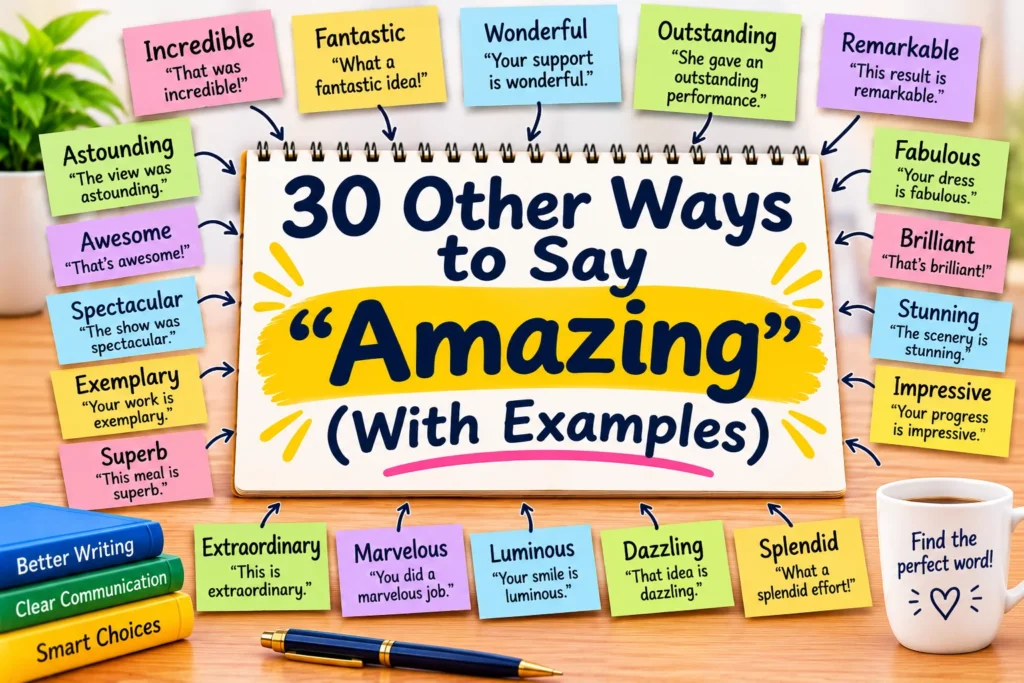

Finding the right words to describe something wonderful can make your writing more expressive and engaging. “Amazing” is commonly used to show excitement, admiration, or surprise when something exceeds expectations. However, using the same word repeatedly can make your descriptions feel less interesting. Exploring different expressions can help you communicate your feelings more clearly and naturally.
Depending on the situation, you can replace “amazing” with words like “incredible,” “outstanding,” “remarkable,” or “extraordinary.” Some alternatives are perfect for expressing excitement in everyday conversations, while others sound more professional in workplace communication or formal writing. Choosing the right word helps you describe experiences, achievements, people, and special moments with greater detail.
In this guide, you’ll discover 30 other ways to say “amazing,” along with simple explanations and practical examples. These alternatives will help you expand your vocabulary, avoid repetitive language, and express appreciation more effectively. Whether you’re complimenting someone’s work, describing an unforgettable experience, or writing a thoughtful message, you’ll find useful expressions for every situation.
What Does “Amazing” Mean?
The word “amazing” describes something that causes great surprise, admiration, excitement, or wonder. It is commonly used for people, experiences, achievements, places, and things that stand out in a positive way. For example, saying “You did an amazing job” shows that you are impressed with someone’s effort and results. Similarly, describing a trip as amazing means that you found it unusually enjoyable or memorable. Depending on the situation, “amazing” can communicate admiration, excitement, appreciation, or surprise.
Is It Professional or Polite to Say “Amazing”?
Yes, “amazing” is generally polite and acceptable in professional and everyday communication. You can use it when praising a colleague, appreciating someone’s contribution, or responding positively to an idea. However, in formal reports or business writing, it may sound a little informal or subjective. Alternatives such as exceptional, outstanding, impressive, and remarkable can make your message more specific and professional. Choosing the right expression helps you show genuine appreciation without sounding repetitive.
Advantages of Using “Amazing”
- Expresses enthusiasm: It communicates excitement and admiration in a simple, natural way.
- Makes compliments warmer: It helps people feel appreciated when you recognize their efforts or achievements.
- Works in many situations: You can use it in conversations, emails, social posts, and personal messages.
Disadvantages of Using “Amazing”
- Can become repetitive: Using it too frequently may make your compliments sound less original.
- May lack detail: It does not always explain what makes something impressive or special.
- Can sound informal: Some professional or academic situations call for more precise alternatives.
30 Alternatives to “Amazing”
Here is a complete list of 30 alternatives to “amazing.” Each word has a slightly different meaning, so choose the one that best describes the person, experience, or achievement you want to praise.
- Wonderful
- Incredible
- Remarkable
- Fantastic
- Outstanding
- Exceptional
- Impressive
- Magnificent
- Extraordinary
- Brilliant
- Spectacular
- Fabulous
- Phenomenal
- Marvelous
- Awesome
- Unbelievable
- Stunning
- Breathtaking
- Inspiring
- Superb
- Astonishing
- Unforgettable
- Mind-Blowing
- First-Class
- Splendid
- Extraordinary
- Tremendous
- Exquisite
- Unparalleled
- Awe-Inspiring
1. Wonderful
Meaning: Extremely good, enjoyable, or pleasing.
Definition: Wonderful describes something that creates happiness, admiration, or a strong positive feeling.
Detailed Explanation: This is one of the warmest alternatives to “amazing.” It works well when appreciating someone’s kindness, celebrating a special experience, or describing something you genuinely enjoyed. It sounds friendly without feeling exaggerated, making it suitable for both personal and professional communication.
Scenario Examples:
- “You did a wonderful job organizing the event.”
- “We had a wonderful time spending the afternoon together.”
Best Use: Use wonderful when praising someone’s efforts, describing enjoyable experiences, or expressing appreciation.
Tone: Warm, friendly, positive, and thoughtful.
2. Incredible
Meaning: Extremely impressive or difficult to believe.
Definition: Incredible describes something so impressive, unusual, or surprising that it is hard to believe.
Detailed Explanation: Choose this word when you want to express strong admiration or excitement. It works particularly well when describing achievements, talents, experiences, or unexpected results. It gives your compliment extra energy and helps communicate how impressed you feel.
Scenario Examples:
- “Your progress over the last few months has been incredible.”
- “The view from the mountain was absolutely incredible.”
Best Use: Use incredible when praising impressive achievements, remarkable abilities, or unforgettable experiences.
Tone: Enthusiastic, expressive, energetic, and appreciative.
3. Remarkable
Meaning: Worth noticing because of an unusual quality or achievement.
Definition: Remarkable describes someone or something that stands out and deserves attention or admiration.
Detailed Explanation: This alternative is especially useful when you want to give a thoughtful compliment. It suggests that something is more impressive than what people usually expect. It works well in professional writing because it sounds polished while still communicating genuine appreciation.
Scenario Examples:
- “Your dedication to helping others is remarkable.”
- “The team achieved remarkable results this quarter.”
Best Use: Use remarkable when describing achievements, personal qualities, progress, or outstanding contributions.
Tone: Respectful, thoughtful, professional, and appreciative.
4. Fantastic
Meaning: Extremely good or enjoyable.
Definition: Fantastic describes something that is exceptionally pleasing, exciting, or impressive.
Detailed Explanation: This word is a natural choice for everyday conversations. It adds enthusiasm to your message without making it sound overly formal. You can use it when complimenting someone’s work, responding to good news, or describing a fun experience.
Scenario Examples:
- “You came up with a fantastic idea for the campaign.”
- “We had a fantastic evening with our friends.”
Best Use: Use fantastic in casual conversations, friendly emails, and positive feedback.
Tone: Cheerful, enthusiastic, relaxed, and encouraging.
5. Outstanding
Meaning: Exceptionally good and better than most others.
Definition: Outstanding describes something that stands above the usual standard because of its quality or performance.
Detailed Explanation: This alternative is particularly effective in professional settings. It helps you recognize someone’s hard work, excellent performance, or valuable contribution. Instead of giving a general compliment, it communicates that the person’s work deserves special recognition.
Scenario Examples:
- “Your presentation was outstanding from beginning to end.”
- “She delivered outstanding customer service throughout the project.”
Best Use: Use outstanding in performance reviews, recommendations, workplace emails, and professional praise.
Tone: Professional, confident, respectful, and appreciative.
6. Exceptional
Meaning: Unusually good or far above the normal standard.
Definition: Exceptional describes a person, quality, or achievement that is much better than what is typical.
Detailed Explanation: Use this word when you want to recognize something that goes beyond ordinary expectations. It is especially useful for praising professional skills, dedication, service, and performance. It sounds more formal than “amazing” and gives your compliment a polished feel.
Scenario Examples:
- “Your attention to detail is exceptional.”
- “The team provided exceptional support during the launch.”
Best Use: Use exceptional in professional communication, formal recommendations, and meaningful compliments.
Tone: Polished, respectful, confident, and admiring.
7. Impressive
Meaning: Causing admiration because of quality, skill, or achievement.
Definition: Impressive describes something that makes people feel admiration or respect.
Detailed Explanation: This is a useful alternative when you want to explain that someone’s work or ability has made a strong positive impression. It focuses on the reason for your admiration, such as effort, creativity, or skill. It sounds natural in both workplace and everyday communication.
Scenario Examples:
- “Your ability to solve problems is truly impressive.”
- “The presentation included some impressive research.”
Best Use: Use impressive when praising someone’s skills, achievements, ideas, or performance.
Tone: Respectful, positive, professional, and encouraging.
8. Magnificent
Meaning: Extremely beautiful, impressive, or grand.
Definition: Magnificent describes something that inspires admiration because of its beauty, quality, or impressive appearance.
Detailed Explanation: Choose this word when describing something visually beautiful or unusually grand. It works especially well for architecture, scenery, performances, celebrations, and special experiences. It creates a stronger sense of wonder than many everyday alternatives.
Scenario Examples:
- “The palace looked magnificent under the evening lights.”
- “You gave a magnificent performance on stage.”
Best Use: Use magnificent when describing beautiful places, impressive performances, or grand experiences.
Tone: Expressive, admiring, elegant, and enthusiastic.
9. Extraordinary
Meaning: Very unusual or far beyond what is ordinary.
Definition: Extraordinary describes something that is exceptional, unusual, or remarkably impressive.
Detailed Explanation: This word works when you want to highlight something that goes beyond everyday expectations. It can describe a person’s talent, a major achievement, or a memorable experience. It gives your writing a strong sense of admiration without relying on a common expression.
Scenario Examples:
- “She has an extraordinary ability to connect with people.”
- “Your hard work has led to extraordinary results.”
Best Use: Use extraordinary when praising unusual talents, major accomplishments, or special experiences.
Tone: Strong, admiring, thoughtful, and expressive.
10. Brilliant
Meaning: Extremely clever, successful, or impressive.
Definition: Brilliant describes something that shows exceptional intelligence, creativity, quality, or skill.
Detailed Explanation: This alternative is particularly useful when praising someone’s ideas, problem-solving ability, or creative work. It can also describe an excellent performance or experience. In everyday British and international English, it is commonly used as a positive expression of approval.
Scenario Examples:
- “That was a brilliant solution to a difficult problem.”
- “You did a brilliant job explaining the new process.”
Best Use: Use brilliant when praising intelligence, creativity, ideas, or excellent work.
Tone: Energetic, approving, friendly, and admiring.
11. Spectacular
Meaning: Extremely impressive or visually exciting.
Definition: Spectacular describes something that attracts attention because of its remarkable appearance, performance, or effect.
Detailed Explanation: This word is a strong choice when something creates a memorable impression. It often describes views, events, performances, and achievements. It adds excitement to your message and helps readers imagine how impressive the experience was.
Scenario Examples:
- “The fireworks display was spectacular.”
- “Your team delivered a spectacular performance.”
Best Use: Use spectacular when describing exciting events, impressive displays, or memorable achievements.
Tone: Exciting, dramatic, enthusiastic, and expressive.
12. Fabulous
Meaning: Extremely attractive, enjoyable, or excellent.
Definition: Fabulous describes something that is exceptionally good, stylish, or pleasing.
Detailed Explanation: This alternative adds personality and enthusiasm to everyday communication. It works well when complimenting someone’s appearance, celebrating good news, or describing an enjoyable experience. It is less formal, so it is best suited to friendly and relaxed settings.
Scenario Examples:
- “You look fabulous in that outfit.”
- “We had a fabulous time at the celebration.”
Best Use: Use fabulous in friendly conversations, social messages, and informal compliments.
Tone: Playful, cheerful, enthusiastic, and warm.
13. Phenomenal
Meaning: Exceptionally impressive or extraordinary.
Definition: Phenomenal describes something that is remarkably good, successful, or impressive.
Detailed Explanation: Choose this word when you want to express a high level of admiration. It works particularly well for achievements, performances, business results, and personal growth. It suggests that something has exceeded expectations by a considerable amount.
Scenario Examples:
- “Your growth as a writer has been phenomenal.”
- “The team achieved phenomenal results in a short time.”
Best Use: Use phenomenal when praising major achievements, impressive progress, or exceptional performance.
Tone: Enthusiastic, powerful, admiring, and confident.
14. Marvelous
Meaning: Extremely good, pleasing, or wonderful.
Definition: Marvelous describes something that inspires delight, admiration, or pleasant surprise.
Detailed Explanation: This word has a warm and slightly traditional feel. It is useful when praising someone’s efforts or describing an experience that made you happy. It can make your compliment feel more expressive while remaining polite and friendly.
Scenario Examples:
- “You did a marvelous job taking care of everything.”
- “It was a marvelous experience meeting everyone.”
Best Use: Use marvelous in personal conversations, appreciative messages, and positive descriptions.
Tone: Warm, cheerful, gracious, and appreciative.
15. Awesome
Meaning: Extremely good, impressive, or enjoyable.
Definition: Awesome describes something that creates strong admiration, excitement, or approval.
Detailed Explanation: This is a popular alternative to “amazing” in casual English. It works well when reacting to good news, praising a friend’s work, or describing something exciting. While it is natural in everyday conversation, a more formal word may be better for official documents.
Scenario Examples:
- “That’s an awesome idea for the weekend.”
- “You did an awesome job with the presentation.”
Best Use: Use awesome in casual conversations, text messages, and friendly compliments.
Tone: Relaxed, enthusiastic, positive, and informal.
16. Unbelievable
Meaning: So surprising or impressive that it is difficult to believe.
Definition: Unbelievable describes something that seems extraordinary because it is unexpected or exceptionally impressive.
Detailed Explanation: This word can express admiration, excitement, or surprise. It works well when someone achieves something difficult or when an experience exceeds your expectations. However, it can also describe something negative or shocking, so the surrounding sentence should make your meaning clear.
Scenario Examples:
- “Your performance today was unbelievable.”
- “The view from the top was simply unbelievable.”
Best Use: Use unbelievable when expressing surprise about impressive achievements or unexpected experiences.
Tone: Excited, surprised, expressive, and emphatic.
17. Stunning
Meaning: Extremely beautiful, attractive, or impressive.
Definition: Stunning describes something that creates a strong impression because of its beauty or quality.
Detailed Explanation: This word is especially useful for describing appearance, design, photography, scenery, and performances. It can also be used for achievements that leave people impressed. It gives your compliment a vivid and memorable quality.
Scenario Examples:
- “The wedding decorations looked stunning.”
- “She gave a stunning performance during the final round.”
Best Use: Use stunning when describing beautiful things, impressive visuals, or remarkable performances.
Tone: Admiring, expressive, enthusiastic, and elegant.
18. Breathtaking
Meaning: So beautiful or impressive that it takes your breath away.
Definition: Breathtaking describes something that creates an intense feeling of wonder or admiration.
Detailed Explanation: This expression is especially effective when describing natural beauty, architecture, artistic performances, or unforgettable experiences. It suggests that something is so impressive that ordinary words may not fully describe it.
Scenario Examples:
- “The sunset over the ocean was breathtaking.”
- “The dancer delivered a breathtaking performance.”
Best Use: Use breathtaking when describing extraordinary scenery, beautiful designs, or unforgettable moments.
Tone: Emotional, expressive, admiring, and poetic.
19. Inspiring
Meaning: Encouraging someone to feel motivated or hopeful.
Definition: Inspiring describes a person, action, or experience that encourages others to think positively or take action.
Detailed Explanation: This alternative is particularly meaningful when praising someone’s character, determination, or achievements. It focuses not only on how impressive something is but also on how it affects other people. It can make your compliment feel more personal and heartfelt.
Scenario Examples:
- “Your dedication to helping others is inspiring.”
- “Her story was inspiring and gave everyone hope.”
Best Use: Use inspiring when praising personal growth, kindness, leadership, or meaningful achievements.
Tone: Encouraging, heartfelt, uplifting, and respectful.
20. Superb
Meaning: Extremely good or of the highest quality.
Definition: Superb describes something that is excellent in quality, performance, or appearance.
Detailed Explanation: This word is a polished alternative when you want to give a strong compliment without sounding overly casual. It works well for professional feedback, creative work, customer service, and personal achievements. It communicates high praise in a concise way.
Scenario Examples:
- “Your attention to detail was superb.”
- “The restaurant provided superb service throughout the evening.”
Best Use: Use superb when praising quality, performance, service, or excellent work.
Tone: Refined, professional, positive, and appreciative.
21. Astonishing
Meaning: Extremely surprising or impressive.
Definition: Astonishing describes something that creates great surprise because it is unusual or beyond expectations.
Detailed Explanation: Choose this word when you want to highlight how unexpected or impressive something is. It works well when discussing remarkable progress, surprising results, or unusual achievements. It communicates a stronger sense of surprise than the ordinary word “amazing.”
Scenario Examples:
- “The improvement in your work has been astonishing.”
- “She showed astonishing courage during a difficult time.”
Best Use: Use astonishing when describing surprising achievements, impressive changes, or unexpected events.
Tone: Surprised, expressive, admiring, and emphatic.
22. Unforgettable
Meaning: So special or memorable that it is difficult to forget.
Definition: Unforgettable describes an experience, moment, or person that leaves a lasting impression.
Detailed Explanation: This alternative is especially useful when talking about meaningful experiences. It does not simply say that something was good; it explains that it stayed in your memory. Use it for special occasions, personal milestones, and moments shared with people you care about.
Scenario Examples:
- “Thank you for making my birthday unforgettable.”
- “It was an unforgettable experience working with such a talented team.”
Best Use: Use unforgettable when describing special memories, meaningful occasions, or experiences that leave a lasting impression.
Tone: Heartfelt, warm, emotional, and appreciative.
23. Mind-Blowing
Meaning: Extremely surprising, impressive, or difficult to imagine.
Definition: Mind-blowing is an informal expression used for something that creates a powerful feeling of surprise or excitement.
Detailed Explanation: This phrase works well when something exceeds your expectations by a large amount. It is often used for discoveries, performances, technology, or surprising experiences. Because it is informal, it is better suited to casual conversations than formal business writing.
Scenario Examples:
- “The special effects in the movie were mind-blowing.”
- “The results of the experiment were absolutely mind-blowing.”
Best Use: Use mind-blowing in informal conversations, social media posts, and enthusiastic reactions.
Tone: Casual, energetic, dramatic, and excited.
24. First-Class
Meaning: Of the highest quality or standard.
Definition: First-class describes something that is excellent and meets a very high standard.
Detailed Explanation: This expression is useful when praising a service, product, experience, or professional performance. It highlights quality and reliability rather than surprise alone. It can make your feedback sound specific and confident.
Scenario Examples:
- “The hotel provided first-class service.”
- “Your team delivered first-class work on this project.”
Best Use: Use first-class when describing excellent service, high-quality work, and outstanding experiences.
Tone: Professional, approving, confident, and positive.
25. Splendid
Meaning: Very impressive, attractive, or excellent.
Definition: Splendid describes something that is exceptionally good, beautiful, or enjoyable.
Detailed Explanation: This alternative adds a graceful and slightly formal quality to your writing. It works well when describing an event, performance, achievement, or thoughtful gesture. It can make a compliment feel warm without relying on common expressions.
Scenario Examples:
- “You made a splendid contribution to the discussion.”
- “The garden looked splendid in the spring sunshine.”
Best Use: Use splendid when describing beautiful settings, excellent work, and enjoyable experiences.
Tone: Elegant, warm, appreciative, and positive.
26. Tremendous
Meaning: Very great in amount, degree, or quality.
Definition: Tremendous describes something that is exceptionally impressive, powerful, or successful.
Detailed Explanation: Choose this word when you want to emphasize the scale or strength of an achievement. It is useful for praising progress, effort, support, and results. It communicates strong approval while sounding natural in many professional and everyday situations.
Scenario Examples:
- “Your team has made tremendous progress this year.”
- “Thank you for your tremendous support during the project.”
Best Use: Use tremendous when describing major progress, strong effort, impressive results, or valuable support.
Tone: Enthusiastic, appreciative, confident, and encouraging.
27. Exquisite
Meaning: Extremely beautiful, delicate, or carefully made.
Definition: Exquisite describes something of exceptional beauty, quality, or refinement.
Detailed Explanation: This word is especially suitable for art, design, food, clothing, jewelry, and other things with fine details. It suggests that something is not only attractive but also carefully crafted. It is a more specific alternative than “amazing” when discussing beauty or elegance.
Scenario Examples:
- “The artist created an exquisite piece of artwork.”
- “The restaurant served an exquisite dessert.”
Best Use: Use exquisite when describing fine details, elegant designs, beautiful objects, or carefully prepared food.
Tone: Elegant, refined, appreciative, and descriptive.
28. Unparalleled
Meaning: Better or greater than anything comparable.
Definition: Unparalleled describes something that has no equal in a particular quality or area.
Detailed Explanation: This is a strong word for describing exceptional skill, service, quality, or achievement. It suggests that something stands alone because there is nothing quite like it. Since it makes a bold claim, use it when you have a good reason to support the compliment.
Scenario Examples:
- “Her dedication to the community is unparalleled.”
- “The company is known for its unparalleled customer support.”
Best Use: Use unparalleled when praising truly exceptional quality, talent, service, or commitment.
Tone: Strong, formal, admiring, and confident.
29. Extraordinary
Meaning: Far beyond what is normal or expected.
Definition: Extraordinary describes something unusually impressive, remarkable, or special.
Detailed Explanation: This word is repeated here only if treated as a distinct alternative, so it is better to use a different expression in a list of 30. A more useful choice is out of this world, which communicates strong admiration in informal settings. It is best used when something feels exceptionally enjoyable or impressive.
Scenario Examples:
- “Your performance was out of this world.”
- “The food at the festival was out of this world.”
Best Use: Use out of this world in casual conversations when describing exceptional experiences, performances, or food.
Tone: Playful, enthusiastic, informal, and expressive.
30. Awe-Inspiring
Meaning: Creating a strong feeling of admiration, wonder, or respect.
Definition: Awe-inspiring describes something so impressive or powerful that it fills people with wonder.
Detailed Explanation: This expression is useful when describing natural beauty, courageous actions, major achievements, or people who motivate others. It communicates more than simple approval because it suggests a deep sense of admiration. It can make your writing feel vivid and meaningful.
Scenario Examples:
- “The mountains created an awe-inspiring view.”
- “Her courage during such a difficult time was awe-inspiring.”
Best Use: Use awe-inspiring when describing extraordinary scenery, inspiring people, and achievements that create deep admiration.
Tone: Respectful, emotional, powerful, and admiring.
Conclusion
Using different words instead of “amazing” can make your writing more expressive and engaging. Alternatives such as “incredible,” “outstanding,” “remarkable,” “extraordinary,” and “impressive” help you describe something special without repeating the same word. Each expression carries a slightly different meaning, so choose one that matches your message and tone.
The next time you want to describe something amazing, try one of these alternatives to make your words more meaningful. Whether you’re writing a professional message, sharing an experience, or complimenting someone, the right expression can help you communicate your thoughts with greater clarity and impact.


Pingback: 30 Other Ways to Say “Happy” (With Examples)