
The phrase “I’m fine” is a common way to let someone know that you’re doing well or that everything is okay. However, using the same expression repeatedly can sometimes make your conversations sound predictable. Whether someone asks how you’re feeling, checks on your well-being, or wants to know how things are going, choosing different words can make your response feel more natural and personal.
The right alternative depends on how you’re feeling and the situation you’re in. For example, “I’m doing well” sounds polite and professional, while “I’m great” expresses a more positive mood. Phrases like “Doing pretty good,” “Can’t complain,” “All is well,” and “I’m doing alright” offer different ways to respond. Some expressions are perfect for casual chats, while others work better in professional conversations.
In this guide, you’ll discover 30 other ways to say “I’m fine”, along with simple meanings and practical examples. Whether you’re replying to a friend, answering a colleague, or responding to someone who genuinely cares about you, these alternatives will help you express yourself more comfortably. You’ll also learn how to choose a response that matches your actual feelings and makes your conversations sound more genuine.
What Does “I’m Fine” Mean?
The phrase “I’m fine” means that you are doing well, feeling okay, or not experiencing any particular problems. People commonly use it to respond to questions like “How are you?” or “Is everything okay?” It can express that you’re happy, healthy, comfortable, or simply managing things without difficulty. However, the meaning can change depending on your tone and situation. Sometimes, it genuinely means you’re doing well, while other times, it may be a polite way to avoid discussing personal feelings.
Is It Professional or Polite to Say “I’m Fine”?
Yes, saying “I’m fine” is generally polite and acceptable in both personal and professional conversations. It’s a simple response when someone asks how you’re doing. At work, you can use it when speaking with colleagues, managers, or clients. However, it may sometimes sound a little short or unenthusiastic, especially in formal conversations. Alternatives like “I’m doing well,” “Everything is going smoothly,” or “I’m doing quite alright” can make your response sound warmer and more professional.
Advantages of Saying “I’m Fine”
- Simple and Direct: It communicates that you’re okay without requiring a lengthy explanation.
- Polite and Familiar: Most people understand the phrase, making it suitable for everyday conversations.
- Maintains Privacy: It allows you to respond without sharing personal information or discussing private feelings.
Disadvantages of Saying “I’m Fine”
- Can Sound Dismissive: Depending on your tone, it might make someone feel that you don’t want to continue the conversation.
- Lacks Emotional Detail: It doesn’t explain whether you’re happy, relaxed, tired, or simply managing.
- May Hide Your Feelings: Sometimes, saying you’re fine can make it difficult to communicate when you’re actually struggling.
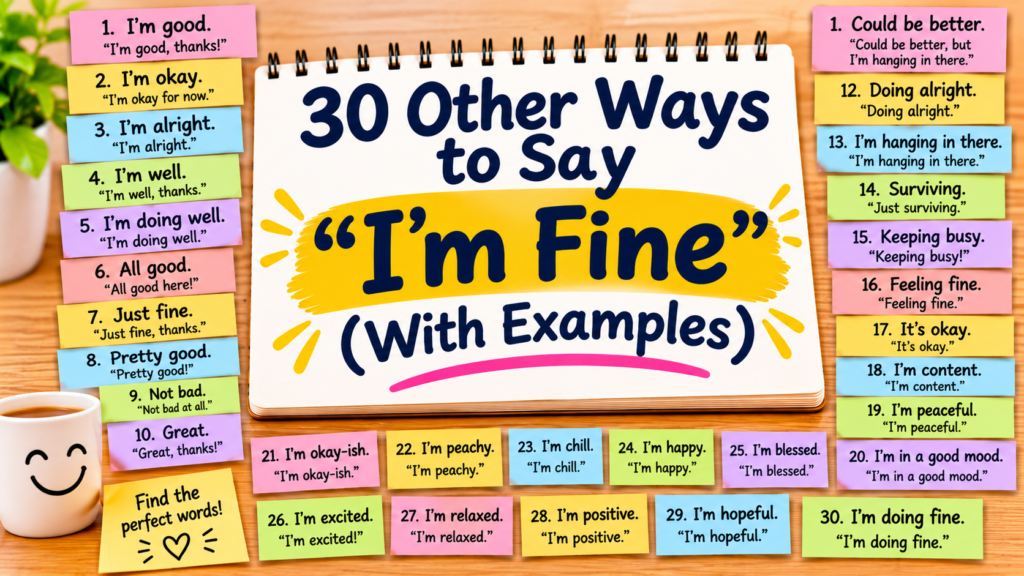
30 Alternatives to Say “I’m Fine” (With Examples)
Here is the complete list of 30 alternatives you can use instead of saying “I’m fine.” These expressions range from casual and friendly to professional and reassuring.
- I’m Doing Well
- I’m Good, Thanks
- Everything Is Okay
- I’m Doing Alright
- Can’t Complain
- I’m Pretty Good
- I’m Feeling Great
- All Is Well
- I’m Managing
- I’m Hanging In There
- Things Are Going Well
- I’m Doing Just Fine
- No Complaints Here
- I’m Quite Alright
- I’m Feeling Okay
- Everything’s Under Control
- I’m Keeping Well
- I’m In Good Shape
- I’m Getting By
- Life Is Good
- I’m Doing Better
- I’m As Good as Ever
- I’m Feeling Positive
- I’m Well, Thank You
- Things Are Looking Up
- I’m Having a Good Day
- I’m Taking It Easy
- I’m Staying Positive
- I’m Doing Pretty Alright
- Couldn’t Be Better
1. I’m Doing Well
Meaning:
“I’m doing well” means that you’re feeling good and things are going positively in your life.
Definition:
A polite and natural expression used to communicate that you’re healthy, happy, or generally satisfied with how things are going.
Detailed Explanation:
This is one of the most versatile alternatives to “I’m fine.” It sounds slightly more polished and confident while remaining friendly. You can use it in professional conversations, casual chats, or when responding to someone who genuinely wants to know how you’re doing.
Scenario Examples:
- “How have you been lately?” “I’m doing well, thanks for asking!”
- “How are things at work?” “I’m doing well, and the new project is going smoothly.”
Best Use:
Use this expression in workplace conversations, everyday greetings, and polite interactions.
Tone:
Polite, positive, friendly, and professional.
2. I’m Good, Thanks
Meaning:
“I’m good, thanks” means you’re feeling okay and appreciate someone checking on you.
Definition:
A casual expression used to acknowledge someone’s concern while communicating that you’re doing well.
Detailed Explanation:
This phrase feels relaxed and natural. It’s especially useful when friends, family members, or coworkers ask how you’re doing. Adding “thanks” makes your response sound more appreciative and considerate.
Scenario Examples:
- “Hey, how are you today?” “I’m good, thanks! How about you?”
- “Everything okay with you?” “I’m good, thanks for checking.”
Best Use:
Use it in informal conversations, friendly messages, and everyday social interactions.
Tone:
Casual, warm, appreciative, and friendly.
3. Everything Is Okay
Meaning:
“Everything is okay” means that things are going smoothly and there isn’t anything particularly wrong.
Definition:
A reassuring expression used to communicate that your current circumstances are manageable or satisfactory.
Detailed Explanation:
This alternative is particularly helpful when someone is worried about you. Instead of simply saying you’re fine, you reassure them that nothing serious is happening. It can also help prevent unnecessary concern when you’re dealing with ordinary daily challenges.
Scenario Examples:
- “You seem a little quiet. Is something wrong?” “Don’t worry, everything is okay.”
- “How are things at home?” “Everything is okay, thanks for asking.”
Best Use:
Use it when reassuring friends, family members, or colleagues who are concerned about you.
Tone:
Reassuring, gentle, calm, and comforting.
4. I’m Doing Alright
Meaning:
“I’m doing alright” means you’re managing your daily life and generally feeling okay.
Definition:
An informal expression that communicates a satisfactory or reasonably positive state of well-being.
Detailed Explanation:
This phrase is useful when you’re neither extremely happy nor particularly upset. It expresses a balanced feeling without exaggerating your situation. It’s also a good choice when you want to answer honestly but don’t feel like explaining everything.
Scenario Examples:
- “How have you been since we last met?” “I’m doing alright, just keeping busy.”
- “Are you feeling better now?” “Yes, I’m doing alright.”
Best Use:
Use it in casual conversations when you want to express that you’re managing comfortably.
Tone:
Relaxed, honest, neutral, and friendly.
5. Can’t Complain
Meaning:
“Can’t complain” means that things are going reasonably well and you don’t have anything serious to complain about.
Definition:
A casual idiomatic expression used to describe a generally satisfactory situation.
Detailed Explanation:
This phrase adds a little personality to your response. It’s often used when someone asks how life is going, especially during everyday conversations. It doesn’t necessarily mean everything is perfect. Instead, it suggests that you’re satisfied with how things are going.
Scenario Examples:
- “How’s everything going?” “Can’t complain! Life has been treating me well.”
- “How’s the new job?” “Can’t complain. The team is really supportive.”
Best Use:
Use it with friends, acquaintances, and coworkers in relaxed conversations.
Tone:
Casual, cheerful, humorous, and laid-back.
6. I’m Pretty Good
Meaning:
“I’m pretty good” means you’re feeling good and generally satisfied with your current situation.
Definition:
An informal expression that communicates a positive but not overly enthusiastic emotional state.
Detailed Explanation:
This alternative sounds natural and conversational. It’s a good option when you want to express that you’re doing better than just okay. It also keeps the conversation friendly without making your response sound overly formal.
Scenario Examples:
- “How are you feeling today?” “I’m pretty good, actually.”
- “How’s everything going with your studies?” “I’m pretty good. I’ve been making progress.”
Best Use:
Use it in everyday conversations with friends, classmates, and familiar colleagues.
Tone:
Friendly, positive, relaxed, and approachable.
7. I’m Feeling Great
Meaning:
“I’m feeling great” means you’re happy, energetic, and in a particularly positive state of mind.
Definition:
An enthusiastic expression used to communicate excellent physical or emotional well-being.
Detailed Explanation:
When you’re genuinely having a good day, this phrase communicates more excitement than simply saying you’re fine. It can make conversations feel more positive and encourage others to share their happiness, too.
Scenario Examples:
- “How are you doing after your vacation?” “I’m feeling great! It was exactly what I needed.”
- “Are you ready for the presentation?” “I’m feeling great and looking forward to it.”
Best Use:
Use it when you’re genuinely happy, energetic, or excited about something.
Tone:
Enthusiastic, cheerful, confident, and upbeat.
8. All Is Well
Meaning:
“All is well” means everything is going as expected and there are no significant problems.
Definition:
A reassuring expression used to describe a peaceful, satisfactory, or positive situation.
Detailed Explanation:
This phrase sounds thoughtful and slightly more formal than “I’m fine.” It’s especially useful when someone asks whether everything is going smoothly. It can also communicate a sense of calm and contentment without requiring additional details.
Scenario Examples:
- “I wanted to check if everything was okay.” “Thank you. All is well.”
- “How’s the family doing?” “All is well, and everyone is happy.”
Best Use:
Use it in thoughtful messages, professional conversations, and reassuring replies.
Tone:
Calm, reassuring, composed, and polite.
9. I’m Managing
Meaning:
“I’m managing” means you’re handling your responsibilities and dealing with whatever is happening in your life.
Definition:
A straightforward expression used to describe your ability to cope with everyday situations or challenges.
Detailed Explanation:
This phrase is useful when life isn’t perfect, but you’re making things work. It communicates honesty without requiring you to share every personal detail. It can also invite a more understanding conversation when someone genuinely wants to know how you’re coping.
Scenario Examples:
- “How are you handling everything lately?” “I’m managing, one day at a time.”
- “Is work becoming too stressful?” “I’m managing, and I’m trying to stay organized.”
Best Use:
Use it when you’re dealing with responsibilities, challenges, or a busy schedule.
Tone:
Honest, practical, reserved, and composed.
10. I’m Hanging In There
Meaning:
“I’m hanging in there” means you’re doing your best to stay strong despite difficulties or challenging circumstances.
Definition:
An informal expression used to communicate that you’re coping with a difficult situation.
Detailed Explanation:
Unlike “I’m fine,” this phrase acknowledges that things might not be easy. It shows that you’re continuing to move forward, even when you’re tired or overwhelmed. It’s also a gentle way to be honest without turning a casual conversation into a serious discussion.
Scenario Examples:
- “How have you been since the busy season started?” “I’m hanging in there, just taking things one day at a time.”
- “How are you coping with everything?” “I’m hanging in there. Thanks for checking on me.”
Best Use:
Use it when dealing with stress, difficult periods, or demanding responsibilities.
Tone:
Honest, resilient, vulnerable, and hopeful.
11. Things Are Going Well
Meaning:
“Things are going well” means your current circumstances are positive and progressing smoothly.
Definition:
A conversational expression used to describe satisfactory progress in personal or professional life.
Detailed Explanation:
This alternative shifts attention from your feelings to your overall circumstances. It’s especially useful when someone asks about your work, studies, relationships, or daily activities. It also gives you an opportunity to share a little positive news.
Scenario Examples:
- “How’s your new business doing?” “Things are going well so far.”
- “How is everything with your family?” “Things are going well, and everyone is healthy.”
Best Use:
Use it when discussing work, personal goals, relationships, or general progress.
Tone:
Positive, confident, conversational, and reassuring.
12. I’m Doing Just Fine
Meaning:
“I’m doing just fine” means you’re perfectly okay and don’t have any major concerns.
Definition:
A reassuring expression used to communicate that your well-being or circumstances are satisfactory.
Detailed Explanation:
This phrase sounds slightly more emphatic than “I’m fine.” It can reassure someone who seems worried or make your response feel more complete. Depending on your delivery, however, it can also sound firm when you want to end a conversation about your personal situation.
Scenario Examples:
- “Are you sure you don’t need any help?” “I’m doing just fine, but thank you.”
- “How are you feeling after the appointment?” “I’m doing just fine.”
Best Use:
Use it when reassuring someone or responding to a friendly check-in.
Tone:
Confident, reassuring, polite, and sometimes firm.
13. No Complaints Here
Meaning:
“No complaints here” means you’re satisfied with how things are going and don’t have anything significant to complain about.
Definition:
An informal expression used to communicate contentment with your current circumstances.
Detailed Explanation:
This phrase is a friendly way to answer questions about your well-being. It often suggests that life is treating you reasonably well, even if everything isn’t perfect. Its relaxed wording also makes it suitable for lighthearted conversations.
Scenario Examples:
- “How’s life treating you?” “No complaints here!”
- “Are you enjoying your new position?” “No complaints here. I’m learning something new every day.”
Best Use:
Use it during casual conversations with friends, coworkers, and acquaintances.
Tone:
Lighthearted, cheerful, relaxed, and friendly.
14. I’m Quite Alright
Meaning:
“I’m quite alright” means you’re doing reasonably well and feel comfortable with your current situation.
Definition:
A polite expression used to communicate satisfactory physical or emotional well-being.
Detailed Explanation:
This alternative sounds a little more refined than “I’m fine.” It’s useful when you want to respond politely without sounding overly enthusiastic. It can also reassure someone that you’re comfortable and don’t need immediate assistance.
Scenario Examples:
- “Would you like me to help you with anything?” “Thank you, I’m quite alright.”
- “How have you been recently?” “I’m quite alright, just enjoying a quieter routine.”
Best Use:
Use it in polite conversations, social situations, and moderately formal interactions.
Tone:
Polite, composed, gentle, and reserved.
15. I’m Feeling Okay
Meaning:
“I’m feeling okay” means your emotional or physical condition is satisfactory, although you may not feel especially happy or energetic.
Definition:
A simple expression used to describe a neutral or moderately positive state of well-being.
Detailed Explanation:
This phrase is helpful when you want to communicate your actual feelings without pretending everything is perfect. It leaves room for honesty and makes it easier to discuss your emotions if the other person asks further questions.
Scenario Examples:
- “How are you feeling after a long day?” “I’m feeling okay, just a little tired.”
- “Are you feeling better today?” “Yes, I’m feeling okay now.”
Best Use:
Use it when discussing your emotional or physical condition with someone you trust.
Tone:
Honest, neutral, gentle, and conversational.
16. Everything’s Under Control
Meaning:
“Everything’s under control” means you’re handling your responsibilities and managing your current situation successfully.
Definition:
A confident expression used to reassure others that a situation is being managed properly.
Detailed Explanation:
This phrase is particularly useful when someone is concerned about your workload, responsibilities, or personal circumstances. It communicates confidence and shows that you’re capable of handling the situation. However, use it only when you genuinely have things under control.
Scenario Examples:
- “Do you need help finishing the project?” “Thanks, but everything’s under control.”
- “Are you managing all the arrangements?” “Yes, everything’s under control.”
Best Use:
Use it in workplace discussions, planning conversations, and situations involving responsibilities.
Tone:
Confident, reassuring, professional, and decisive.
17. I’m Keeping Well
Meaning:
“I’m keeping well” means you’re maintaining good health and generally feeling comfortable.
Definition:
A polite expression used to communicate that your physical and overall well-being remain satisfactory.
Detailed Explanation:
This phrase is especially common in friendly conversations where someone asks about your health or general condition. It sounds considerate and slightly traditional. It’s also a nice way to respond when reconnecting with someone after a long time.
Scenario Examples:
- “How have you been since we last spoke?” “I’m keeping well, thank you.”
- “I hope you’re doing okay.” “Yes, I’m keeping well. I hope you are too.”
Best Use:
Use it in polite conversations, personal messages, and friendly check-ins.
Tone:
Warm, courteous, calm, and thoughtful.
18. I’m In Good Shape
Meaning:
“I’m in good shape” means you’re physically or mentally doing well and feel capable of handling your activities.
Definition:
An expression used to describe a healthy, strong, or satisfactory physical or general condition.
Detailed Explanation:
This alternative can communicate confidence about your health, energy, or readiness. It’s particularly suitable when someone asks how you’re feeling after recovering from an illness or preparing for a demanding activity. In some contexts, it can also refer to being well-prepared.
Scenario Examples:
- “Are you feeling better after your recovery?” “Yes, I’m in good shape now.”
- “Are you ready for the competition?” “Absolutely. I’m in good shape.”
Best Use:
Use it when discussing fitness, recovery, health, or readiness.
Tone:
Confident, positive, energetic, and assured.
19. I’m Getting By
Meaning:
“I’m getting by” means you’re managing your daily life and meeting your basic responsibilities, even if things aren’t particularly easy.
Definition:
An informal expression used to describe a situation in which someone is coping adequately with their circumstances.
Detailed Explanation:
This phrase is more realistic than saying you’re completely fine. It suggests that you’re handling things but may still have challenges. It’s a useful expression when you want to be honest without sharing too much about your personal life.
Scenario Examples:
- “How have you been managing lately?” “I’m getting by, taking things slowly.”
- “How’s everything going with your new schedule?” “I’m getting by, but it’s been a little hectic.”
Best Use:
Use it when you’re managing responsibilities or navigating a challenging period.
Tone:
Honest, modest, neutral, and slightly reserved.
20. Life Is Good
Meaning:
“Life is good” means you’re satisfied with your circumstances and appreciate the positive things happening around you.
Definition:
A cheerful expression used to communicate happiness, gratitude, and general contentment.
Detailed Explanation:
This alternative is more expressive than “I’m fine.” It suggests that you’re enjoying life and feeling grateful for your experiences. It’s particularly effective when talking with friends or sharing a positive update about your personal life.
Scenario Examples:
- “How’s everything going these days?” “Life is good! I’ve been enjoying my weekends.”
- “Are you happy with how things are turning out?” “Yes, life is good, and I’m grateful.”
Best Use:
Use it when you’re genuinely happy and want to express gratitude or contentment.
Tone:
Cheerful, optimistic, grateful, and positive.
21. I’m Doing Better
Meaning:
“I’m doing better” means your condition or circumstances have improved compared with how they were previously.
Definition:
An expression used to communicate progress or improvement in physical health, emotional well-being, or personal circumstances.
Detailed Explanation:
This phrase is particularly meaningful when someone knows you’ve been dealing with a difficult situation. It acknowledges that things may not have been easy before but shows that you’re making progress. It also gives the other person reassurance without requiring a detailed explanation.
Scenario Examples:
- “How are you feeling after being sick?” “I’m doing better, thank you.”
- “Have things improved at work?” “Yes, I’m doing better and feeling less stressed.”
Best Use:
Use it when responding to someone who knows about your recent challenges or recovery.
Tone:
Hopeful, sincere, reassuring, and positive.
22. I’m As Good as Ever
Meaning:
“I’m as good as ever” means you’re feeling just as well as you normally do, or perhaps even as well as you’ve ever felt.
Definition:
An expression used to communicate consistent or excellent well-being.
Detailed Explanation:
This phrase conveys confidence and positivity. It suggests that you’re maintaining your usual energy, health, or happiness. It’s especially useful when reconnecting with someone who hasn’t seen you for a while and wants to know how you’re doing.
Scenario Examples:
- “You look wonderful! How have you been?” “I’m as good as ever.”
- “How are you managing these days?” “I’m as good as ever, thanks for asking.”
Best Use:
Use it during reunions, friendly conversations, and positive personal updates.
Tone:
Confident, cheerful, upbeat, and assured.
23. I’m Feeling Positive
Meaning:
“I’m feeling positive” means you’re maintaining an optimistic attitude and looking forward to good things.
Definition:
An expression used to communicate hopefulness, confidence, and a constructive emotional outlook.
Detailed Explanation:
This alternative focuses more on your mindset than your physical condition. It’s useful when you’re facing uncertainty but choosing to remain hopeful. It can also encourage a positive conversation with someone who wants to know how you’re handling things.
Scenario Examples:
- “How do you feel about the upcoming changes?” “I’m feeling positive about them.”
- “Are you worried about the results?” “Not too much. I’m feeling positive.”
Best Use:
Use it when discussing goals, upcoming changes, challenges, or future plans.
Tone:
Optimistic, encouraging, hopeful, and confident.
24. I’m Well, Thank You
Meaning:
“I’m well, thank you” means you’re in good health or generally doing well, while politely acknowledging someone’s concern.
Definition:
A courteous expression commonly used to respond to questions about your well-being.
Detailed Explanation:
This is a more formal and grammatically traditional alternative to “I’m fine.” It’s suitable for professional interactions, polite introductions, and conversations with people you don’t know very well. Adding “thank you” makes the response feel considerate.
Scenario Examples:
- “Good morning. How are you?” “I’m well, thank you. How are you?”
- “I hope everything is going well.” “I’m well, thank you for asking.”
Best Use:
Use it in professional conversations, formal greetings, and respectful social interactions.
Tone:
Formal, respectful, courteous, and warm.
25. Things Are Looking Up
Meaning:
“Things are looking up” means your circumstances are improving and you’re becoming more hopeful about the future.
Definition:
An optimistic idiomatic expression used to describe positive changes after a difficult or uncertain period.
Detailed Explanation:
This phrase is a wonderful alternative when you’ve recently experienced challenges but are starting to see improvements. It communicates progress without suggesting that everything is already perfect. It also gives others a reason to feel encouraged about your situation.
Scenario Examples:
- “How have things been since you changed jobs?” “Things are looking up, and I’m enjoying the new environment.”
- “Are you feeling more hopeful now?” “Yes, things are looking up.”
Best Use:
Use it when discussing improvements, personal growth, career progress, or positive changes.
Tone:
Hopeful, optimistic, encouraging, and positive.
26. I’m Having a Good Day
Meaning:
“I’m having a good day” means you’re enjoying your day and things are going positively at the moment.
Definition:
A conversational expression used to describe a pleasant daily experience or positive mood.
Detailed Explanation:
This phrase gives a more specific answer than simply saying you’re fine. It tells the other person that you’re enjoying the present moment. It’s especially useful during casual conversations when you want to share a little happiness.
Scenario Examples:
- “How’s your day going so far?” “I’m having a good day, thanks!”
- “You seem cheerful today.” “I am! I’m having a good day.”
Best Use:
Use it during daily check-ins, friendly conversations, and casual messages.
Tone:
Cheerful, relaxed, friendly, and upbeat.
27. I’m Taking It Easy
Meaning:
“I’m taking it easy” means you’re relaxing, avoiding unnecessary stress, or keeping your activities manageable.
Definition:
An informal expression used to describe a relaxed lifestyle or a decision to avoid excessive effort or pressure.
Detailed Explanation:
This phrase is useful when you’re enjoying some rest or trying to maintain a healthy balance. It doesn’t necessarily mean you’re doing nothing. Instead, it suggests that you’re giving yourself time to relax and enjoy a slower pace.
Scenario Examples:
- “What are you doing this weekend?” “I’m taking it easy and catching up on some rest.”
- “How have you been after the busy week?” “I’m taking it easy today.”
Best Use:
Use it when discussing relaxation, weekends, holidays, or time away from responsibilities.
Tone:
Relaxed, casual, peaceful, and laid-back.
28. I’m Staying Positive
Meaning:
“I’m staying positive” means you’re choosing to maintain an optimistic attitude despite possible challenges.
Definition:
An expression used to communicate determination, hope, and emotional resilience.
Detailed Explanation:
This alternative is especially meaningful when things aren’t going exactly as planned. It shows that you’re trying to focus on opportunities rather than difficulties. It also allows you to acknowledge challenges without letting them define your overall outlook.
Scenario Examples:
- “How are you handling the uncertainty?” “I’m staying positive and focusing on what I can control.”
- “Are you worried about the project?” “A little, but I’m staying positive.”
Best Use:
Use it when dealing with uncertainty, setbacks, personal goals, or challenging situations.
Tone:
Resilient, hopeful, encouraging, and determined.
29. I’m Doing Pretty Alright
Meaning:
“I’m doing pretty alright” means you’re generally okay and managing your circumstances without any major problems.
Definition:
An informal expression used to describe a reasonably satisfactory emotional or personal condition.
Detailed Explanation:
This phrase has a relaxed, conversational feel. It’s suitable when you want to give an honest but uncomplicated response. It suggests that you’re doing reasonably well, even if you don’t feel especially excited or enthusiastic.
Scenario Examples:
- “How have things been going?” “I’m doing pretty alright, thanks.”
- “How’s everything with your new routine?” “I’m doing pretty alright. Still getting used to it.”
Best Use:
Use it in casual conversations with friends, family, and familiar coworkers.
Tone:
Informal, friendly, relaxed, and neutral.
30. Couldn’t Be Better
Meaning:
“Couldn’t be better” means you’re feeling extremely happy or satisfied and everything is going exceptionally well.
Definition:
An enthusiastic idiomatic expression used to describe an excellent state of well-being or satisfaction.
Detailed Explanation:
This is a stronger alternative to “I’m fine.” It communicates that you’re genuinely enjoying your current situation and have little or nothing to complain about. It’s a great way to share enthusiasm when life is treating you particularly well.
Scenario Examples:
- “How are you enjoying your vacation?” “Couldn’t be better! I’m having an amazing time.”
- “How’s the new job treating you?” “Couldn’t be better. I love working with this team.”
Best Use:
Use it when you’re genuinely happy, excited, and completely satisfied with your circumstances.
Tone:
Enthusiastic, confident, cheerful, and upbeat.
Conclusion
Finding the right alternative to “I’m fine” can make everyday conversations feel more natural and meaningful. While the phrase is simple and polite, it doesn’t always communicate your actual feelings. Expressions like “I’m doing well,” “I’m hanging in there,” “Everything is okay,” and “I’m staying positive” allow you to respond with greater honesty and warmth.
The best expression depends on your situation, relationship, and emotional state. If you’re having a wonderful day, say “I’m feeling great.” If you’re managing a difficult period, “I’m getting by” or “I’m hanging in there” might feel more genuine. Remember, you don’t have to pretend everything is perfect. Sometimes, the most thoughtful response is simply an honest one.