

30 Other Ways to Say ‘On the Other Hand’ helps you find clear, natural alternatives for contrast in essays, emails, and everyday writing.
In English, “on the other hand” is a common connector and transitional phrase for showing contrast. It helps speakers and writers compare ideas, highlight differences, present an alternative view, and provide another perspective in a discussion or argument.
This useful phrase can make communication clearer, yet overuse may make writing sound repetitive. Simple transitions can make essays, emails, presentations, and everyday writing feel more natural, clear, and engaging.
Choosing the right alternative matters because your choice of words shapes the tone, professionalism, clarity, level of formality, precision, and nuance of a message. In casual conversation or daily conversation, you might describe summer and its exhausting heat with a simple contrast.
In a professional email about a project, conversely can show contrast between strong results and areas needing improvement. Learning synonyms and alternatives can support expressing contrast, presenting another perspective, enriching vocabulary, enhancing finesse, and improving expression and writing style in business communication.
Quick Answer
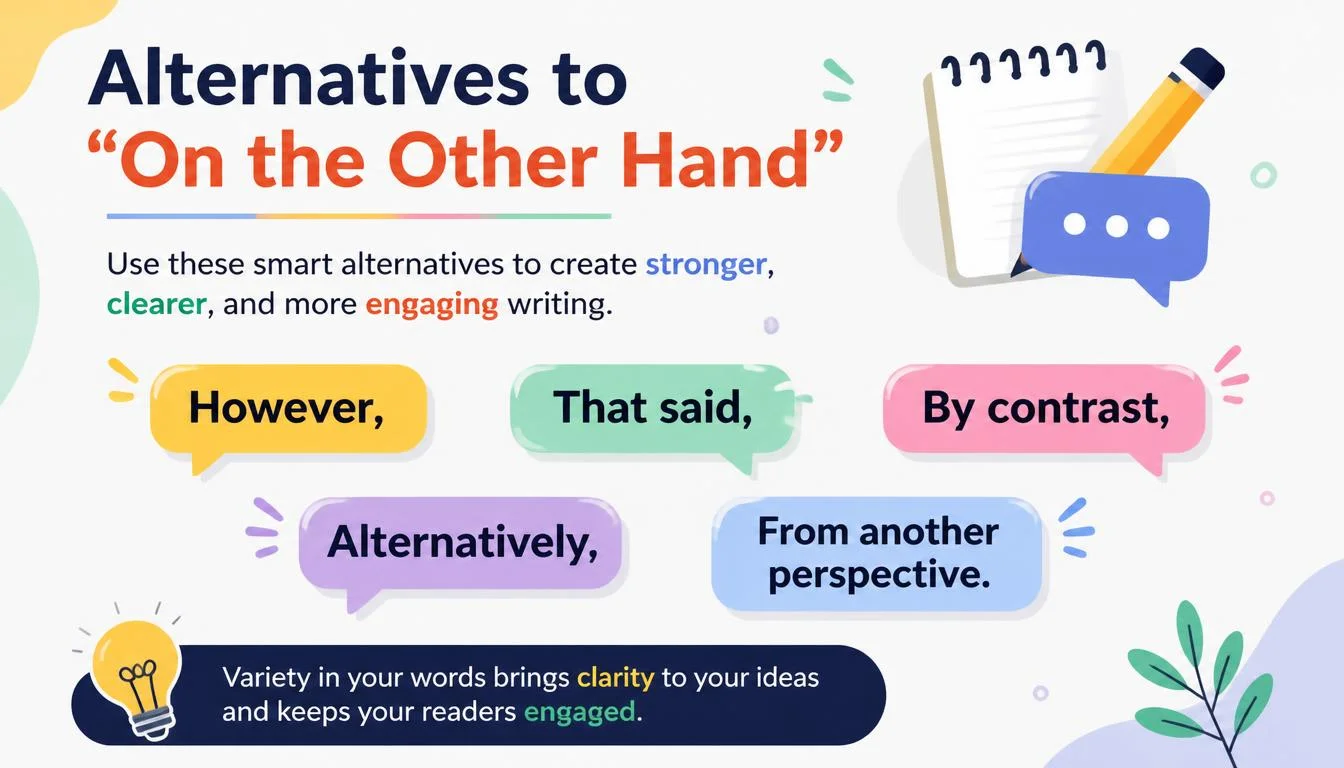
If you want alternatives to “on the other hand,” you can use phrases such as “however,” “that said,” “by contrast,” “alternatively,” and “from another perspective.” The best choice depends on what you want to express. For a direct contrast, “however” or “by contrast” works well, while “from another perspective” sounds more thoughtful and open-minded. For another option or course of action, “alternatively” or “instead” is more precise. These alternatives can make your writing feel clearer, smoother, and less repetitive in emails, essays, conversations, and professional communication.
What Does “On the Other Hand” Mean?
“On the other hand” is used to introduce a different, contrasting, or opposite point of view. It often appears when two ideas, situations, choices, or opinions need to be compared fairly. For example, you might say, “The job pays well. On the other hand, the commute is very long.” Here, the phrase helps the reader understand that the second point creates a contrast with the first.
The expression does not always mean that the second idea is completely opposite. Sometimes, it simply introduces another side of an issue. It is common in everyday conversations, academic writing, business communication, and thoughtful discussions.
Is It Professional or Polite to Say “On the Other Hand”?
Yes, “on the other hand” is both professional and polite. It is especially useful when you want to acknowledge another perspective without sounding dismissive or argumentative. In professional writing, it can help you present balanced reasoning by showing that you have considered more than one side.
However, using the phrase repeatedly can make your writing sound predictable. Depending on the situation, alternatives such as “alternatively,” “by contrast,” “from another perspective,” or “that said” may sound smoother and more appropriate.
Advantages of Saying “On the Other Hand”
- Shows balance: It helps you present more than one side of an argument or situation.
- Creates clear contrast: Readers can easily recognize that a different idea is being introduced.
- Works in many settings: The phrase fits conversations, essays, emails, reports, and professional discussions.
Disadvantages of Saying “On the Other Hand”
- Can become repetitive: Using it too often may make your writing feel formulaic.
- May sound slightly formal: In casual conversations, simpler expressions can feel more natural.
- Does not fit every contrast: Some situations call for a more precise phrase, such as “however,” “instead,” or “by comparison.”
Synonyms for “On the Other Hand”
- However
- That Said
- By Contrast
- In Contrast
- Alternatively
- On the Contrary
- Conversely
- From Another Perspective
- Looking at It Another Way
- Then Again
- At the Same Time
- In Comparison
- By Comparison
- In Another View
- Another Perspective Is
- From Another Point of View
- That Being Said
- Even So
- Still
- Yet
- Nevertheless
- Nonetheless
- Instead
- Rather
- In a Different Light
- Seen Another Way
- Alternatively Speaking
- Another Way to Look at It
- There Is Another Side to Consider
- Looking at the Other Side
1. However
Meaning: “However” introduces an idea that contrasts with something previously mentioned.
Definition: It is a transition word used to show contrast, limitation, or an unexpected difference.
Detailed Explanation: “However” is one of the most natural alternatives to “on the other hand.” It works particularly well when you want to make your writing concise and professional. It can connect two contrasting thoughts without making the sentence feel overly complicated.
Scenario Example: The project is challenging. However, it gives us an excellent opportunity to learn.
Best Use: Use it in professional emails, essays, reports, and everyday writing.
Tone: Professional, clear, balanced, and natural.
2. That Said
Meaning: “That said” introduces a contrasting point after acknowledging something.
Definition: It is a transition used to recognize a previous idea before presenting another perspective.
Detailed Explanation: This phrase sounds conversational while still being polished. It is useful when you don’t want your contrasting point to completely dismiss what came before.
Scenario Example: The apartment is expensive. That said, its location is excellent.
Best Use: Use it in emails, discussions, articles, and thoughtful conversations.
Tone: Balanced, conversational, and thoughtful.
3. By Contrast
Meaning: “By contrast” highlights a clear difference between two things.
Definition: It is a phrase used to emphasize how one situation differs from another.
Detailed Explanation: This expression is especially useful when comparing two people, choices, results, or situations. It makes the relationship between the two ideas very clear.
Scenario Example: The first plan is inexpensive. By contrast, the second option offers more features.
Best Use: Use it for comparisons, reports, academic writing, and business communication.
Tone: Formal, precise, and analytical.
4. In Contrast
Meaning: “In contrast” introduces something that is noticeably different from what was previously discussed.
Definition: It signals a difference or opposing characteristic between two ideas.
Detailed Explanation: This phrase is straightforward and easy to understand. It works well when the contrast is strong and you want the reader to notice the difference.
Scenario Example: The old system was difficult to use. In contrast, the new system is much simpler.
Best Use: Use it in professional and academic writing.
Tone: Clear, formal, and objective.
5. Alternatively
Meaning: “Alternatively” introduces another choice or possibility.
Definition: It means as another option or possibility.
Detailed Explanation: “Alternatively” is ideal when the second idea is not simply different but represents another possible path. It can make recommendations sound more flexible.
Scenario Example: We could meet on Friday. Alternatively, we could schedule the meeting for Monday.
Best Use: Use it when discussing options, solutions, plans, or choices.
Tone: Professional, flexible, and practical.
6. On the Contrary
Meaning: “On the contrary” introduces an idea that directly opposes a previous statement.
Definition: It is used to emphasize that something is opposite to what has just been suggested.
Detailed Explanation: Unlike “on the other hand,” this phrase usually indicates a stronger contradiction. It should not be used simply whenever two ideas are different.
Scenario Example: I don’t think the task was boring. On the contrary, I found it extremely interesting.
Best Use: Use it when correcting or strongly contradicting an idea.
Tone: Direct, confident, and somewhat formal.
7. Conversely
Meaning: “Conversely” introduces an idea that is reversed or opposite to the previous one.
Definition: It means in the opposite way or in reverse.
Detailed Explanation: This is a strong choice when explaining relationships between two situations. It is more formal than everyday alternatives.
Scenario Example: Higher prices can reduce demand. Conversely, lower prices may encourage more purchases.
Best Use: Use it in academic, technical, business, and analytical writing.
Tone: Formal, precise, and analytical.
8. From Another Perspective
Meaning: This phrase introduces a different way of viewing a situation.
Definition: It signals that an issue can be understood from another viewpoint.
Detailed Explanation: This alternative is helpful when you want to sound open-minded rather than argumentative. It encourages readers to consider another interpretation.
Scenario Example: The decision may seem risky. From another perspective, it could create valuable opportunities.
Best Use: Use it in discussions, essays, workplace conversations, and thoughtful writing.
Tone: Open-minded, respectful, and thoughtful.
9. Looking at It Another Way
Meaning: It means considering the same situation from a different angle.
Definition: This conversational phrase introduces an alternative interpretation.
Detailed Explanation: “Looking at it another way” sounds natural and approachable. It is especially useful when you want to introduce a different opinion without sounding confrontational.
Scenario Example: The delay was frustrating. Looking at it another way, it gave us time to fix the problem.
Best Use: Use it in casual conversations, discussions, and friendly writing.
Tone: Friendly, conversational, and reflective.
See More: 30 Other Ways to Say ‘Welcome Aboard’ with Examples
10. Then Again
Meaning: “Then again” introduces another thought that changes or qualifies what was just said.
Definition: It is a conversational expression used to reconsider an earlier point.
Detailed Explanation: This phrase works well when you’re thinking through a situation aloud. It suggests that the speaker is weighing another possibility.
Scenario Example: I could buy the cheaper laptop. Then again, the more expensive one may last longer.
Best Use: Use it in casual conversations and informal writing.
Tone: Casual, reflective, and natural.
11. At the Same Time
Meaning: “At the same time” introduces another point that exists alongside the first.
Definition: It can show that two ideas are true or relevant simultaneously.
Detailed Explanation: This phrase is useful when the second point does not completely contradict the first. Instead, it adds balance or complexity.
Scenario Example: The work is demanding. At the same time, it is very rewarding.
Best Use: Use it when balancing two ideas or acknowledging complexity.
Tone: Balanced, natural, and conversational.
12. In Comparison
Meaning: “In comparison” introduces a point by comparing it with something else.
Definition: It means when considered alongside another thing.
Detailed Explanation: This phrase helps readers understand differences in size, quality, performance, cost, or other characteristics.
Scenario Example: The first model is lightweight. In comparison, the second model is much heavier.
Best Use: Use it in comparisons, reviews, reports, and analytical writing.
Tone: Objective, clear, and professional.
13. By Comparison
Meaning: “By comparison” highlights a difference between two things.
Definition: It means that something becomes clearer when compared with another example.
Detailed Explanation: It is similar to “in comparison” but often sounds slightly more deliberate. It works especially well when describing measurable differences.
Scenario Example: The first route takes an hour. By comparison, the second takes only thirty minutes.
Best Use: Use it in reports, articles, reviews, and comparisons.
Tone: Professional, analytical, and precise.
14. In Another View
Meaning: “In another view” introduces a different interpretation or opinion.
Definition: It refers to another way of understanding a situation.
Detailed Explanation: While less common than some alternatives, the expression can be useful when emphasizing that different people may interpret the same issue differently.
Scenario Example: The change may seem unnecessary. In another view, it could improve efficiency.
Best Use: Use it when discussing different opinions or interpretations.
Tone: Thoughtful and somewhat formal.
15. Another Perspective Is
Meaning: This phrase introduces another viewpoint on a subject.
Definition: It signals that there is an additional way to understand an issue.
Detailed Explanation: It directly tells the reader that the discussion is shifting toward another perspective. This makes it useful for balanced arguments.
Scenario Example: The plan may increase costs. Another perspective is that it could improve long-term results.
Best Use: Use it in discussions, presentations, essays, and professional communication.
Tone: Balanced, thoughtful, and professional.
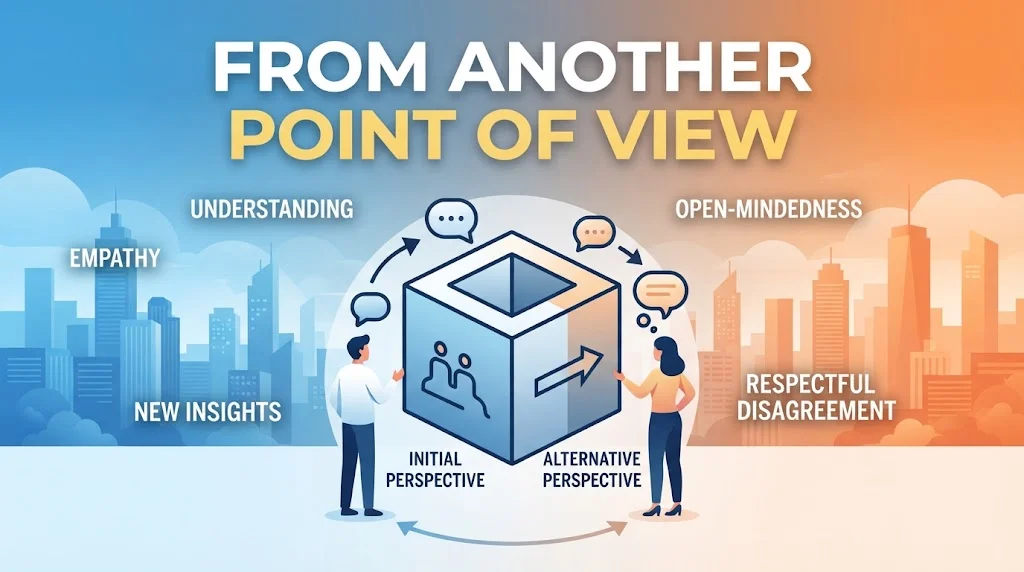
16. From Another Point of View
Meaning: It means considering something from a different perspective.
Definition: The phrase introduces an alternative viewpoint or interpretation.
Detailed Explanation: This expression encourages people to step outside their original position. It can make disagreement feel more respectful because it focuses on perspective rather than proving someone wrong.
Scenario Example: The decision may seem unfair. From another point of view, it may have been necessary.
Best Use: Use it in debates, discussions, essays, and sensitive conversations.
Tone: Respectful, thoughtful, and balanced.
17. That Being Said
Meaning: “That being said” introduces a contrasting or qualifying thought.
Definition: It acknowledges a previous statement before presenting another idea.
Detailed Explanation: This expression helps you disagree or add a qualification without abruptly changing direction. It is common in professional and conversational writing.
Scenario Example: The proposal needs some changes. That being said, the overall idea is promising.
Best Use: Use it in emails, reports, discussions, and feedback.
Tone: Polite, balanced, and professional.
18. Even So
Meaning: “Even so” means that something remains true despite what was just mentioned.
Definition: It introduces a contrasting point that continues despite a previous fact.
Detailed Explanation: This phrase is useful when the second statement does not erase the first. Instead, it shows that another conclusion still stands.
Scenario Example: The weather was terrible. Even so, we enjoyed the trip.
Best Use: Use it in conversations, stories, essays, and informal writing.
Tone: Natural, reflective, and slightly informal.
19. Still
Meaning: “Still” can introduce a contrasting or qualifying thought.
Definition: It signals that something remains true despite another fact.
Detailed Explanation: This is a short and flexible alternative. Because it is so simple, it can make your writing feel more natural and less formal.
Scenario Example: The course is difficult. Still, I think it is worth taking.
Best Use: Use it in everyday conversations, emails, and informal writing.
Tone: Simple, natural, and conversational.
20. Yet
Meaning: “Yet” introduces an unexpected contrast.
Definition: It is a conjunction or transition that shows contrast despite something previously stated.
Detailed Explanation: “Yet” is concise and powerful. It works especially well when two facts seem surprising when placed together.
Scenario Example: The task was challenging, yet the team completed it early.
Best Use: Use it in professional writing, essays, stories, and everyday communication.
Tone: Concise, polished, and natural.
21. Nevertheless
Meaning: “Nevertheless” means despite what has just been said.
Definition: It introduces a contrasting statement that remains valid despite a previous point.
Detailed Explanation: This word adds a more formal feel to your writing. It is useful when you want to acknowledge a limitation while still emphasizing a positive or opposing conclusion.
Scenario Example: The process is time-consuming. Nevertheless, the results are worthwhile.
Best Use: Use it in formal writing, reports, essays, and professional communication.
Tone: Formal, confident, and polished.
22. Nonetheless
Meaning: “Nonetheless” means despite that or nevertheless.
Definition: It introduces a statement that remains true despite a previous fact.
Detailed Explanation: “Nonetheless” is almost interchangeable with “nevertheless.” It gives your writing a polished quality without sounding overly complicated.
Scenario Example: The proposal has weaknesses. Nonetheless, it deserves serious consideration.
Best Use: Use it in professional, academic, and formal writing.
Tone: Formal, balanced, and confident.
23. Instead
Meaning: “Instead” introduces a different choice or action.
Definition: It means in place of something else.
Detailed Explanation: This word works best when the second idea replaces the first rather than simply contrasting with it. It is particularly useful when discussing decisions or alternatives.
Scenario Example: We could drive there. Instead, we decided to take the train.
Best Use: Use it for choices, actions, solutions, and alternatives.
Tone: Direct, practical, and clear.
24. Rather
Meaning: “Rather” can introduce an alternative or preferred option.
Definition: It indicates that one thing is preferred instead of another.
Detailed Explanation: It is especially useful when correcting or refining an idea. It can make your wording sound more precise.
Scenario Example: We should focus on quality rather than speed.
Best Use: Use it when correcting, refining, or comparing choices.
Tone: Polished, precise, and professional.
25. In a Different Light
Meaning: It means viewing something from another angle or interpretation.
Definition: The phrase describes a different way of understanding or evaluating something.
Detailed Explanation: This alternative has a thoughtful quality. It is useful when a new perspective changes how someone understands a situation.
Scenario Example: The mistake seemed serious at first. In a different light, it became a valuable learning experience.
Best Use: Use it in reflective writing, discussions, essays, and personal communication.
Tone: Thoughtful, reflective, and warm.
26. Seen Another Way
Meaning: “Seen another way” introduces a different interpretation.
Definition: It means that something can be understood differently when viewed from another perspective.
Detailed Explanation: This phrase is excellent when you want to offer another interpretation without presenting it as the only correct one.
Scenario Example: The change may look inconvenient. Seen another way, it could make the process more efficient.
Best Use: Use it in discussions, essays, explanations, and thoughtful conversations.
Tone: Open-minded, conversational, and respectful.
27. Alternatively Speaking
Meaning: This phrase introduces another possible way of thinking or doing something.
Definition: It signals an alternative option, approach, or perspective.
Detailed Explanation: Although “alternatively” is more natural in most situations, this variation can emphasize that another approach deserves consideration.
Scenario Example: Alternatively speaking, we could postpone the launch until next month.
Best Use: Use it when presenting different approaches or options.
Tone: Formal and practical.
See More: 30 Other Ways to Say ‘Thank You for Asking’ Best Uses
28. Another Way to Look at It
Meaning: It introduces another interpretation of the same situation.
Definition: The phrase encourages someone to consider an issue from a different angle.
Detailed Explanation: This is a friendly way to introduce disagreement or another opinion. Instead of saying that someone is wrong, you invite them to consider another possibility.
Scenario Example: The project seems expensive. Another way to look at it is that it could save money later.
Best Use: Use it in friendly discussions, meetings, explanations, and conversations.
Tone: Friendly, respectful, and conversational.
29. There Is Another Side to Consider
Meaning: This phrase reminds the reader that another aspect of an issue deserves attention.
Definition: It introduces an additional perspective, concern, or factor.
Detailed Explanation: This wording is especially helpful when discussing complicated issues. It encourages balanced thinking without suggesting that one side must be completely rejected.
Scenario Example: The new policy could improve productivity. There is another side to consider, though: employees may need more support.
Best Use: Use it in discussions, workplace communication, essays, and decision-making.
Tone: Balanced, thoughtful, and considerate.
30. Looking at the Other Side
Meaning: It means considering a different side of an issue or situation.
Definition: The phrase encourages consideration of another viewpoint or possibility.
Detailed Explanation: This expression is straightforward and human. It works well when you want to remind someone that a situation may have more than one reasonable interpretation.
Scenario Example: The change may create short-term difficulties. Looking at the other side, it could bring important long-term benefits.
Best Use: Use it in conversations, discussions, essays, and reflective writing.
Tone: Thoughtful, balanced, and approachable.
Frequently Asked Questions
1. What does “on the other hand” mean?
“On the other hand” introduces a different, contrasting, or alternative idea. It helps you show another side of a situation without completely rejecting the first point.
2. What is the best alternative to “on the other hand”?
“However” is one of the most useful alternatives because it is short, natural, and professional. Other choices include “that said,” “by contrast,” “conversely,” and “from another perspective.”
3. Is “on the other hand” professional?
Yes, “on the other hand” is professional and polite. It works well in emails, reports, essays, presentations, and workplace discussions when you need to introduce a contrasting point.
4. Can I use “however” instead of “on the other hand”?
Yes. “However” is often a smoother choice when you want to introduce a limitation or contrasting thought. The two phrases are similar, although they do not work in exactly the same situations.
5. What is a casual way to say “on the other hand”?
In casual conversation, you can use “then again,” “still,” “at the same time,” or “looking at it another way.” These options usually sound more relaxed and conversational.
6. What is a formal way to say “on the other hand”?
For formal writing, consider “by contrast,” “conversely,” “nevertheless,” “nonetheless,” or “in contrast.” These expressions are especially suitable for academic and professional writing.
7. Can “alternatively” replace “on the other hand”?
Sometimes. “Alternatively” is best when you are presenting another choice, option, solution, or course of action rather than simply contrasting two ideas.
8. What is the difference between “on the other hand” and “on the contrary”?
“On the other hand” normally presents another side or perspective. “On the contrary” is stronger and usually introduces a statement that directly contradicts or corrects the previous idea.
9. How can I avoid repeating “on the other hand”?
You can vary your transitions according to the meaning you want. Try “however” for general contrast, “by comparison” for comparisons, “instead” for replacement, or “from another point of view” for a different perspective.
10. Is “on the other hand” suitable for essays?
Yes. “On the other hand” is common in essays because it helps create a balanced discussion. However, varying your transitions can make your writing feel more natural, precise, and engaging.
Conclusion
Knowing different ways to say “on the other hand” gives you more control over your writing. Words such as “however,” “that said,” “by contrast,” “alternatively,” and “conversely” can help you express contrast without sounding repetitive.
The best alternative depends on your purpose, audience, and tone. Whether you’re writing an essay, email, presentation, report, or having a casual conversation, choosing the right expression can make your message clearer, smoother, and more effective.