
Explore Other Ways to Say “Sorry for the Late Reply” (With Examples) to make delayed messages sound polite, clear, and natural in daily emails too. Everyone has a backlog sometimes, and emails pile up when work gets busy.
After a few days, you may finally reply, but starting with the same habitual apology is not always the right move. Excessive apologizing can draw unnecessary attention to the delay, even if the recipient has not noticed how much time passed. It may also affect your professional image, professional credibility, and personal credibility.
A delay of a few business days is often normal and expected, so there is no need to make it seem like you are falling short. Good email communication and workplace communication should show respect for the other person’s time while protecting your confidence and professional reputation. Better communication habits, time management, and email etiquette can help you maintain credibility.
The phrase sorry for the delay is grammatically correct and suitable for an everyday email. However, the real issues are often register, tone, and substance rather than grammar. It may sound too casual in a formal complaint or like groveling when there is only a one-day delay. Sometimes, an apology can become too long and bury the answer it was attached to. Following basic grammar rules, sentence structure, correct grammar, and language usage helps you choose the right sentence. Your apology wording should depend on the situation, context, and recipient expectations. For example, a business email, formal complaint response, or informal email may require different wording. A formal apology may suit a serious issue, while a casual apology works well when replying to a friend. Good grammar and judgment, grammatical accuracy, and sentence clarity also help you maintain an appropriate tone, whether you choose a professional tone, casual tone, or formal tone.
When you need to apologize for taking longer than expected, choosing the right alternative can make a meaningful difference. Instead of repeatedly saying the same phrase, try warmer alternatives, professional alternatives, or personal alternatives. These 30 thoughtful ways offer 30 alternatives for replying to a friend, colleague, client, or another important person. You can use a thoughtful apology, sincere apology, heartfelt apology, or genuine apology to show that you value their time, appreciate their patience, and care about the conversation. The examples include alternative phrases, apology phrases, reply alternatives, and late reply alternatives for creating a genuine message, caring message, or thoughtful message.
Whether you need a polite response, warm response, or professional response, focus on effective communication, empathetic communication, appropriate wording, and meaningful acknowledgment. These options are useful for client communication, colleague communication, customer service, customer support, work messages, formal emails, and everyday conversations. A considerate, respectful, and understanding message can express appreciation and gratitude without an unnecessary apology. Sometimes, brief pivots that skip the apology are enough; in other cases, a graceful response, thoughtful response, or concise response is more suitable. This approach supports professional standards, workplace expectations, recipient awareness, self-confidence, and a better response time without making response delays the center of your message.
What Does “Sorry for the Late Reply” Mean?
The phrase “Sorry for the late reply” is a polite expression used when you respond to someone’s message, email, or request later than expected. It acknowledges that there has been a delay and communicates that you recognize the other person’s time and patience.
People commonly use this phrase in personal conversations, professional emails, workplace discussions, and customer communications. It can also express consideration, accountability, and appreciation without requiring a lengthy explanation. A sincere apology helps maintain positive relationships and shows the recipient that their message still matters to you.
Is It Professional and Polite to Say “Sorry for the Late Reply”?
Yes, “Sorry for the late reply” is both professional and polite in most situations. It is a simple, respectful way to acknowledge a delayed response without making the conversation unnecessarily complicated.
In professional communication, it shows accountability and consideration for the recipient’s time. It works well when responding to colleagues, managers, clients, and business partners.
However, the wording can depend on the situation. For a formal email, expressions such as “I apologize for the delayed response” or “Thank you for your patience” may sound more polished. When speaking with friends or familiar colleagues, warmer alternatives such as “Sorry I took so long to get back to you” feel more natural.
The most important thing is to acknowledge the delay, communicate sincerely, and continue the conversation positively.
Advantages and Disadvantages of Saying “Sorry for the Late Reply”
Understanding the advantages and disadvantages of this phrase can help you decide when it is appropriate and when another expression might work better.
Advantages
- Shows consideration: It acknowledges that the other person has been waiting and demonstrates respect for their time.
- Communicates accountability: It shows that you recognize the delayed response rather than ignoring it.
- Maintains positive relationships: A thoughtful apology can help preserve trust and keep personal or professional conversations comfortable.
Disadvantages
- Can sound repetitive: Using the same apology in every email or message may make your communication feel less personal.
- May sound overly apologetic: Repeatedly apologizing for minor delays can make an otherwise simple conversation feel unnecessarily serious.
- Does not always explain the situation: The phrase acknowledges the delay but does not communicate whether you were busy, unavailable, or handling other responsibilities.
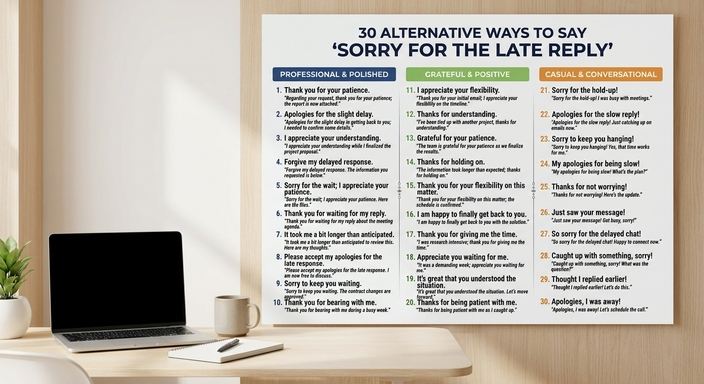
30 Other Ways to Say “Sorry for the Late Reply”
Here is a complete list of thoughtful alternatives you can use depending on your situation, relationship, and communication style.
- I Apologize for the Delayed Response
- Thank You for Your Patience
- Sorry It Took Me So Long to Get Back to You
- I Appreciate Your Understanding
- Apologies for Keeping You Waiting
- Thank You for Following Up
- I’m Sorry for the Delay in Getting Back to You
- I Didn’t Mean to Leave You Waiting
- Thanks for Bearing with Me
- My Apologies for the Late Response
- Sorry for Getting Back to You So Late
- I Appreciate You Waiting for My Response
- Please Accept My Apologies for the Delay
- Sorry I Couldn’t Respond Sooner
- Thank You for Your Continued Patience
- I’ve Been Meaning to Get Back to You
- Apologies for the Delayed Follow-Up
- Sorry for the Radio Silence
- I Hope You Don’t Mind My Delayed Response
- Thank You for Giving Me Some Time to Respond
- I’m Sorry I Missed Your Message Earlier
- I Appreciate Your Patience While I Got Back to You
- Sorry for the Slow Response
- I Should Have Gotten Back to You Earlier
- Thank You for Waiting to Hear From Me
- I Apologize for Not Responding Earlier
- Sorry I Took a Little Longer to Reply
- Thanks for Your Patience While I Caught Up
- I Didn’t Want to Rush My Response
- Thank You for Your Grace and Understanding
1. I Apologize for the Delayed Response
Meaning:
This expression communicates a sincere apology for taking longer than expected to respond to someone’s message or email.
Definition:
A formal and respectful statement acknowledging that your response was delayed.
Detailed Explanation:
“I apologize for the delayed response” is an excellent alternative when you want to maintain a professional tone. It sounds polished, thoughtful, and appropriate for workplace conversations. Unlike casual apologies, this phrase demonstrates accountability while keeping the conversation focused.
It is particularly useful when communicating with clients, managers, business partners, or people you do not know very well.
Scenario Examples:
- Email: “I apologize for the delayed response. I’ve reviewed your proposal and would be happy to discuss the next steps.”
- Workplace: “I apologize for the delayed response. I was reviewing the documents before getting back to you.”
- Client communication: “I apologize for the delayed response and appreciate your patience while I looked into this matter.”
Best Use: Formal emails, business communication, client conversations, and professional correspondence.
Tone: Professional, respectful, formal, and sincere.
2. Thank You for Your Patience
Meaning:
This phrase expresses appreciation to someone for waiting while you prepared or sent your response.
Definition:
A polite expression of gratitude acknowledging someone’s willingness to wait.
Detailed Explanation:
Sometimes, expressing gratitude feels more natural than repeatedly apologizing. “Thank you for your patience” shifts the focus toward appreciation and acknowledges the recipient’s understanding.
It is particularly effective when the delay was unavoidable or when you needed additional time to gather information. It creates a positive impression without making the situation feel uncomfortable.
Scenario Examples:
- Email: “Thank you for your patience. I’ve attached the requested information for your review.”
- Workplace: “Thank you for your patience while I completed the report.”
- Personal message: “Thank you for being patient with me. I really appreciate it!”
Best Use: Professional emails, customer service messages, workplace updates, and situations involving unavoidable delays.
Tone: Appreciative, polite, warm, and professional.
3. Sorry It Took Me So Long to Get Back to You
Meaning:
This phrase acknowledges that you took longer than expected to respond and expresses a straightforward apology.
Definition:
An informal apology for responding later than intended.
Detailed Explanation:
This alternative sounds natural and conversational. It is especially useful when communicating with friends, family members, familiar colleagues, or people with whom you have a comfortable relationship.
It feels more personal than a formal apology because it uses everyday language. It also acknowledges the delay without making excuses.
Scenario Examples:
- Friend: “Sorry it took me so long to get back to you! I’ve been meaning to answer your question.”
- Colleague: “Sorry it took me so long to get back to you. I’ve finally had a chance to review everything.”
- Family: “Sorry it took me so long to get back to you. I hope everything is going well!”
Best Use: Casual emails, text messages, friendly conversations, and informal workplace communication.
Tone: Friendly, relaxed, sincere, and conversational.
4. I Appreciate Your Understanding
Meaning:
This expression shows gratitude toward someone for being understanding about your delayed response.
Definition:
A polite statement recognizing another person’s patience and consideration.
Detailed Explanation:
“I appreciate your understanding” is a thoughtful way to acknowledge a delay without focusing too heavily on the apology itself. It communicates respect and appreciation while maintaining a positive atmosphere.
It works especially well when someone already knows that you have been busy or dealing with other responsibilities.
Scenario Examples:
- Email: “I appreciate your understanding regarding my delayed response. I’ll share the updated document shortly.”
- Workplace: “I appreciate your understanding while I worked through the pending requests.”
- Personal: “I appreciate your understanding. It’s been a busy week, but I’m glad we could reconnect.”
Best Use: Professional emails, workplace conversations, customer communication, and situations where the recipient has shown flexibility.
Tone: Respectful, appreciative, considerate, and professional.
5. Apologies for Keeping You Waiting
Meaning:
This phrase expresses regret for making someone wait longer than expected for a response.
Definition:
A courteous apology acknowledging that someone has been waiting for your reply.
Detailed Explanation:
“Apologies for keeping you waiting” is a polished alternative that works well in professional and semi-formal situations. It recognizes the recipient’s time and communicates that you understand the inconvenience caused by the delay.
It is particularly useful when someone has been waiting for important information, feedback, or confirmation.
Scenario Examples:
- Email: “Apologies for keeping you waiting. I’ve now reviewed the proposal and added my comments.”
- Workplace: “Apologies for keeping you waiting. The updated figures are ready.”
- Client: “Apologies for keeping you waiting, and thank you for your patience while we reviewed your request.”
Best Use: Business emails, client communication, formal follow-ups, and professional discussions.
Tone: Courteous, professional, apologetic, and respectful.
6. Thank You for Following Up
Meaning:
This phrase acknowledges someone’s reminder or additional message and expresses appreciation for their continued communication.
Definition:
A polite expression of gratitude toward someone who has contacted you again about an unanswered message or request.
Detailed Explanation:
Sometimes, someone sends another message because they have not received a response. Instead of simply apologizing, you can thank them for following up.
This expression is especially useful in professional conversations because it acknowledges their initiative and allows you to continue the discussion naturally.
Scenario Examples:
- Email: “Thank you for following up. I’ve reviewed your request and will send the details this afternoon.”
- Workplace: “Thank you for following up. I have the information you requested.”
- Client: “Thank you for following up with us. We appreciate your patience while we finalized the details.”
Best Use: Business emails, workplace reminders, customer inquiries, and professional follow-ups.
Tone: Professional, appreciative, polite, and positive.
7. I’m Sorry for the Delay in Getting Back to You
Meaning:
This phrase communicates regret for not responding to someone as quickly as expected.
Definition:
A polite apology acknowledging a delay in replying to a message or communication.
Detailed Explanation:
This is a versatile alternative that works in both personal and professional settings. It sounds more complete than a short apology and makes it clear that you recognize the delay.
It is particularly helpful when responding to someone who has been waiting for an update or answer.
Scenario Examples:
- Email: “I’m sorry for the delay in getting back to you. I’ve reviewed your questions and included my answers below.”
- Workplace: “I’m sorry for the delay in getting back to you. I needed some additional time to confirm the details.”
- Friend: “I’m sorry for the delay in getting back to you. I’d still love to catch up!”
Best Use: Professional emails, workplace discussions, personal messages, and delayed follow-ups.
Tone: Sincere, polite, considerate, and approachable.
8. I Didn’t Mean to Leave You Waiting
Meaning:
This phrase reassures someone that you did not intentionally ignore their message or make them wait.
Definition:
An informal expression of regret for unintentionally delaying a response.
Detailed Explanation:
Sometimes, a delayed reply can make someone feel overlooked. This expression helps reassure the recipient that their message was important to you.
It adds a personal touch to your apology and is particularly suitable for conversations with friends, family members, or people you care about.
Scenario Examples:
- Friend: “I didn’t mean to leave you waiting. I got caught up with a few things, but I’m here now.”
- Family: “I didn’t mean to leave you waiting. I hope everything is okay!”
- Colleague: “I didn’t mean to leave you waiting. I’ve now had a chance to review your message.”
Best Use: Personal messages, friendly conversations, and informal workplace communication.
Tone: Warm, reassuring, personal, and sincere.
9. Thanks for Bearing with Me
Meaning:
This expression thanks someone for remaining patient while you were unavailable or taking longer to respond.
Definition:
A friendly way of appreciating someone’s patience during a delay.
Detailed Explanation:
“Thanks for bearing with me” sounds relaxed, approachable, and appreciative. It is a great choice when you want to acknowledge someone’s patience without making the apology overly formal.
It works particularly well when you have been managing several responsibilities or needed additional time to complete something.
Scenario Examples:
- Email: “Thanks for bearing with me. I’ve attached the updated files for your review.”
- Workplace: “Thanks for bearing with me while I worked through the remaining tasks.”
- Friend: “Thanks for bearing with me! I know I’ve been slow to reply lately.”
Best Use: Friendly professional emails, team communication, customer support, and casual conversations.
Tone: Friendly, appreciative, relaxed, and considerate.
10. My Apologies for the Late Response
Meaning:
This phrase expresses regret for responding later than expected.
Definition:
A formal statement acknowledging that a response was not provided within the expected timeframe.
Detailed Explanation:
“My apologies for the late response” is a polished alternative that fits many professional situations. It is straightforward, respectful, and easy to include at the beginning of an email.
It also allows you to acknowledge the delay before moving directly into the information or answer the recipient needs.
Scenario Examples:
- Email: “My apologies for the late response. I’ve reviewed the attached proposal and would like to schedule a discussion.”
- Workplace: “My apologies for the late response. The requested figures are included below.”
- Client: “My apologies for the late response, and thank you for allowing us time to review your inquiry.”
Best Use: Formal emails, business communication, client correspondence, and professional follow-ups.
Tone: Formal, courteous, professional, and sincere.
11. Sorry for Getting Back to You So Late
Meaning:
This phrase acknowledges that you responded later than you intended and expresses a friendly apology.
Definition:
A conversational apology for taking an extended amount of time to reply.
Detailed Explanation:
This alternative sounds natural and is easy to use in everyday conversations. It communicates regret without sounding overly serious or formal.
It is especially useful when replying to friends, familiar colleagues, or people with whom you regularly communicate.
Scenario Examples:
- Friend: “Sorry for getting back to you so late! I’d love to join you this weekend.”
- Colleague: “Sorry for getting back to you so late. I’ve checked the schedule, and Tuesday works for me.”
- Personal: “Sorry for getting back to you so late. Thanks for checking in!”
Best Use: Text messages, casual emails, friendly conversations, and informal workplace communication.
Tone: Casual, friendly, warm, and sincere.
12. I Appreciate You Waiting for My Response
Meaning:
This expression thanks someone for allowing you additional time to respond.
Definition:
A considerate statement expressing gratitude for someone’s patience while waiting for your reply.
Detailed Explanation:
This phrase is particularly helpful when the recipient has been waiting for an important answer. It recognizes their time and communicates that you do not take their patience for granted.
It also sounds thoughtful because it focuses on appreciation rather than simply apologizing.
Scenario Examples:
- Email: “I appreciate you waiting for my response. I’ve now gathered the information you requested.”
- Workplace: “I appreciate you waiting for my response while I confirmed the final numbers.”
- Client: “I appreciate you waiting for my response. We have an update regarding your inquiry.”
Best Use: Professional communication, client emails, business discussions, and important requests.
Tone: Respectful, appreciative, thoughtful, and professional.
13. Please Accept My Apologies for the Delay
Meaning:
This phrase offers a formal apology for taking longer than expected to respond.
Definition:
A courteous request for someone to accept your apology regarding a delayed reply.
Detailed Explanation:
“Please accept my apologies for the delay” is suitable when you want your message to sound particularly respectful and professional.
It works well in situations where timely communication is important, such as business correspondence, customer relationships, or formal workplace discussions.
Scenario Examples:
- Email: “Please accept my apologies for the delay. I’ve attached the completed report.”
- Business: “Please accept my apologies for the delay in responding to your inquiry.”
- Client: “Please accept my apologies for the delay, and thank you for your continued understanding.”
Best Use: Formal business emails, client correspondence, official communication, and sensitive professional situations.
Tone: Formal, respectful, apologetic, and courteous.
14. Sorry I Couldn’t Respond Sooner
Meaning:
This phrase acknowledges that you were unable to reply earlier and expresses regret about the delay.
Definition:
A friendly apology for not having the opportunity to respond sooner.
Detailed Explanation:
This alternative is useful when you want to communicate that the delay was not intentional. It sounds natural and gives you room to explain the circumstances if necessary.
It is suitable for personal conversations and informal professional exchanges.
Scenario Examples:
- Friend: “Sorry I couldn’t respond sooner. I hope your day went well!”
- Colleague: “Sorry I couldn’t respond sooner. I’ve now reviewed the document.”
- Family: “Sorry I couldn’t respond sooner. I’ve been meaning to call you.”
Best Use: Personal conversations, text messages, informal emails, and friendly workplace communication.
Tone: Friendly, apologetic, warm, and understanding.
15. Thank You for Your Continued Patience
Meaning:
This expression shows appreciation to someone who has remained patient despite a longer-than-expected delay.
Definition:
A professional statement recognizing someone’s ongoing patience and understanding.
Detailed Explanation:
Sometimes, a response takes longer because you need to investigate a concern, gather information, or coordinate with other people. In these situations, “Thank you for your continued patience” is an excellent choice.
It communicates appreciation and helps maintain a positive relationship, especially when the recipient has been waiting for an important update.
Scenario Examples:
- Email: “Thank you for your continued patience. We’re working to finalize the requested information.”
- Client: “Thank you for your continued patience while we investigate your concern.”
- Workplace: “Thank you for your continued patience. I’ll share the final update shortly.”
Best Use: Customer service emails, business correspondence, ongoing requests, and workplace updates.
Tone: Professional, appreciative, reassuring, and respectful.
16. I’ve Been Meaning to Get Back to You
Meaning:
This phrase communicates that you intended to respond earlier but had not yet found the opportunity.
Definition:
An informal expression indicating that someone has been on your mind and that you intended to reply.
Detailed Explanation:
“I’ve been meaning to get back to you” adds a personal and conversational touch to your message. It suggests that the conversation was not forgotten, even if your response was delayed.
It works particularly well with friends, family members, and familiar colleagues.
Scenario Examples:
- Friend: “I’ve been meaning to get back to you! How did your interview go?”
- Colleague: “I’ve been meaning to get back to you about the meeting schedule.”
- Family: “I’ve been meaning to get back to you. Let’s plan a call this week.”
Best Use: Personal messages, informal emails, friendly follow-ups, and familiar workplace conversations.
Tone: Warm, casual, thoughtful, and conversational.
17. Apologies for the Delayed Follow-Up
Meaning:
This phrase acknowledges that you did not follow up with someone as quickly as expected.
Definition:
A formal apology for taking longer than anticipated to provide an update or additional information.
Detailed Explanation:
This alternative is particularly useful when you previously promised to share information, send documents, or provide an update.
It recognizes that the recipient may have been expecting to hear from you and helps maintain professional communication.
Scenario Examples:
- Email: “Apologies for the delayed follow-up. I’ve included the revised proposal for your consideration.”
- Workplace: “Apologies for the delayed follow-up. I’ve confirmed the meeting details.”
- Client: “Apologies for the delayed follow-up. We now have an update regarding your request.”
Best Use: Professional follow-ups, business emails, project updates, and client communication.
Tone: Professional, courteous, accountable, and respectful.
18. Sorry for the Radio Silence
Meaning:
This phrase is a casual way to apologize for being unusually quiet or not responding for some time.
Definition:
An informal expression acknowledging a period of little or no communication.
Detailed Explanation:
“Sorry for the radio silence” is a friendly, slightly humorous alternative that works well with people you know personally.
It can make reconnecting feel more comfortable after a period of limited communication. However, because it is informal, it is better to avoid it in serious business correspondence.
Scenario Examples:
- Friend: “Sorry for the radio silence! Life has been a little hectic lately.”
- Colleague: “Sorry for the radio silence. I’ve been catching up on a few projects.”
- Personal: “Sorry for the radio silence. I’d love to hear how you’ve been!”
Best Use: Friendly messages, casual emails, social conversations, and informal team communication.
Tone: Casual, humorous, friendly, and approachable.
19. I Hope You Don’t Mind My Delayed Response
Meaning:
This phrase politely acknowledges a late reply while showing consideration for the recipient’s feelings.
Definition:
A courteous expression recognizing a delayed response and seeking understanding from the recipient.
Detailed Explanation:
This alternative sounds gentle and considerate. It is useful when you want to acknowledge that your response took longer than expected without making the conversation feel too formal.
It is particularly appropriate when communicating with someone you do not know very well or when you want to maintain a respectful tone.
Scenario Examples:
- Email: “I hope you don’t mind my delayed response. I’ve now had an opportunity to review your message.”
- Workplace: “I hope you don’t mind my delayed response. I wanted to make sure I had the correct information.”
- Personal: “I hope you don’t mind my delayed response. Thanks for reaching out!”
Best Use: Semi-formal emails, professional conversations, and polite personal communication.
Tone: Gentle, considerate, respectful, and polite.
20. Thank You for Giving Me Some Time to Respond
Meaning:
This expression thanks someone for allowing you extra time to prepare a thoughtful or complete response.
Definition:
A statement of appreciation for someone’s willingness to wait while you formulate a reply.
Detailed Explanation:
Not every message deserves an immediate answer. Sometimes, you need additional time to consider the details, review information, or prepare a meaningful response.
This phrase communicates that you appreciate the recipient’s flexibility and that you wanted to respond carefully rather than rush.
Scenario Examples:
- Email: “Thank you for giving me some time to respond. I’ve carefully reviewed the proposal.”
- Workplace: “Thank you for giving me some time to respond. I’ve now checked the relevant details.”
- Personal: “Thank you for giving me some time to respond. I wanted to think everything through properly.”
Best Use: Thoughtful discussions, professional emails, important decisions, and situations requiring careful consideration.
Tone: Appreciative, thoughtful, respectful, and sincere.
21. I’m Sorry I Missed Your Message Earlier
Meaning:
This phrase expresses regret for overlooking or not noticing someone’s message when it was originally sent.
Definition:
A polite apology for failing to see or respond to a message earlier.
Detailed Explanation:
Sometimes, messages get buried in busy inboxes or notifications are missed. This expression is a natural way to acknowledge the oversight without making the recipient feel ignored.
It works well in personal and professional conversations, especially when the delay happened unintentionally.
Scenario Examples:
- Friend: “I’m sorry I missed your message earlier. Are you still available to meet?”
- Colleague: “I’m sorry I missed your message earlier. I’ve reviewed the details now.”
- Client: “I’m sorry I missed your message earlier. Thank you for bringing this to my attention.”
Best Use: Email replies, text messages, workplace communication, and missed notifications.
Tone: Sincere, apologetic, friendly, and considerate.
22. I Appreciate Your Patience While I Got Back to You
Meaning:
This phrase communicates gratitude for someone’s patience during the time it took you to respond.
Definition:
A thoughtful statement recognizing another person’s understanding while waiting for a reply.
Detailed Explanation:
This expression combines appreciation with an acknowledgment of the delayed response. It is particularly useful when you want to maintain a warm and respectful relationship.
It also makes your message feel more personal than a simple apology, especially when someone has been waiting for information that matters to them.
Scenario Examples:
- Email: “I appreciate your patience while I got back to you. I’ve included the requested details below.”
- Workplace: “I appreciate your patience while I got back to you. The report is now ready.”
- Personal: “I appreciate your patience while I got back to you. It means a lot!”
Best Use: Professional emails, customer communication, workplace updates, and personal conversations.
Tone: Appreciative, warm, respectful, and thoughtful.
23. Sorry for the Slow Response
Meaning:
This phrase is a simple apology for taking longer than usual to answer someone.
Definition:
An informal expression acknowledging a slower-than-expected response.
Detailed Explanation:
“Sorry for the slow response” is short, direct, and easy to use. It works particularly well in everyday conversations when you want to acknowledge the delay without giving a lengthy explanation.
It is also useful when responding to several messages or emails after a busy period.
Scenario Examples:
- Friend: “Sorry for the slow response! I’ve finally had a chance to check my messages.”
- Colleague: “Sorry for the slow response. I’ll send the updated version shortly.”
- Personal: “Sorry for the slow response. Thanks for checking in!”
Best Use: Text messages, informal emails, everyday conversations, and friendly workplace communication.
Tone: Casual, straightforward, friendly, and sincere.
24. I Should Have Gotten Back to You Earlier
Meaning:
This phrase acknowledges personal responsibility for not responding within a reasonable timeframe.
Definition:
A direct statement recognizing that you could have replied sooner.
Detailed Explanation:
Sometimes, the most thoughtful thing you can do is take responsibility without offering excuses. “I should have gotten back to you earlier” communicates accountability and shows that you understand the importance of timely communication.
It is particularly useful when you have unintentionally overlooked an important message or request.
Scenario Examples:
- Email: “I should have gotten back to you earlier. Thank you for following up on this.”
- Workplace: “I should have gotten back to you earlier. I’ve now completed the review.”
- Friend: “I should have gotten back to you earlier. I’m sorry for leaving you waiting!”
Best Use: Professional accountability, important conversations, personal apologies, and delayed follow-ups.
Tone: Honest, responsible, sincere, and apologetic.
25. Thank You for Waiting to Hear From Me
Meaning:
This phrase expresses appreciation to someone who waited for your response or update.
Definition:
A polite statement thanking someone for remaining patient while expecting a reply.
Detailed Explanation:
This expression focuses on the recipient’s patience and makes them feel appreciated. It is useful when you want to acknowledge the time they spent waiting without making the delay the main subject of your message.
It can also create a friendly transition into the information you are finally sharing.
Scenario Examples:
- Email: “Thank you for waiting to hear from me. I’ve attached the requested information.”
- Workplace: “Thank you for waiting to hear from me. I have an update about the project.”
- Personal: “Thank you for waiting to hear from me. I really appreciate your patience!”
Best Use: Professional correspondence, important updates, business emails, and personal conversations.
Tone: Warm, appreciative, considerate, and polite.
26. I Apologize for Not Responding Earlier
Meaning:
This phrase expresses a sincere apology for not replying when someone originally contacted you.
Definition:
A formal acknowledgment of responsibility for failing to respond promptly.
Detailed Explanation:
“I apologize for not responding earlier” is a clear and professional way to recognize a communication delay. It is particularly effective when you want to take responsibility without providing unnecessary explanations.
The phrase is suitable for professional and personal settings, depending on the rest of your message.
Scenario Examples:
- Email: “I apologize for not responding earlier. I’ve reviewed your request and have a few suggestions.”
- Workplace: “I apologize for not responding earlier. I’ve now checked the information.”
- Client: “I apologize for not responding earlier and appreciate your patience.”
Best Use: Formal emails, workplace communication, business relationships, and important personal messages.
Tone: Professional, sincere, respectful, and accountable.
27. Sorry I Took a Little Longer to Reply
Meaning:
This phrase offers a friendly apology for taking slightly more time than expected to respond.
Definition:
A casual expression acknowledging a small delay in replying.
Detailed Explanation:
This alternative sounds relaxed and approachable. The words “a little longer” soften the apology and make it suitable for situations where the delay was not particularly serious.
It is a good choice for friendly conversations where you want to acknowledge the delay without making it seem like a major issue.
Scenario Examples:
- Friend: “Sorry I took a little longer to reply. I’d love to hear more about your plans!”
- Colleague: “Sorry I took a little longer to reply. Friday works perfectly for me.”
- Family: “Sorry I took a little longer to reply. Hope you’re having a wonderful day!”
Best Use: Casual emails, friendly messages, text conversations, and informal workplace communication.
Tone: Lighthearted, friendly, relaxed, and sincere.
28. Thanks for Your Patience While I Caught Up
Meaning:
This expression thanks someone for being patient while you worked through pending messages or responsibilities.
Definition:
A friendly statement of gratitude for someone’s patience while you became available to respond.
Detailed Explanation:
Sometimes, a busy schedule means you cannot respond to every message immediately. This phrase acknowledges that reality while showing appreciation for the other person’s understanding.
It is particularly useful when returning to your inbox after a busy week, vacation, or period of heavy workload.
Scenario Examples:
- Email: “Thanks for your patience while I caught up. I’ve now reviewed your message.”
- Workplace: “Thanks for your patience while I caught up on the outstanding requests.”
- Friend: “Thanks for your patience while I caught up with everything. How have you been?”
Best Use: Workplace emails, busy schedules, returning from leave, and casual conversations.
Tone: Friendly, appreciative, conversational, and thoughtful.
29. I Didn’t Want to Rush My Response
Meaning:
This phrase explains that you took additional time because you wanted to provide a thoughtful and considered answer.
Definition:
An explanation for a delayed response based on the desire to reply carefully rather than hastily.
Detailed Explanation:
Not all delays happen because someone is distracted or unavailable. Sometimes, a question requires careful thought, research, or consideration.
This expression helps explain your intention while showing that you value the conversation. However, it works best when the additional time genuinely helped you prepare a better response.
Scenario Examples:
- Email: “I didn’t want to rush my response, so I took some time to review the proposal carefully.”
- Workplace: “I didn’t want to rush my response because I wanted to make sure the information was accurate.”
- Personal: “I didn’t want to rush my response. Your message deserved some thought.”
Best Use: Important discussions, thoughtful replies, business decisions, and sensitive personal conversations.
Tone: Thoughtful, considerate, sincere, and professional.
30. Thank You for Your Grace and Understanding
Meaning:
This phrase expresses deep appreciation for someone’s kindness, patience, and understanding during a delayed response.
Definition:
A warm expression of gratitude recognizing someone’s generous and understanding attitude.
Detailed Explanation:
“Thank you for your grace and understanding” is a thoughtful alternative when you want to communicate more than a simple apology. It acknowledges the recipient’s kindness and shows that you value the way they have handled the delay.
It is particularly appropriate for personal relationships, meaningful conversations, and situations where someone has been especially understanding.
Scenario Examples:
- Email: “Thank you for your grace and understanding. I appreciate your flexibility while I worked through everything.”
- Workplace: “Thank you for your grace and understanding during this busy period.”
- Personal: “Thank you for your grace and understanding. I truly appreciate your kindness and patience.”
Best Use: Meaningful personal conversations, thoughtful professional messages, and situations requiring extra warmth.
Tone: Warm, heartfelt, appreciative, respectful, and sincere.
Conclusion
Finding the right way to say “Sorry for the Late Reply” is about more than simply acknowledging that you responded late. It is an opportunity to show someone that you value their time, appreciate their patience, and care about maintaining a positive connection.
Whether you choose a professional expression like “I apologize for the delayed response,” a friendly alternative like “Sorry it took me so long to get back to you,” or a thoughtful message like “Thank you for your patience,” the most important thing is to communicate genuinely.