
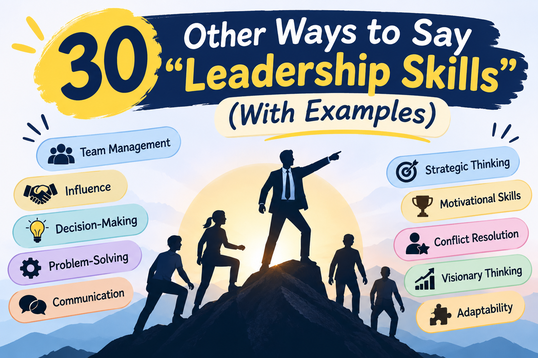

Finding the right words to describe someone’s ability to lead, inspire, and support others can make your communication more meaningful. Whether you’re writing a resume, preparing a professional email, giving feedback, or describing someone’s strengths, using alternatives to “leadership skills” can help you express your thoughts more clearly. These phrases allow you to highlight different qualities, such as decision-making, teamwork, communication, and motivating others, while making your message sound more natural and professional.
What Does “Leadership Skills” Mean?
Leadership skills refer to the abilities, qualities, and personal characteristics that help someone guide, motivate, and support a group of people toward achieving shared goals. These skills include effective communication, decision-making, problem-solving, delegation, teamwork, and the ability to inspire others.
A person with strong leadership skills can take responsibility, handle challenges, resolve disagreements, and encourage team members to perform at their best. Leadership is not simply about giving instructions or managing people; it is also about building trust, understanding others, and creating an environment where everyone feels valued and motivated.
Is It Professional and Polite to Say “Leadership Skills”?
Yes, “leadership skills” is a professional, polite, and widely accepted expression in workplace communication. It is commonly used in resumes, job applications, performance reviews, interviews, business discussions, and professional recommendations.
The phrase communicates someone’s ability to guide people, manage responsibilities, and contribute to organizational success. However, repeating it too often can make your writing sound generic.
Using alternatives such as leadership abilities, team management skills, strategic thinking, and people-management abilities can make your communication more specific and engaging.
For example:
- General: She has excellent leadership skills.
- More specific: She demonstrates exceptional team-building and decision-making abilities.
- Professional: He consistently displays strong people-management and strategic leadership capabilities.
Choosing the right alternative depends on what you want to emphasize and the situation in which you’re communicating.
Advantages and Disadvantages of Saying “Leadership Skills”
Advantages
- Professional and Recognizable: The phrase is widely understood in professional environments, making it suitable for resumes, interviews, business documents, and workplace conversations.
- Covers Multiple Abilities: It represents several important qualities, including communication, decision-making, teamwork, organization, and the ability to motivate others.
- Positive Impression: Describing someone as having strong leadership skills creates a positive impression and highlights their potential to take responsibility and guide others.
Disadvantages
- Can Sound Generic: The expression is frequently used in professional writing, so it may not adequately explain what makes someone’s leadership approach special.
- Lacks Specific Details: It does not identify whether someone excels at motivating employees, resolving conflicts, making decisions, or managing projects.
- May Sound Repetitive: Using the same phrase repeatedly in a resume, cover letter, or professional document can make your writing less engaging.
30 Other Ways to Say “Leadership Skills”
Here is a helpful list of alternatives you can use to describe leadership abilities in different professional and personal situations.
- Leadership Abilities
- Leadership Qualities
- Management Skills
- Team Leadership Abilities
- People-Management Skills
- Strategic Leadership
- Decision-Making Abilities
- Communication Skills
- Team-Building Skills
- Delegation Skills
- Mentoring Abilities
- Coaching Skills
- Conflict-Resolution Skills
- Problem-Solving Abilities
- Visionary Thinking
- Strategic-Thinking Skills
- Organizational Skills
- Motivational Skills
- Interpersonal Skills
- Emotional Intelligence
- Change-Management Skills
- Project Leadership Abilities
- Influencing Skills
- Accountability and Responsibility
- Adaptability Skills
- Initiative and Proactiveness
- Performance-Management Skills
- Consensus-Building Skills
- Talent-Development Skills
- Executive Leadership Capabilities
1. Leadership Abilities
Meaning:
Leadership abilities refer to the natural and developed capabilities that allow someone to guide, influence, and encourage others toward achieving specific goals.
Definition:
These are the personal and professional strengths that help individuals take responsibility, make informed decisions, and lead teams effectively.
Detailed Explanation:
Leadership abilities are closely related to leadership skills, but the expression places greater emphasis on someone’s overall capacity to lead. It can include confidence, communication, strategic thinking, problem-solving, and the ability to bring people together.
This phrase works particularly well when describing someone’s potential to take on a leadership position or their ability to manage responsibilities effectively.
Scenario Examples:
- She has excellent leadership abilities and always encourages her team to achieve its goals.
- His leadership abilities make him a valuable addition to the management team.
- We appreciate her strong leadership abilities during challenging projects.
Best Use:
Use this phrase in professional resumes, performance reviews, recommendation letters, job interviews, and workplace evaluations.
Tone:
Professional, confident, positive, and respectful.
2. Leadership Qualities
Meaning:
Leadership qualities describe the personal characteristics and positive traits that make someone an effective and trustworthy leader.
Definition:
These are the characteristics that help individuals inspire others, demonstrate responsibility, build trust, and guide people toward common objectives.
Detailed Explanation:
Unlike leadership skills, which often focus on practical abilities, leadership qualities emphasize personal characteristics. These may include honesty, patience, confidence, empathy, accountability, and integrity.
This phrase is especially useful when you want to recognize someone’s personality and approach to leading others rather than simply describing their professional abilities.
Scenario Examples:
- Her honesty and dedication demonstrate excellent leadership qualities.
- He possesses the leadership qualities needed to guide a successful team.
- Good leadership qualities help create a positive and supportive workplace.
Best Use:
Use it in employee evaluations, professional recommendations, character assessments, interviews, and discussions about personal development.
Tone:
Appreciative, encouraging, professional, and thoughtful.
3. Management Skills
Meaning:
Management skills refer to the abilities required to organize people, coordinate responsibilities, manage resources, and achieve organizational objectives.
Definition:
These are the practical capabilities that help someone plan, supervise, organize, and control workplace activities efficiently.
Detailed Explanation:
Management skills are closely connected to leadership skills, although they are not exactly the same. Leadership focuses on inspiring and guiding people, while management often involves organizing tasks, setting priorities, monitoring performance, and ensuring that work is completed effectively.
This expression is particularly useful when describing someone who can handle workplace responsibilities, coordinate projects, and maintain productivity.
Scenario Examples:
- She demonstrates excellent management skills when coordinating multiple projects.
- His management skills help the department maintain consistent performance.
- Effective management skills are essential for handling workplace responsibilities.
Best Use:
Use this phrase in resumes, management reports, job applications, performance evaluations, and professional interviews.
Tone:
Formal, practical, professional, and confident.
4. Team Leadership Abilities
Meaning:
Team leadership abilities describe someone’s capacity to guide a group, coordinate individual contributions, and encourage everyone to work toward a shared objective.
Definition:
These are the capabilities that help individuals organize, support, motivate, and direct team members effectively.
Detailed Explanation:
Team leadership abilities focus on working with people and helping them perform successfully as a group. They involve communication, collaboration, delegation, encouragement, and the ability to recognize individual strengths.
Someone with strong team leadership abilities understands that successful teamwork requires trust, cooperation, and mutual respect.
Scenario Examples:
- Her team leadership abilities helped the department complete the project successfully.
- He uses his team leadership abilities to bring employees together.
- Strong team leadership abilities can improve workplace collaboration.
Best Use:
Use it in team performance reviews, resumes, job interviews, project reports, and professional recommendations.
Tone:
Collaborative, supportive, positive, and professional.
5. People-Management Skills
Meaning:
People-management skills refer to the ability to understand, support, guide, and coordinate individuals within a workplace or organization.
Definition:
These are interpersonal and organizational abilities that help someone manage employees, maintain relationships, and encourage productive working environments.
Detailed Explanation:
People-management skills are particularly important for supervisors, managers, and team leaders. They involve understanding employees’ needs, providing constructive feedback, resolving disagreements, recognizing achievements, and helping individuals improve their performance.
This phrase is useful when you want to emphasize the human side of leadership.
Scenario Examples:
- She has exceptional people-management skills and knows how to support her employees.
- His people-management skills have strengthened the relationship between departments.
- Good people-management skills help create a respectful workplace.
Best Use:
Use it in management resumes, employee evaluations, leadership interviews, and discussions about workplace relationships.
Tone:
Professional, empathetic, approachable, and respectful.
6. Strategic Leadership
Meaning:
Strategic leadership refers to the ability to establish long-term goals, make thoughtful decisions, and guide an organization toward future success.
Definition:
It is the capability to combine leadership, planning, analysis, and decision-making to achieve long-term organizational objectives.
Detailed Explanation:
Strategic leadership involves looking beyond immediate responsibilities and considering the bigger picture. A strategic leader understands organizational challenges, identifies opportunities, anticipates future changes, and develops plans that support sustainable growth.
This expression is especially appropriate when describing someone who can make important decisions and guide an organization through complex situations.
Scenario Examples:
- Her strategic leadership helped the company navigate a difficult business period.
- He demonstrates strategic leadership by identifying opportunities for long-term growth.
- Effective strategic leadership encourages innovation and organizational development.
Best Use:
Use it in executive resumes, business reports, management discussions, leadership assessments, and corporate presentations.
Tone:
Authoritative, forward-thinking, professional, and confident.
7. Decision-Making Abilities
Meaning:
Decision-making abilities describe someone’s capacity to evaluate information, consider available options, and choose appropriate solutions.
Definition:
These are the skills required to make informed, practical, and timely decisions while considering possible outcomes.
Detailed Explanation:
Strong decision-making abilities are essential for effective leadership because leaders frequently face situations that require careful judgment. They must evaluate risks, consider different perspectives, solve problems, and take responsibility for their choices.
This alternative is useful when you want to highlight someone’s ability to make sensible decisions rather than simply stating that they are a good leader.
Scenario Examples:
- Her decision-making abilities helped the team overcome an unexpected challenge.
- He demonstrates excellent decision-making abilities under pressure.
- Strong decision-making abilities are essential for successful management.
Best Use:
Use it in professional resumes, job interviews, performance reviews, and workplace recommendations.
Tone:
Confident, analytical, professional, and practical.
8. Communication Skills
Meaning:
Communication skills refer to someone’s ability to share information, express ideas, listen carefully, and understand other people’s perspectives.
Definition:
These are the verbal, written, and interpersonal abilities that help individuals communicate clearly and build effective relationships.
Detailed Explanation:
Effective communication is one of the most important parts of leadership. A good leader must explain expectations, provide feedback, listen to concerns, and make sure everyone understands their responsibilities.
Strong communication skills also help prevent misunderstandings, encourage collaboration, and create a supportive workplace.
Scenario Examples:
- Her excellent communication skills help keep everyone informed and motivated.
- He uses his communication skills to explain complex ideas clearly.
- Strong communication skills contribute to successful team leadership.
Best Use:
Use it in resumes, cover letters, professional interviews, employee evaluations, and workplace discussions.
Tone:
Friendly, professional, clear, and approachable.
9. Team-Building Skills
Meaning:
Team-building skills describe someone’s ability to bring individuals together and create a cooperative, supportive, and productive team.
Definition:
These are the capabilities that help someone develop trust, encourage collaboration, and strengthen relationships among team members.
Detailed Explanation:
Team-building skills involve creating an environment where people feel comfortable sharing ideas, helping one another, and working toward common goals. Effective team builders recognize individual strengths and encourage employees to contribute their best efforts.
This phrase is particularly useful when highlighting someone’s ability to create strong working relationships and improve teamwork.
Scenario Examples:
- Her team-building skills helped create a more collaborative workplace.
- He uses his team-building skills to encourage employees to support one another.
- Excellent team-building skills can improve employee engagement.
Best Use:
Use it in resumes, team assessments, management reports, leadership interviews, and professional recommendations.
Tone:
Encouraging, cooperative, positive, and professional.
10. Delegation Skills
Meaning:
Delegation skills refer to the ability to assign tasks and responsibilities to appropriate individuals while providing the necessary guidance and support.
Definition:
These are the capabilities required to distribute workloads effectively according to people’s strengths, experience, and responsibilities.
Detailed Explanation:
Effective delegation allows leaders to manage their time, improve productivity, and help employees develop new abilities. Rather than handling every responsibility themselves, good leaders understand when to trust others with important tasks.
Delegation also demonstrates confidence in team members and encourages greater accountability.
Scenario Examples:
- Her excellent delegation skills help the team manage workloads efficiently.
- He demonstrates strong delegation skills by assigning tasks according to employees’ strengths.
- Effective delegation skills allow managers to focus on important priorities.
Best Use:
Use it in management resumes, leadership assessments, performance reviews, and professional interviews.
Tone:
Organized, responsible, professional, and confident.
11. Mentoring Abilities
Meaning:
Mentoring abilities refer to someone’s capacity to guide, support, and encourage others as they develop their professional knowledge and skills.
Definition:
These are the interpersonal and guidance-related capabilities that help individuals share experience, offer advice, and support the growth of others.
Detailed Explanation:
Mentoring is an important part of effective leadership because experienced professionals can help others learn from their knowledge and experiences. Good mentors listen carefully, provide constructive advice, recognize potential, and encourage continuous improvement.
This phrase is especially appropriate when describing leaders who invest time in helping employees develop their careers.
Scenario Examples:
- Her mentoring abilities have helped several employees advance professionally.
- He uses his mentoring abilities to guide new team members.
- Strong mentoring abilities contribute to a positive learning environment.
Best Use:
Use it in professional recommendations, leadership resumes, employee development reports, and career discussions.
Tone:
Supportive, encouraging, caring, and professional.
12. Coaching Skills
Meaning:
Coaching skills refer to the ability to guide individuals through feedback, encouragement, questions, and practical advice to improve their performance.
Definition:
These are the abilities that help someone identify development opportunities and support others in reaching their professional or personal goals.
Detailed Explanation:
Coaching skills are closely related to mentoring, but they often focus more on improving specific abilities and achieving measurable goals. Effective coaches help individuals recognize their strengths, address weaknesses, and develop confidence.
Leaders who possess strong coaching skills create opportunities for employees to learn, improve, and become more independent.
Scenario Examples:
- Her coaching skills helped the new employees improve their performance.
- He demonstrates excellent coaching skills during team development sessions.
- Effective coaching skills encourage continuous learning.
Best Use:
Use it in employee assessments, management resumes, professional interviews, and workplace development plans.
Tone:
Helpful, constructive, encouraging, and professional.
13. Conflict-Resolution Skills
Meaning:
Conflict-resolution skills describe someone’s ability to identify disagreements, understand different perspectives, and find solutions that work for everyone involved.
Definition:
These are the interpersonal and problem-solving abilities required to manage disputes and restore positive working relationships.
Detailed Explanation:
Disagreements can occur in any workplace, especially when people have different opinions, priorities, and expectations. Leaders with strong conflict-resolution skills remain calm, listen carefully, and address problems fairly.
Rather than ignoring disagreements, they encourage open communication and help people reach practical solutions.
Scenario Examples:
- Her conflict-resolution skills helped resolve a disagreement between two departments.
- He uses his conflict-resolution skills to maintain a positive working environment.
- Strong conflict-resolution skills help managers handle challenging situations professionally.
Best Use:
Use it in resumes, management evaluations, workplace reports, and leadership interviews.
Tone:
Diplomatic, mature, respectful, and professional.
14. Problem-Solving Abilities
Meaning:
Problem-solving abilities refer to someone’s capacity to identify challenges, analyze situations, and develop effective solutions.
Definition:
These are the analytical and practical capabilities that help individuals overcome obstacles and make improvements.
Detailed Explanation:
Effective leaders regularly face unexpected problems that require patience, creativity, and thoughtful decision-making. Strong problem-solving abilities help them understand the cause of an issue, consider possible solutions, and take appropriate action.
This alternative is useful when describing someone who remains focused and finds practical solutions during difficult situations.
Scenario Examples:
- Her problem-solving abilities helped the team overcome several project challenges.
- He demonstrates excellent problem-solving abilities when handling unexpected issues.
- Strong problem-solving abilities make her a valuable team leader.
Best Use:
Use it in resumes, job interviews, project evaluations, performance reviews, and professional recommendations.
Tone:
Practical, analytical, confident, and professional.
15. Visionary Thinking
Meaning:
Visionary thinking refers to the ability to imagine future possibilities, recognize opportunities, and develop ideas that support long-term progress.
Definition:
It is the ability to think beyond immediate challenges and create a clear picture of future goals and possibilities.
Detailed Explanation:
Visionary thinking is an important leadership quality because successful leaders need to understand where they want their teams or organizations to go. They identify opportunities, encourage innovation, and help others understand the purpose behind their work.
This phrase is particularly useful when describing someone who inspires people through ambitious ideas and a clear sense of direction.
Scenario Examples:
- Her visionary thinking helped the company develop a successful long-term strategy.
- He uses visionary thinking to encourage innovation across the organization.
- Visionary thinking allows leaders to recognize opportunities for growth.
Best Use:
Use it in executive resumes, business presentations, leadership recommendations, and strategic planning discussions.
Tone:
Inspirational, ambitious, forward-thinking, and professional.
16. Strategic-Thinking Skills
Meaning:
Strategic-thinking skills describe the ability to analyze complex situations, identify priorities, and develop plans that support long-term objectives.
Definition:
These are analytical and planning capabilities that help individuals evaluate possibilities and make decisions based on future goals.
Detailed Explanation:
Strategic thinking allows leaders to understand how individual decisions affect larger organizational objectives. It involves evaluating information, identifying risks, anticipating changes, and determining the most effective direction.
This expression is useful when highlighting someone’s ability to plan ahead and make thoughtful decisions.
Scenario Examples:
- Her strategic-thinking skills helped the team achieve its long-term objectives.
- He applies strategic-thinking skills when developing business plans.
- Strong strategic-thinking skills allow managers to anticipate potential challenges.
Best Use:
Use it in resumes, executive interviews, business proposals, management reports, and performance evaluations.
Tone:
Intelligent, analytical, professional, and forward-looking.
17. Organizational Skills
Meaning:
Organizational skills refer to the ability to arrange tasks, manage time, coordinate resources, and maintain an orderly working environment.
Definition:
These are the planning and coordination abilities that help individuals manage responsibilities and complete tasks efficiently.
Detailed Explanation:
Good leaders need strong organizational skills to keep projects moving in the right direction. They must establish priorities, manage schedules, allocate resources, and ensure that everyone understands their responsibilities.
These skills are particularly valuable when managing multiple projects or coordinating large teams.
Scenario Examples:
- Her excellent organizational skills help the department meet important deadlines.
- He uses his organizational skills to coordinate complex projects.
- Strong organizational skills contribute to effective team management.
Best Use:
Use it in resumes, job applications, performance reviews, project reports, and professional interviews.
Tone:
Practical, responsible, organized, and professional.
18. Motivational Skills
Meaning:
Motivational skills describe someone’s ability to encourage, inspire, and support others in achieving their goals.
Definition:
These are the interpersonal abilities that help individuals build enthusiasm, strengthen confidence, and encourage positive performance.
Detailed Explanation:
Effective leaders understand that people perform better when they feel valued, supported, and appreciated. Motivational skills involve recognizing achievements, offering encouragement, communicating positive expectations, and helping team members overcome setbacks.
This phrase is useful when describing someone who knows how to bring out the best in others.
Scenario Examples:
- Her motivational skills helped the team remain focused during a difficult project.
- He uses his motivational skills to encourage employees to reach their potential.
- Strong motivational skills can improve workplace morale.
Best Use:
Use it in performance evaluations, professional recommendations, leadership resumes, and team management discussions.
Tone:
Positive, inspiring, encouraging, and supportive.
19. Interpersonal Skills
Meaning:
Interpersonal skills refer to the ability to interact, communicate, and build positive relationships with other people.
Definition:
These are the social and communication abilities that help individuals understand others, cooperate effectively, and maintain healthy professional relationships.
Detailed Explanation:
Interpersonal skills are essential for leaders because they regularly interact with employees, colleagues, clients, and business partners. These skills include active listening, empathy, cooperation, patience, and respectful communication.
A leader with strong interpersonal skills can build trust and create an environment where people feel comfortable expressing their ideas.
Scenario Examples:
- Her excellent interpersonal skills help her maintain strong professional relationships.
- He uses his interpersonal skills to encourage collaboration between departments.
- Strong interpersonal skills are essential for effective workplace communication.
Best Use:
Use it in resumes, cover letters, professional interviews, employee assessments, and recommendation letters.
Tone:
Friendly, respectful, approachable, and professional.
20. Emotional Intelligence
Meaning:
Emotional intelligence refers to the ability to understand, recognize, and manage one’s own emotions while responding thoughtfully to the emotions of others.
Definition:
It is the capacity to recognize emotional responses, demonstrate empathy, and maintain healthy relationships through self-awareness and emotional understanding.
Detailed Explanation:
Emotional intelligence is a valuable leadership quality because managing people requires more than giving instructions. Leaders must understand how their words and decisions affect others.
Someone with strong emotional intelligence can remain calm under pressure, listen with empathy, handle sensitive conversations, and respond appropriately to workplace challenges.
Scenario Examples:
- Her emotional intelligence helps her understand and support her team members.
- He demonstrates emotional intelligence when handling difficult conversations.
- Strong emotional intelligence contributes to a healthier workplace culture.
Best Use:
Use it in leadership assessments, professional recommendations, resumes, management interviews, and discussions about workplace culture.
Tone:
Empathetic, thoughtful, mature, and professional.
21. Change-Management Skills
Meaning:
Change-management skills refer to the ability to guide individuals and organizations through transitions, adjustments, and new working processes.
Definition:
These are the planning, communication, and leadership capabilities required to introduce changes and help people adapt successfully.
Detailed Explanation:
Workplaces constantly experience changes, including new technologies, updated procedures, organizational restructuring, and evolving business goals. Leaders with strong change-management skills help employees understand these changes and adjust with confidence.
They communicate clearly, address concerns, provide support, and ensure that transitions happen as smoothly as possible.
Scenario Examples:
- Her change-management skills helped employees adapt to the new company structure.
- He demonstrates strong change-management skills during organizational transitions.
- Effective change-management skills reduce uncertainty during workplace changes.
Best Use:
Use it in management resumes, corporate reports, organizational development plans, and executive interviews.
Tone:
Adaptable, supportive, strategic, and professional.
22. Project Leadership Abilities
Meaning:
Project leadership abilities describe someone’s capacity to guide projects, coordinate teams, manage responsibilities, and achieve project objectives.
Definition:
These are the skills required to direct project activities, support team members, monitor progress, and ensure successful completion.
Detailed Explanation:
Project leadership abilities combine planning, communication, problem-solving, decision-making, and coordination. Effective project leaders understand deadlines, manage available resources, identify potential risks, and keep everyone focused on shared objectives.
This phrase is particularly useful when describing someone who successfully leads projects from beginning to completion.
Scenario Examples:
- Her project leadership abilities helped deliver the assignment ahead of schedule.
- He demonstrates excellent project leadership abilities when coordinating cross-functional teams.
- Strong project leadership abilities contribute to successful project outcomes.
Best Use:
Use it in project management resumes, professional interviews, project reports, and workplace evaluations.
Tone:
Organized, responsible, confident, and professional.
23. Influencing Skills
Meaning:
Influencing skills refer to the ability to encourage others to consider ideas, understand different perspectives, and support shared objectives.
Definition:
These are communication and relationship-building abilities that help individuals gain cooperation and encourage positive decisions.
Detailed Explanation:
Influencing skills are important for leaders because they often need to gain support without relying entirely on authority. Effective leaders communicate their ideas clearly, understand other people’s concerns, and build trust through respectful conversations.
These skills help create cooperation and encourage people to work toward common goals.
Scenario Examples:
- Her influencing skills helped gain support for the new business strategy.
- He uses his influencing skills to encourage cooperation between teams.
- Strong influencing skills can help leaders build professional relationships.
Best Use:
Use it in business presentations, sales leadership resumes, management interviews, and professional recommendations.
Tone:
Persuasive, confident, diplomatic, and professional.
24. Accountability and Responsibility
Meaning:
Accountability and responsibility describe someone’s willingness to accept ownership of decisions, actions, and results.
Definition:
These are the qualities that help individuals fulfill commitments, take responsibility for their work, and remain answerable for outcomes.
Detailed Explanation:
Good leaders understand that responsibility does not end with assigning tasks. They must also take ownership of decisions, acknowledge mistakes, and ensure that commitments are fulfilled.
Accountability creates trust within teams because employees know that their leaders are willing to stand behind their decisions and actions.
Scenario Examples:
- Her strong sense of accountability and responsibility sets a positive example for the team.
- He demonstrates accountability and responsibility by taking ownership of difficult decisions.
- Accountability and responsibility are essential qualities of effective leadership.
Best Use:
Use it in performance reviews, professional recommendations, leadership resumes, and workplace evaluations.
Tone:
Trustworthy, responsible, mature, and professional.
25. Adaptability Skills
Meaning:
Adaptability skills refer to someone’s ability to adjust to changing circumstances, new challenges, and unexpected situations.
Definition:
These are the capabilities that help individuals remain flexible, learn new approaches, and respond effectively to changing environments.
Detailed Explanation:
Leadership often involves situations that do not go according to plan. Adaptable leaders remain open to new ideas, adjust their strategies, and help their teams manage uncertainty.
Rather than resisting change, they look for opportunities to improve and encourage others to approach challenges positively.
Scenario Examples:
- Her adaptability skills helped the team respond effectively to unexpected changes.
- He demonstrates strong adaptability skills when managing new responsibilities.
- Adaptability skills allow leaders to navigate changing business environments.
Best Use:
Use it in resumes, job interviews, performance reviews, and professional development discussions.
Tone:
Flexible, positive, confident, and professional.
26. Initiative and Proactiveness
Meaning:
Initiative and proactiveness describe someone’s ability to take action, recognize opportunities, and address potential problems without waiting for instructions.
Definition:
These are the qualities that help individuals act independently, anticipate challenges, and take practical steps toward achieving goals.
Detailed Explanation:
Effective leaders do not always wait for someone else to identify a problem or suggest a solution. They take initiative, recognize areas for improvement, and encourage others to move forward.
Being proactive also means anticipating future challenges and preparing for them before they become serious issues.
Scenario Examples:
- Her initiative and proactiveness helped improve the team’s workflow.
- He demonstrates initiative and proactiveness when handling new challenges.
- Initiative and proactiveness are valuable qualities in successful leaders.
Best Use:
Use it in resumes, job applications, professional interviews, performance reviews, and employee recommendations.
Tone:
Energetic, confident, responsible, and professional.
27. Performance-Management Skills
Meaning:
Performance-management skills refer to the ability to monitor, evaluate, and improve individual and team performance.
Definition:
These are the management capabilities required to establish expectations, measure progress, provide feedback, and support continuous improvement.
Detailed Explanation:
Performance management is an important responsibility for supervisors and team leaders. It involves setting clear goals, evaluating results, recognizing achievements, and identifying areas where additional support may be needed.
Leaders with strong performance-management skills help employees understand their responsibilities and work toward meaningful improvements.
Scenario Examples:
- Her performance-management skills helped improve productivity across the department.
- He uses his performance-management skills to provide constructive feedback.
- Strong performance-management skills support employee development.
Best Use:
Use it in management resumes, human resources reports, employee evaluations, and professional interviews.
Tone:
Analytical, constructive, professional, and results-oriented.
28. Consensus-Building Skills
Meaning:
Consensus-building skills refer to the ability to bring people together, understand different viewpoints, and help groups reach mutually acceptable decisions.
Definition:
These are the communication and collaboration abilities that help individuals encourage agreement and establish shared understanding.
Detailed Explanation:
In many workplaces, employees have different ideas, experiences, and priorities. Leaders with strong consensus-building skills listen to these perspectives and help people identify common ground.
Instead of forcing decisions, they encourage open discussions and work toward solutions that consider everyone’s contributions.
Scenario Examples:
- Her consensus-building skills helped the team agree on a practical solution.
- He uses his consensus-building skills to encourage cooperation between departments.
- Strong consensus-building skills help create a more inclusive workplace.
Best Use:
Use it in management discussions, leadership assessments, project meetings, and professional recommendations.
Tone:
Diplomatic, inclusive, cooperative, and respectful.
29. Talent-Development Skills
Meaning:
Talent-development skills refer to someone’s ability to recognize potential, support professional growth, and help individuals improve their capabilities.
Definition:
These are the mentoring, coaching, and management abilities that help individuals identify strengths and develop the knowledge needed for future success.
Detailed Explanation:
Effective leaders understand that a successful organization depends on developing its people. Talent-development skills involve recognizing individual potential, identifying learning opportunities, offering guidance, and encouraging employees to build new abilities.
This phrase is particularly valuable when describing leaders who focus on long-term employee growth and professional development.
Scenario Examples:
- Her talent-development skills helped several employees prepare for leadership positions.
- He demonstrates strong talent-development skills through regular coaching and feedback.
- Talent-development skills contribute to a stronger and more capable workforce.
Best Use:
Use it in human resources documents, management resumes, employee development plans, and leadership evaluations.
Tone:
Supportive, encouraging, growth-oriented, and professional.
30. Executive Leadership Capabilities
Meaning:
Executive leadership capabilities refer to the high-level abilities required to guide organizations, establish strategic priorities, and make important business decisions.
Definition:
These are the advanced leadership and management capabilities that help senior professionals direct organizational operations and achieve long-term objectives.
Detailed Explanation:
Executive leadership capabilities involve strategic planning, organizational decision-making, communication, financial awareness, team development, and the ability to manage complex responsibilities.
This expression is particularly useful when describing senior managers, directors, executives, and business leaders who influence an organization’s overall direction.
Scenario Examples:
- Her executive leadership capabilities have contributed to the company’s continued growth.
- He demonstrates exceptional executive leadership capabilities when managing organizational challenges.
- Strong executive leadership capabilities help businesses achieve their long-term objectives.
Best Use:
Use it in executive resumes, senior-level job applications, corporate reports, leadership recommendations, and professional biographies.
Tone:
Authoritative, sophisticated, confident, and professional.
Conclusion
Finding the right alternative to “leadership skills” can make your writing more specific, professional, and meaningful. Instead of relying on one general expression, you can choose words that highlight particular strengths, such as communication, decision-making, mentoring, teamwork, and strategic thinking.