
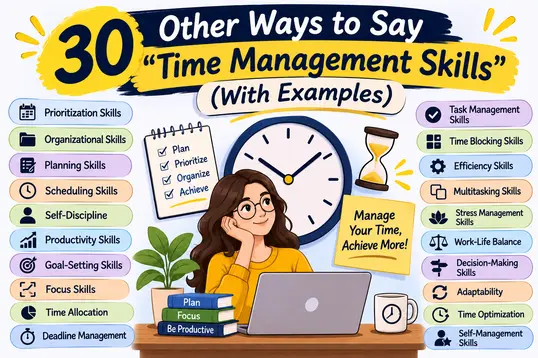

Finding the right words to describe your abilities can make a meaningful difference in professional communication. Whether you’re writing a resume, preparing for an interview, updating your LinkedIn profile, or describing your strengths at work, expressing time management skills in different ways can make your message sound more natural, confident, and engaging. These 30 thoughtful alternatives will help you communicate your ability to organize tasks, meet deadlines, prioritize responsibilities, and make the most of your time.
What Does “Time Management Skills” Mean?
Time management skills refer to the ability to organize, plan, and control how you spend your time to complete tasks efficiently and achieve your goals. These skills involve setting priorities, managing deadlines, planning schedules, avoiding unnecessary distractions, and balancing multiple responsibilities. Good time management helps individuals stay productive, reduce stress, and maintain a healthy balance between professional and personal commitments. In the workplace, these abilities demonstrate reliability, organization, and a commitment to completing work on time.
Is It Professional and Polite to Say “Time Management Skills”?
Yes, time management skills is a professional, polite, and widely accepted expression, particularly in resumes, job applications, performance reviews, and workplace conversations. It communicates that someone can organize responsibilities, use working hours effectively, and complete assignments within established deadlines. However, using alternative expressions can make your communication more specific and impactful. For example, deadline management, organizational abilities, and task prioritization highlight particular aspects of managing time and can help employers better understand your strengths.
Advantages and Disadvantages of Saying “Time Management Skills”
Advantages
- Clear and Professional: The phrase is widely understood and communicates your ability to organize tasks and meet deadlines.
- Suitable for Different Situations: It works well in resumes, interviews, professional profiles, performance evaluations, and everyday workplace conversations.
- Highlights Productivity: It demonstrates that you understand the importance of planning, prioritizing, and completing responsibilities efficiently.
Disadvantages
- Can Sound Generic: Many candidates use this phrase on their resumes, making it less distinctive.
- Does Not Explain Specific Abilities: It does not necessarily show whether you are particularly good at scheduling, prioritizing, or handling multiple tasks.
- May Lack Personal Impact: Using the same expression repeatedly can make professional writing sound less engaging or descriptive.
30 Alternatives to “Time Management Skills”
Here is a helpful list of 30 professional and meaningful alternatives you can use instead of saying “time management skills.”
- Time Organization Abilities
- Effective Scheduling Skills
- Task Prioritization Skills
- Deadline Management Abilities
- Organizational Skills
- Workload Management Skills
- Productivity Management
- Planning and Organizing Skills
- Efficient Work Habits
- Time Allocation Skills
- Schedule Management Abilities
- Task Management Skills
- Prioritization Abilities
- Workflow Management Skills
- Resource Management Skills
- Goal-Oriented Planning
- Strategic Planning Abilities
- Deadline-Oriented Work Ethic
- Productivity and Efficiency Skills
- Multitasking Abilities
- Work Planning Skills
- Daily Planning Abilities
- Operational Efficiency
- Structured Work Approach
- Calendar Management Skills
- Responsibility Management
- Project Scheduling Skills
- Proactive Planning Abilities
- Workload Prioritization
- Time Optimization Skills
1. Time Organization Abilities
Meaning: Time organization abilities refer to the capacity to arrange your daily activities and responsibilities in a structured and manageable way.
Definition: The ability to organize available time effectively to complete tasks, manage responsibilities, and maintain a productive routine.
Detailed Explanation: This expression emphasizes your ability to create structure in your workday. It suggests that you can identify important responsibilities, arrange tasks according to their urgency, and establish a routine that helps you stay focused. It is especially useful when describing someone who prefers organized schedules and systematic working methods.
Scenario Examples:
- “I demonstrate strong time organization abilities when handling multiple assignments.”
- “Her excellent time organization abilities help the department complete projects efficiently.”
Best Use: Use this phrase in resumes, professional profiles, job interviews, and performance reviews when highlighting your ability to organize daily responsibilities.
Tone: Professional, organized, confident, and dependable.
2. Effective Scheduling Skills
Meaning: Effective scheduling skills describe the ability to plan activities and assign appropriate time slots to different responsibilities.
Definition: The ability to create and maintain practical schedules that support timely and efficient task completion.
Detailed Explanation: This phrase focuses on planning your working hours and ensuring that every responsibility receives appropriate attention. It communicates that you can develop realistic schedules, manage appointments, and avoid unnecessary delays. It is particularly valuable in roles that involve meetings, deadlines, and several ongoing assignments.
Scenario Examples:
- “My effective scheduling skills allow me to manage daily responsibilities without missing important deadlines.”
- “She uses effective scheduling skills to coordinate meetings and project activities.”
Best Use: Ideal for administrative roles, project coordination, office management, and professional resumes.
Tone: Professional, practical, organized, and reliable.
3. Task Prioritization Skills
Meaning: Task prioritization skills refer to the ability to identify which responsibilities require immediate attention and which can be completed later.
Definition: The ability to arrange tasks according to their importance, urgency, and expected outcomes.
Detailed Explanation: Not every task has the same level of importance. This expression highlights your ability to recognize critical responsibilities and complete them before less urgent activities. It also demonstrates sound judgment, decision-making, and the ability to remain focused when managing several assignments.
Scenario Examples:
- “My task prioritization skills help me focus on important assignments while maintaining consistent productivity.”
- “Strong task prioritization skills allow our team to meet important project milestones.”
Best Use: Use it in resumes, leadership discussions, job interviews, and project management environments.
Tone: Strategic, professional, decisive, and responsible.
4. Deadline Management Abilities
Meaning: Deadline management abilities describe your capacity to complete assignments within established time limits.
Definition: The ability to monitor deadlines, plan work accordingly, and deliver responsibilities on schedule.
Detailed Explanation: This expression emphasizes reliability and accountability. It suggests that you understand the importance of meeting commitments and can organize your workload to avoid last-minute pressure. It is particularly effective when describing professional experience involving strict timelines and time-sensitive projects.
Scenario Examples:
- “My deadline management abilities ensure that projects are completed within the agreed time frames.”
- “He demonstrates excellent deadline management abilities when coordinating multiple client assignments.”
Best Use: Suitable for project management resumes, professional interviews, client communication, and performance evaluations.
Tone: Dependable, responsible, professional, and results-oriented.
5. Organizational Skills
Meaning: Organizational skills refer to the ability to arrange tasks, information, resources, and responsibilities systematically.
Definition: The ability to establish structure and maintain order while managing professional or personal responsibilities.
Detailed Explanation: Organizational skills are closely connected to time management because an organized approach makes it easier to complete tasks efficiently. This expression highlights your ability to maintain clear priorities, organize information, and establish productive routines. However, it covers more than time management alone.
Scenario Examples:
- “My strong organizational skills help me manage daily responsibilities and maintain consistent productivity.”
- “Her organizational skills contribute to the smooth operation of the entire department.”
Best Use: Ideal for resumes, cover letters, administrative positions, and professional introductions.
Tone: Professional, dependable, structured, and polished.
6. Workload Management Skills
Meaning: Workload management skills describe the ability to handle different assignments and responsibilities without becoming overwhelmed.
Definition: The ability to distribute, organize, and monitor work efficiently according to available time and resources.
Detailed Explanation: This expression communicates that you can manage a demanding workload while maintaining quality and productivity. It emphasizes balancing several responsibilities, understanding work capacity, and distributing effort appropriately. It is especially useful when describing experience in busy workplaces.
Scenario Examples:
- “My workload management skills allow me to handle several projects while maintaining high-quality results.”
- “Effective workload management skills help employees maintain productivity during busy periods.”
Best Use: Use it in job applications, performance reviews, management roles, and team-based environments.
Tone: Capable, professional, balanced, and dependable.
7. Productivity Management
Meaning: Productivity management refers to organizing work activities to achieve the best possible results within available time.
Definition: The ability to improve work output through effective planning, prioritization, and efficient working methods.
Detailed Explanation: This phrase focuses on achieving meaningful results rather than simply staying busy. It suggests that you understand how to use your time wisely, reduce unnecessary activities, and concentrate on tasks that contribute to important goals. It is particularly appropriate for performance-focused professional environments.
Scenario Examples:
- “My productivity management approach helps me complete important assignments without compromising quality.”
- “Good productivity management allows the team to achieve more within regular working hours.”
Best Use: Suitable for professional profiles, management positions, productivity-related discussions, and performance evaluations.
Tone: Results-driven, confident, professional, and efficient.
8. Planning and Organizing Skills
Meaning: Planning and organizing skills refer to the ability to prepare for responsibilities and arrange activities in a structured way.
Definition: The ability to develop practical plans, organize tasks, and coordinate activities to achieve specific objectives.
Detailed Explanation: This alternative combines two important abilities: planning ahead and maintaining organization throughout the process. It demonstrates that you can identify what needs to be done, determine how to accomplish it, and arrange responsibilities in a logical order.
Scenario Examples:
- “My planning and organizing skills help me coordinate daily activities and complete assignments on time.”
- “Her planning and organizing skills make her an effective project coordinator.”
Best Use: Ideal for resumes, interviews, administrative positions, and project coordination roles.
Tone: Professional, thoughtful, structured, and reliable.
9. Efficient Work Habits
Meaning: Efficient work habits describe consistent behaviors that help individuals complete responsibilities effectively.
Definition: Productive working practices that support timely task completion and minimize unnecessary effort.
Detailed Explanation: This expression focuses on the habits and routines that make someone productive. It suggests that you work systematically, avoid unnecessary distractions, and approach responsibilities with discipline. Rather than simply describing your ability to manage time, it highlights the practical behaviors that support efficiency.
Scenario Examples:
- “My efficient work habits allow me to complete assignments accurately and within deadlines.”
- “Developing efficient work habits has improved the team’s overall performance.”
Best Use: Use it in job interviews, employee evaluations, professional introductions, and workplace discussions.
Tone: Positive, practical, professional, and disciplined.
10. Time Allocation Skills
Meaning: Time allocation skills refer to the ability to distribute available time among different activities and responsibilities.
Definition: The ability to assign appropriate amounts of time to tasks according to their importance and complexity.
Detailed Explanation: This phrase highlights your ability to determine how much time each responsibility requires. It communicates that you understand how to balance competing demands without spending too much time on less important activities. It is particularly helpful when describing someone who works with several deadlines.
Scenario Examples:
- “My time allocation skills help me balance urgent assignments with long-term projects.”
- “Effective time allocation skills are essential when managing multiple responsibilities.”
Best Use: Appropriate for resumes, project management, academic applications, and professional performance reviews.
Tone: Analytical, professional, thoughtful, and organized.
11. Schedule Management Abilities
Meaning: Schedule management abilities describe the capacity to organize, maintain, and adjust schedules according to changing responsibilities.
Definition: The ability to coordinate planned activities, appointments, and deadlines effectively.
Detailed Explanation: This expression emphasizes your ability to keep schedules organized while adapting to unexpected changes. It demonstrates that you can manage appointments, track important activities, and ensure that planned responsibilities are completed without unnecessary conflicts.
Scenario Examples:
- “My schedule management abilities help me coordinate meetings and daily assignments efficiently.”
- “She uses her schedule management abilities to keep office activities running smoothly.”
Best Use: Best for administrative professionals, executive assistants, office coordinators, and project managers.
Tone: Organized, dependable, professional, and practical.
12. Task Management Skills
Meaning: Task management skills refer to the ability to plan, organize, monitor, and complete individual responsibilities.
Definition: The ability to coordinate different tasks from the planning stage through successful completion.
Detailed Explanation: This phrase is broader than simply managing time. It highlights your ability to understand assignments, organize the steps involved, track progress, and complete responsibilities efficiently. It is useful when describing someone who handles several ongoing activities.
Scenario Examples:
- “My task management skills help me keep assignments organized and maintain steady progress.”
- “Strong task management skills are important for completing complex projects successfully.”
Best Use: Suitable for resumes, project management roles, team leadership, and workplace communication.
Tone: Professional, capable, systematic, and results-oriented.
13. Prioritization Abilities
Meaning: Prioritization abilities refer to the capacity to recognize important responsibilities and determine the order in which they should be completed.
Definition: The ability to evaluate tasks and organize them according to urgency, importance, and expected results.
Detailed Explanation: This alternative highlights your ability to make thoughtful decisions when several responsibilities compete for attention. It suggests that you can distinguish urgent activities from less important ones and focus your efforts where they are needed most.
Scenario Examples:
- “My prioritization abilities help me maintain focus when managing competing deadlines.”
- “Her prioritization abilities allow the team to concentrate on its most important objectives.”
Best Use: Ideal for leadership roles, professional interviews, resumes, and demanding workplace environments.
Tone: Decisive, strategic, professional, and confident.
14. Workflow Management Skills
Meaning: Workflow management skills describe the ability to organize the sequence of activities required to complete work.
Definition: The ability to coordinate tasks, processes, and responsibilities to maintain smooth and efficient operations.
Detailed Explanation: This phrase focuses on how work moves from one stage to another. It suggests that you can identify necessary steps, organize responsibilities, monitor progress, and prevent unnecessary delays. It is especially relevant when working with teams or managing ongoing projects.
Scenario Examples:
- “My workflow management skills help maintain smooth operations across different projects.”
- “Effective workflow management skills improve coordination between team members.”
Best Use: Use it in operations, project coordination, team management, and professional resumes.
Tone: Organized, systematic, professional, and collaborative.
15. Resource Management Skills
Meaning: Resource management skills refer to the ability to use available resources, including time, people, and materials, effectively.
Definition: The ability to allocate and coordinate resources to achieve objectives while minimizing unnecessary waste.
Detailed Explanation: This expression connects time management with broader organizational responsibilities. It suggests that you understand how to make the best use of available resources and ensure that tasks receive the attention and support they require.
Scenario Examples:
- “My resource management skills help me allocate time and responsibilities efficiently.”
- “Strong resource management skills allow project teams to work within established budgets and schedules.”
Best Use: Suitable for management positions, project leadership, operations, and business-related resumes.
Tone: Strategic, responsible, professional, and resourceful.
16. Goal-Oriented Planning
Meaning: Goal-oriented planning refers to organizing activities around specific objectives and desired outcomes.
Definition: The ability to develop practical plans that connect daily responsibilities with long-term goals.
Detailed Explanation: This phrase emphasizes purposeful planning. It communicates that you do not simply complete tasks randomly but organize your time according to what you want to achieve. It is particularly useful when describing professionals who work toward measurable targets.
Scenario Examples:
- “My goal-oriented planning helps me organize daily activities around important business objectives.”
- “Her goal-oriented planning ensures that project activities remain aligned with company targets.”
Best Use: Ideal for leadership roles, career profiles, strategic positions, and professional interviews.
Tone: Motivated, focused, strategic, and confident.
17. Strategic Planning Abilities
Meaning: Strategic planning abilities describe the capacity to develop long-term plans and organize resources to achieve important objectives.
Definition: The ability to evaluate priorities, anticipate requirements, and establish effective plans for achieving future goals.
Detailed Explanation: This alternative highlights a thoughtful and forward-looking approach to managing responsibilities. It suggests that you can consider future demands, identify potential challenges, and organize activities before problems arise. Although it includes time-related planning, it also covers broader decision-making abilities.
Scenario Examples:
- “My strategic planning abilities help me organize projects and prepare for upcoming deadlines.”
- “Strong strategic planning abilities support the successful completion of long-term objectives.”
Best Use: Best for senior positions, management resumes, leadership interviews, and business planning discussions.
Tone: Forward-thinking, professional, analytical, and confident.
18. Deadline-Oriented Work Ethic
Meaning: A deadline-oriented work ethic describes an approach to work that emphasizes completing responsibilities within agreed time limits.
Definition: A professional attitude characterized by commitment, punctuality, and consistent attention to deadlines.
Detailed Explanation: This expression highlights your dedication to completing work on schedule. It suggests that you respect commitments, take deadlines seriously, and maintain a responsible approach even when managing several assignments.
Scenario Examples:
- “My deadline-oriented work ethic helps me deliver consistent results under tight schedules.”
- “His deadline-oriented work ethic makes him a dependable member of the team.”
Best Use: Appropriate for resumes, job interviews, professional recommendations, and performance evaluations.
Tone: Responsible, committed, dependable, and professional.
19. Productivity and Efficiency Skills
Meaning: Productivity and efficiency skills refer to the ability to complete meaningful work while making effective use of available time and resources.
Definition: The ability to produce quality results through organized, focused, and efficient working methods.
Detailed Explanation: This phrase communicates that you value both the quality and quantity of your work. It highlights your ability to stay focused, avoid unnecessary delays, and use practical methods to accomplish responsibilities. It is a strong alternative when you want to emphasize performance rather than scheduling alone.
Scenario Examples:
- “My productivity and efficiency skills help me complete projects while maintaining high standards.”
- “Her productivity and efficiency skills have improved the department’s overall performance.”
Best Use: Ideal for professional resumes, performance reviews, business environments, and management positions.
Tone: Results-driven, confident, professional, and positive.
20. Multitasking Abilities
Meaning: Multitasking abilities describe the capacity to handle multiple responsibilities or activities within a particular period.
Definition: The ability to manage more than one task while maintaining appropriate attention and performance.
Detailed Explanation: This expression highlights your ability to handle several assignments and shift between responsibilities when necessary. It can communicate flexibility and adaptability, although multitasking is not always the most effective approach for complex tasks. Use it when the role genuinely requires managing several activities simultaneously.
Scenario Examples:
- “My multitasking abilities allow me to manage several administrative responsibilities efficiently.”
- “Her multitasking abilities help her coordinate customer requests and daily office activities.”
Best Use: Suitable for customer service, administrative work, hospitality, and fast-paced professional environments.
Tone: Adaptable, energetic, capable, and professional.
21. Work Planning Skills
Meaning: Work planning skills refer to the ability to prepare, arrange, and organize responsibilities before beginning a task.
Definition: The ability to establish practical work plans that support efficient task completion and consistent progress.
Detailed Explanation: This expression emphasizes preparation and structure. It communicates that you can evaluate what needs to be accomplished, determine the necessary steps, and organize your activities to avoid confusion or unnecessary delays.
Scenario Examples:
- “My work planning skills help me prepare for upcoming assignments and meet important deadlines.”
- “Effective work planning skills contribute to better team coordination.”
Best Use: Use it in resumes, project coordination, professional interviews, and management discussions.
Tone: Practical, thoughtful, organized, and professional.
22. Daily Planning Abilities
Meaning: Daily planning abilities describe the capacity to organize everyday responsibilities and establish realistic daily goals.
Definition: The ability to prepare daily schedules and arrange activities to maintain productivity throughout the day.
Detailed Explanation: This phrase focuses on how you organize your day-to-day activities. It suggests that you can create manageable routines, identify important tasks, and ensure that everyday responsibilities receive appropriate attention.
Scenario Examples:
- “My daily planning abilities help me stay organized and complete routine assignments on time.”
- “Her daily planning abilities allow her to balance meetings, reports, and administrative duties.”
Best Use: Best for administrative resumes, office positions, personal development discussions, and job interviews.
Tone: Practical, organized, consistent, and dependable.
23. Operational Efficiency
Meaning: Operational efficiency refers to the ability to complete processes and activities using time and resources effectively.
Definition: The ability to maintain productive operations while reducing unnecessary delays, effort, and resource consumption.
Detailed Explanation: This expression focuses on the overall effectiveness of work processes. It suggests that you can organize responsibilities, identify inefficiencies, and improve how tasks are completed. It is broader than individual time management and is particularly useful when describing organizational or managerial achievements.
Scenario Examples:
- “My focus on operational efficiency helps streamline daily activities and improve project delivery.”
- “Improving operational efficiency has helped the department complete assignments more quickly.”
Best Use: Suitable for operations management, business administration, leadership positions, and professional reports.
Tone: Strategic, analytical, professional, and results-oriented.
24. Structured Work Approach
Meaning: A structured work approach refers to completing responsibilities through an organized and consistent method.
Definition: A systematic way of planning, arranging, and carrying out tasks to achieve reliable results.
Detailed Explanation: This phrase highlights your preference for working with clear processes and organized routines. It communicates that you approach responsibilities thoughtfully, follow logical steps, and maintain consistency throughout your work.
Scenario Examples:
- “My structured work approach helps me manage complex assignments without losing focus.”
- “A structured work approach allows our team to maintain consistent project progress.”
Best Use: Ideal for professional profiles, job applications, project environments, and performance reviews.
Tone: Methodical, dependable, professional, and disciplined.
25. Calendar Management Skills
Meaning: Calendar management skills refer to the ability to organize appointments, meetings, activities, and deadlines using a calendar or scheduling system.
Definition: The ability to maintain an accurate schedule and coordinate planned activities effectively.
Detailed Explanation: This alternative emphasizes practical scheduling abilities. It suggests that you can manage appointments, avoid scheduling conflicts, track important dates, and keep your daily responsibilities organized. It is especially useful for roles involving frequent meetings and coordination.
Scenario Examples:
- “My calendar management skills help me coordinate meetings and maintain an organized schedule.”
- “Strong calendar management skills are essential for supporting busy executives.”
Best Use: Best for executive assistants, administrative professionals, office managers, and coordinators.
Tone: Organized, precise, professional, and dependable.
26. Responsibility Management
Meaning: Responsibility management refers to the ability to organize and handle assigned duties effectively.
Definition: The ability to coordinate personal or professional obligations while ensuring that important commitments are fulfilled.
Detailed Explanation: This phrase emphasizes accountability and the ability to manage different obligations. It suggests that you understand your responsibilities, organize your commitments, and make consistent efforts to complete them. It is broader than time management because it also includes ownership and reliability.
Scenario Examples:
- “My responsibility management skills help me balance multiple duties while meeting expectations.”
- “Effective responsibility management contributes to a more organized and productive workplace.”
Best Use: Suitable for professional profiles, management discussions, employee evaluations, and leadership roles.
Tone: Responsible, mature, professional, and dependable.
27. Project Scheduling Skills
Meaning: Project scheduling skills describe the ability to organize project activities, milestones, and deadlines within a planned timeline.
Definition: The ability to develop, maintain, and adjust project schedules to support timely completion.
Detailed Explanation: This phrase is especially relevant to project-based work. It highlights your ability to determine the sequence of activities, establish deadlines, coordinate team responsibilities, and monitor progress. It also communicates an understanding of how proper scheduling contributes to successful project delivery.
Scenario Examples:
- “My project scheduling skills help me coordinate activities and ensure that milestones are achieved on time.”
- “Her project scheduling skills have helped the team complete complex assignments efficiently.”
Best Use: Ideal for project managers, construction professionals, coordinators, and team leaders.
Tone: Technical, professional, organized, and results-oriented.
28. Proactive Planning Abilities
Meaning: Proactive planning abilities refer to the capacity to prepare for responsibilities and potential challenges before they arise.
Definition: The ability to anticipate future requirements and develop plans that prevent unnecessary delays or complications.
Detailed Explanation: This expression highlights your ability to think ahead rather than wait for problems to occur. It suggests that you can identify upcoming deadlines, prepare for changing priorities, and take early action to keep responsibilities on track.
Scenario Examples:
- “My proactive planning abilities help me prepare for upcoming challenges and manage deadlines effectively.”
- “Her proactive planning abilities allow the team to address potential delays before they become problems.”
Best Use: Suitable for leadership positions, project management, professional resumes, and strategic workplace discussions.
Tone: Forward-thinking, confident, responsible, and professional.
29. Workload Prioritization
Meaning: Workload prioritization refers to arranging different work responsibilities according to their importance and urgency.
Definition: The ability to evaluate assignments and determine which responsibilities should receive attention first.
Detailed Explanation: This phrase emphasizes your ability to make sensible decisions when dealing with a demanding workload. It communicates that you can identify important assignments, organize competing responsibilities, and focus on activities that have the greatest impact.
Scenario Examples:
- “My workload prioritization approach helps me maintain productivity during busy periods.”
- “Effective workload prioritization ensures that urgent assignments receive the attention they require.”
Best Use: Ideal for busy professional environments, team management, resumes, and performance evaluations.
Tone: Strategic, practical, professional, and focused.
30. Time Optimization Skills
Meaning: Time optimization skills refer to the ability to improve how available time is used to achieve better results.
Definition: The ability to identify efficient working methods and make the best possible use of available time.
Detailed Explanation: This expression highlights your ability to improve productivity by identifying unnecessary activities, reducing wasted time, and developing better working routines. It communicates a thoughtful approach to efficiency and continuous improvement.
Scenario Examples:
- “My time optimization skills help me improve productivity while maintaining the quality of my work.”
- “Strong time optimization skills allow employees to complete responsibilities with greater efficiency.”
Best Use: Use this phrase in professional resumes, management positions, productivity discussions, and performance evaluations.
Tone: Innovative, analytical, professional, and results-oriented.
Conclusion
Finding the right alternative to time management skills can make your professional communication more specific, engaging, and meaningful. While the original expression is clear and widely accepted, alternatives such as task prioritization skills, effective scheduling skills, deadline management abilities, and time optimization skills can help highlight your particular strengths.