
30 Other Ways to Say “Is It Correct to Say…” helps you check grammar, confirm phrases, and communicate with confidence in everyday English.
Good grammar, clear wording, and proper sentence structure improve communication in emails, conversations, academic writing, and everyday messages. You can use different expressions to confirm a phrase, check grammar, or ask someone for feedback, improving clarity, correctness, and confidence.
In everyday situations, written communication and spoken communication become more effective when you choose polite expressions, thoughtful language, natural wording, and respectful language.
These approaches support professional communication, social communication, personal communication, and interpersonal communication while showing respect and helping you sound confident.
Whether you need grammar checking, phrase confirmation, or a feedback request, useful English expressions strengthen your everyday English, academic communication, and email writing. Developing conversation skills, understanding language usage, and improving your communication style, proper English, clear expression, and effective wording help others understand your questions.
What Does “Is It Correct to Say…” Mean?
The phrase “Is it correct to say…” means you’re asking whether a particular word, phrase, sentence, or expression is grammatically correct, appropriate, or natural. People commonly use it when learning a language, writing professional emails, preparing assignments, or checking whether their wording communicates the intended meaning. For example, you might ask, “Is it correct to say ‘I look forward to hearing from you’?” when you’re unsure about a sentence. The phrase shows that you’re open to feedback and want to communicate accurately.
Is It Professional or Polite to Say “Is It Correct to Say…”?
Yes, “Is it correct to say…” is both professional and polite in most situations. It works well in classrooms, workplace conversations, formal emails, and discussions with colleagues. The expression shows that you value accuracy and are willing to learn. However, repeating it too often can make your writing sound slightly formal or hesitant. Alternatives such as “Would this wording be appropriate?” or “Does this sound natural?” can feel more conversational and specific. Choose an expression that matches your audience, purpose, and relationship with the person you’re asking.
Advantages of Saying “Is It Correct to Say…”
1. It Encourages Accuracy
The phrase helps you check grammar, spelling, sentence structure, and word choice before sharing a message. This can be especially useful when writing important emails or academic assignments.
2. It Shows a Willingness to Learn
Asking whether something is correct demonstrates openness to feedback. It allows others to offer suggestions without making the conversation feel confrontational.
3. It Supports Clear Communication
Checking your wording can prevent misunderstandings and help you express your ideas more clearly. It is particularly useful when communicating in a second language.
Disadvantages of Saying “Is It Correct to Say…”
1. It Can Sound Repetitive
Using the same phrase in every question may make your communication feel predictable. Alternatives help keep your emails and conversations fresh.
2. It May Sound Overly Formal
In casual conversations, the phrase can sometimes feel more formal than necessary. Expressions such as “Does this sound right?” may feel more relaxed.
3. It Can Suggest Unnecessary Uncertainty
Although asking for feedback is helpful, repeatedly questioning simple sentences may make you sound less confident than you intend. A more direct question can communicate confidence and openness at the same time.
Synonyms for “Is It Correct to Say…”
- Is This Correct?
- Is This the Right Way to Say It?
- Does This Sound Right?
- Is This Grammatically Correct?
- Would This Be Correct?
- Is This an Appropriate Expression?
- Does This Sound Natural?
- Am I Saying This Correctly?
- Is This the Proper Way to Phrase It?
- Would It Be Right to Say This?
- Is This Wording Acceptable?
- Have I Expressed This Correctly?
- Does This Sentence Make Sense?
- Would You Say It This Way?
- Is This a Natural Way to Put It?
- Could You Check My Wording?
- Would This Phrase Work Here?
- Is My Use of This Phrase Correct?
- Am I Using the Right Words?
- Would This Be a Better Way to Say It?
- Does This Expression Fit the Context?
- Is This How You Would Phrase It?
- Could You Confirm Whether This Is Correct?
- Would This Be Appropriate in This Situation?
- Is There a Better Way to Express This?
- Could You Let Me Know If This Sounds Right?
- Am I Using This Expression Properly?
- Would This Wording Be Clear to the Reader?
- Can I Phrase It This Way?
- Would You Mind Checking If This Is Correct?
1. Is This Correct?
Meaning
“Is this correct?” asks whether a word, sentence, answer, or statement is accurate.
Definition
It is a direct question used to confirm correctness or accuracy.
Detailed Explanation
This alternative is short, simple, and suitable for almost any setting. It works particularly well when the sentence or answer you’re asking about is already visible to the other person. Unlike “Is it correct to say…,” it doesn’t require you to repeat the wording in your question. You can use it when checking grammar, reviewing a document, or confirming information. However, provide the sentence or context if the other person cannot immediately see what you’re referring to.
Scenario Example
You’ve written an important sentence in an email and want your colleague to review it.
Example: “I’ve written, ‘Please let me know if you need any further information.’ Is this correct?”
Best Use
Use this expression when you want quick, straightforward feedback in conversations, messages, classrooms, or professional settings.
Tone
Neutral, direct, and polite.
2. Is This the Right Way to Say It?
Meaning
This phrase asks whether your wording is appropriate and natural for the intended message.
Definition
It is a question used to confirm whether a particular expression communicates an idea correctly.
Detailed Explanation
“Is this the right way to say it?” is helpful when you understand what you want to communicate but aren’t sure how to express it. It considers more than grammar alone. The phrase also allows you to ask about tone, word choice, and everyday usage. For example, a sentence might be grammatically correct but sound unnatural in a friendly conversation. This question invites the other person to suggest a better alternative without making your request feel demanding.
Scenario Example
You’re writing to a professor and want your message to sound respectful.
Example: “I want to write, ‘Could you explain this concept again?’ Is this the right way to say it?”
Best Use
Use it when checking word choice, natural phrasing, and politeness, especially when learning English.
Tone
Conversational, thoughtful, and respectful.
3. Does This Sound Right?
Meaning
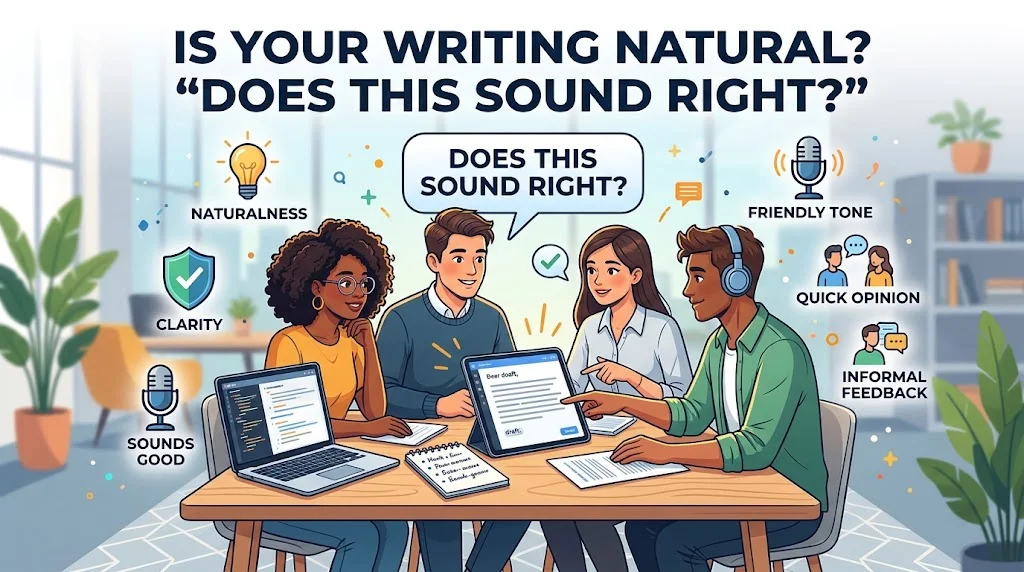
“Does this sound right?” asks whether a sentence feels correct, natural, or appropriate when someone reads or hears it.
Definition
It is an informal question used to check the naturalness and clarity of an expression.
Detailed Explanation
This alternative feels relaxed and friendly. It’s especially useful when you’re asking a friend, classmate, or colleague for a quick opinion. The word “sound” focuses on how the sentence comes across rather than strict grammatical rules alone. Sometimes, a sentence follows grammatical rules but still feels awkward to a fluent speaker. Asking whether it sounds right gives the other person room to comment on both correctness and style.
Scenario Example
You’re preparing a message to a customer and want it to feel welcoming.
Example: “Thank you for your patience while we resolve this issue. Does this sound right?”
Best Use
Use it for casual feedback, everyday writing, and quick language checks.
Tone
Friendly, natural, and informal.
4. Is This Grammatically Correct?
Meaning
This question asks whether a sentence follows the rules of grammar.
Definition
It is a specific question about grammatical accuracy, including tense, word order, agreement, and sentence structure.
Detailed Explanation
Choose this expression when grammar is your main concern. It helps the other person understand that you want a technical language check rather than a general opinion about tone. For instance, you might want to confirm whether a verb tense is appropriate or whether a subject and verb agree. This wording is especially useful in academic settings, language classes, and proofreading tasks. If you also want feedback about naturalness, you can ask a second question about whether the sentence sounds fluent.
Scenario Example
You’re completing an English assignment and want to check a sentence.
Example: “She has completed her assignment yesterday. Is this grammatically correct?”
Best Use
Use it for grammar exercises, proofreading, language learning, and academic writing.
Tone
Specific, neutral, and educational.
5. Would This Be Correct?
Meaning
“Would this be correct?” asks whether a proposed sentence, expression, or answer would be acceptable.
Definition
It is a polite question that seeks confirmation about the accuracy of something you’re considering saying or writing.
Detailed Explanation
This expression is slightly more tentative than “Is this correct?” The word “would” makes the question sound considerate, particularly when you’re asking someone to review your work. It works well when you present a possible sentence and want to know whether it meets the requirements. The phrase can also invite suggestions if the wording needs improvement. Although it’s suitable for professional communication, you should include the sentence you’re asking about to avoid ambiguity.
Scenario Example
You’re drafting a message to your manager.
Example: “I plan to write, ‘I’ll send the revised report by Friday.’ Would this be correct?”
Best Use
Use it when seeking polite confirmation about a proposed sentence or answer.
Tone
Polite, professional, and slightly tentative.
6. Is This an Appropriate Expression?
Meaning
This phrase asks whether certain words are suitable for a particular audience or situation.
Definition
It is a question about the appropriateness of language, including tone, formality, and context.
Detailed Explanation
Correct grammar doesn’t always guarantee appropriate communication. A phrase that works between friends might sound too casual in a business email. Similarly, a formal expression may feel distant when you’re speaking to someone you know well. “Is this an appropriate expression?” helps you consider those differences. It is particularly useful when communicating across professional, cultural, or social settings. If you explain who will receive your message, the other person can provide more relevant advice.
Scenario Example
You’re emailing a new client and want to make a good first impression.
Example: “I was thinking of writing, ‘Hey, just checking in.’ Is this an appropriate expression for a first email to a client?”
Best Use
Use it when checking professional etiquette, formality, and audience suitability.
Tone
Professional, considerate, and formal.
7. Does This Sound Natural?
Meaning
“Does this sound natural?” asks whether a sentence resembles the way fluent speakers commonly communicate.
Definition
It is a question about the natural flow and everyday usage of language.
Detailed Explanation
This alternative is particularly valuable for English learners. A sentence can be grammatically correct yet sound unusual because of word choice, collocations, or sentence structure. Asking whether it sounds natural helps you learn how people typically express the same idea. It also makes room for suggestions that improve fluency without changing your intended meaning. Use it when writing dialogue, everyday messages, social posts, or professional emails that should feel clear and human.
Scenario Example
You’re writing a friendly message to an international colleague.
Example: “I hope everything is going well on your side. Does this sound natural?”
Best Use
Use it to improve fluency, everyday expressions, and natural English phrasing.
Tone
Friendly, curious, and approachable.
8. Am I Saying This Correctly?
Meaning
This question asks whether you’re expressing an idea accurately through your words.
Definition
It is a request for feedback on spoken or written language.
Detailed Explanation
“Am I saying this correctly?” works when you want to confirm your wording while explaining something. It can refer to grammar, pronunciation, vocabulary, or meaning, depending on the context. During a conversation, it gives the other person a chance to correct a mistake before confusion develops. In writing, it can help you check whether a sentence communicates your intended message. If pronunciation is your main concern, say so directly to make the request more specific.
Scenario Example
You’re explaining a technical concept to a classmate.
Example: “The program repeats the instructions until the condition becomes false. Am I saying this correctly?”
Best Use
Use it during spoken explanations, language practice, and discussions where clarity matters.
Tone
Open, humble, and conversational.
9. Is This the Proper Way to Phrase It?
Meaning
This phrase asks whether a sentence has been worded correctly and appropriately.
Definition
It is a question used to evaluate the structure, wording, and suitability of an expression.
Detailed Explanation
“Is this the proper way to phrase it?” sounds more formal than “Does this sound right?” It is useful when the wording needs to meet professional or academic expectations. You might use it when preparing a formal request, writing a report, or responding to an official email. The word “proper” suggests that you want a suitable and accepted way to express the idea. However, it can sound unnecessarily formal in a quick chat with a friend.
Scenario Example
You’re preparing a formal request to a university department.
Example: “I would appreciate an extension on the submission deadline. Is this the proper way to phrase it?”
Best Use
Use it for formal correspondence, academic writing, and professional documents.
Tone
Formal, careful, and respectful.
10. Would It Be Right to Say This?
Meaning
This question asks whether a particular statement or expression would be correct or suitable.
Definition
It is a polite way to request confirmation before using certain words.
Detailed Explanation
This alternative is useful when you’re unsure about the accuracy or implications of a sentence. It allows you to present your idea without insisting that your version is correct. The expression can cover grammar, meaning, and appropriateness, so it works in many contexts. It may be particularly helpful when you’re discussing a sensitive subject and want to avoid choosing words that could offend someone. For the clearest feedback, share the full sentence and explain the situation.
Scenario Example
You’re discussing a workplace issue and want to avoid sounding accusatory.
Example: “Would it be right to say, ‘I noticed a difference in the figures’ instead of ‘You made a mistake’?”
Best Use
Use it when checking wording in delicate conversations or situations requiring tact.
Tone
Polite, thoughtful, and cautious.
11. Is This Wording Acceptable?
Meaning
This phrase asks whether the words you’ve chosen meet the expectations of a particular setting.
Definition
It is a question about the acceptability and suitability of written or spoken wording.
Detailed Explanation
“Is this wording acceptable?” is especially useful when you’re working within guidelines, workplace standards, or academic requirements. It can help you check whether a sentence sounds professional and communicates the intended point. The word “acceptable” focuses on whether the wording meets a reasonable standard rather than whether it’s the only correct option. This distinction matters because several expressions can communicate the same idea effectively. If you want feedback on warmth or friendliness, mention that alongside your question.
Scenario Example
You’re reviewing a customer service response before sending it.
Example: “We apologize for the inconvenience and appreciate your patience. Is this wording acceptable?”
Best Use
Use it for workplace communication, official messages, and text that needs approval.
Tone
Professional, neutral, and measured.
12. Have I Expressed This Correctly?
Meaning
This question asks whether you’ve communicated an idea accurately and clearly.
Definition
It is a request to review the accuracy and clarity of an expressed thought.
Detailed Explanation
Sometimes the challenge isn’t grammar but communicating exactly what you mean. “Have I expressed this correctly?” invites the other person to consider the whole message rather than individual words. It’s useful when explaining a complicated idea, describing a problem, or sharing information that others need to understand. The phrase also shows that you’re willing to clarify your point if necessary. You can make it even more effective by asking whether the message is clear to someone unfamiliar with the topic.
Scenario Example
You’re explaining a project requirement to a teammate.
Example: “The new feature should work only when the user signs in. Have I expressed this correctly?”
Best Use
Use it when checking meaning, clarity, and accuracy in longer explanations.
Tone
Reflective, professional, and collaborative.
13. Does This Sentence Make Sense?
Meaning
This phrase asks whether a sentence is understandable and logically clear.
Definition
It is a question used to check comprehension, meaning, and sentence clarity.
Detailed Explanation
A sentence may contain correct grammar but still confuse readers. “Does this sentence make sense?” helps you determine whether your message is understandable without additional explanation. It is particularly useful when writing technical instructions, essays, reports, or messages about unfamiliar topics. The question encourages feedback about how the sentence reads from another person’s perspective. If you want to check grammar specifically, pair it with “Is the grammar correct?” to cover both concerns.
Scenario Example
You’re writing instructions for a software project.
Example: “The application stores the user’s settings after they close the program. Does this sentence make sense?”
Best Use
Use it when reviewing instructions, explanations, reports, and sentences that may confuse readers.
Tone
Simple, friendly, and practical.
14. Would You Say It This Way?
Meaning
This question asks whether another person would naturally use the same expression.
Definition
It is a conversational request for an opinion about word choice and natural phrasing.
Detailed Explanation
“Would you say it this way?” invites the other person to share their own language preferences. Rather than asking only whether your sentence is technically correct, you’re asking how they would communicate the same idea. This makes the expression especially useful when learning everyday English or adapting your writing for a specific audience. It can also help you discover expressions that sound more natural in a particular region or profession. Remember that personal preferences may vary, so one person’s choice isn’t always the only acceptable option.
Scenario Example
You’re practicing English with a fluent speaker.
Example: “I enjoyed a lot during the trip. Would you say it this way?”
Best Use
Use it for language practice, natural expressions, and learning from other speakers.
Tone
Friendly, curious, and collaborative.
15. Is This a Natural Way to Put It?
Meaning
This phrase asks whether an idea has been expressed in a way that feels natural and fluent.
Definition
It is a question about the naturalness and style of an expression.
Detailed Explanation
“Is this a natural way to put it?” is useful when you want your writing to sound less stiff or translated. It focuses on how the words fit together and how a reader might interpret them. This expression can help you improve emails, personal messages, essays, and conversations. It’s also helpful when several phrases are grammatically correct but differ in how people commonly use them. By sharing the context, you can receive advice that fits your audience instead of relying on a general rule.
Scenario Example
You’re writing a message to thank a colleague for helping with a difficult task.
Example: “Your help made a real difference. Is this a natural way to put it?”
Best Use
Use it when improving fluency, tone, and natural-sounding communication.
Tone
Warm, conversational, and thoughtful.
16. Could You Check My Wording?
Meaning
This question asks someone to review your choice of words.
Definition
It is a polite request for feedback on phrasing, clarity, or tone.
Detailed Explanation
“Could you check my wording?” is a practical alternative when you want another person to review a message. It doesn’t assume that your writing is wrong; it simply invites a second opinion. This makes it suitable for workplace emails, applications, presentations, and sensitive personal messages. You can also specify what matters most, such as grammar, politeness, or readability. A focused request helps the reviewer understand what kind of feedback you need and saves time for both of you.
Scenario Example
You’re preparing an email to a client about a delayed delivery.
Example: “I’ve drafted a message explaining the delay. Could you check my wording before I send it?”
Best Use
Use it when requesting proofreading or constructive feedback from a colleague, teacher, or trusted friend.
Tone
Polite, cooperative, and professional.
See More: 30 Other Ways to Say “Do You Mind?” with Examples
17. Would This Phrase Work Here?
Meaning
This phrase asks whether a particular expression fits the context in which you plan to use it.
Definition
It is a question about the suitability of a phrase for a specific situation.
Detailed Explanation
The same expression can work beautifully in one situation and feel awkward in another. “Would this phrase work here?” helps you consider the surrounding message, audience, and purpose. It’s useful when deciding whether to use a formal expression in an email or a casual phrase in conversation. The question focuses on context rather than grammar alone. To get a helpful answer, share the sentence before and after the phrase, especially if the message has a particular emotional or professional purpose.
Scenario Example
You’re writing a friendly but professional follow-up email.
Example: “I wanted to touch base about the proposal. Would this phrase work here?”
Best Use
Use it when choosing context-appropriate expressions for emails, reports, conversations, or presentations.
Tone
Practical, thoughtful, and conversational.
18. Is My Use of This Phrase Correct?
Meaning
This question asks whether you’ve used a particular expression properly.
Definition
It is a request to verify the correct use of a phrase in context.
Detailed Explanation
Sometimes you know what a phrase means but aren’t sure how to use it in a sentence. This alternative helps you focus on that specific issue. It can cover grammar, meaning, word combinations, and context, depending on the example you provide. For instance, an idiom might have a particular meaning that doesn’t match its literal words. Asking about your use of the phrase helps you learn its practical application instead of memorizing its definition alone.
Scenario Example
You’re learning a new English idiom.
Example: “I wrote, ‘Let’s get the ball rolling’ to suggest starting the project. Is my use of this phrase correct?”
Best Use
Use it for idioms, expressions, vocabulary practice, and language-learning exercises.
Tone
Specific, curious, and educational.
19. Am I Using the Right Words?
Meaning
This phrase asks whether your word choices communicate your intended meaning effectively.
Definition
It is a question about vocabulary, word choice, and clarity.
Detailed Explanation
Choosing the right words can change how a message feels. You might want to sound supportive rather than dismissive, confident rather than demanding, or professional rather than distant. “Am I using the right words?” helps you check whether your vocabulary matches your intention. It is especially useful for personal messages, apologies, feedback, and sensitive discussions. The phrase also encourages you to think about your reader’s feelings, not just the dictionary meaning of each word.
Scenario Example
You’re writing to a friend who has had a difficult week.
Example: “I want you to know I’m here if you need anything. Am I using the right words?”
Best Use
Use it when choosing empathetic, sensitive, or audience-appropriate language.
Tone
Caring, reflective, and open.
20. Would This Be a Better Way to Say It?
Meaning
This question asks whether an alternative expression communicates an idea more effectively.
Definition
It is a request to compare two or more ways of expressing the same thought.
Detailed Explanation
“Would this be a better way to say it?” works well when you’ve already written a sentence but found another version that might improve it. The focus is on improvement rather than simply identifying errors. You can use it to make a message more concise, polite, persuasive, or natural. This wording is particularly useful when editing professional emails or refining important personal messages. Share both versions when possible so the other person can explain which one fits your goal and why.
Scenario Example
You’re revising a request to make it more considerate.
Example: “Instead of ‘Send me the file,’ I wrote, ‘Could you please send me the file when you have a moment?’ Would this be a better way to say it?”
Best Use
Use it when comparing alternative sentences and improving tone or clarity.
Tone
Constructive, considerate, and collaborative.
21. Does This Expression Fit the Context?
Meaning
This question asks whether an expression suits the situation, audience, and purpose.
Definition
It is a question about the contextual appropriateness of language.
Detailed Explanation
Words don’t exist in isolation. A phrase that works in a casual text may not fit a formal report or an apology. “Does this expression fit the context?” encourages you to consider the bigger picture before choosing your wording. It’s useful when writing for different audiences, including customers, managers, teachers, and friends. It also helps you distinguish between an expression that is technically correct and one that communicates the right attitude. Explain the situation to receive more useful feedback.
Scenario Example
You’re preparing a response to a customer who experienced a problem.
Example: “We understand how frustrating this must be. Does this expression fit the context?”
Best Use
Use it for audience awareness, professional etiquette, and context-sensitive writing.
Tone
Analytical, professional, and considerate.
22. Is This How You Would Phrase It?
Meaning
This question asks how another person would express the same idea.
Definition
It is a request for an opinion about wording, style, and personal language choices.
Detailed Explanation
“Is this how you would phrase it?” is helpful when you want a second perspective on your sentence. It invites the other person to suggest a more natural or effective version without suggesting that your own wording must be wrong. This approach works well when collaborating on documents, practicing a language, or polishing a message before sending it. It can also encourage a useful discussion about tone and clarity. Keep in mind that different people may phrase the same idea differently while remaining equally correct.
Scenario Example
You’re working with a teammate on a project update.
Example: “The task is almost complete, and we’re addressing the final issues. Is this how you would phrase it?”
Best Use
Use it for collaborative editing, professional writing, and learning alternative expressions.
Tone
Respectful, open-minded, and collaborative.
23. Could You Confirm Whether This Is Correct?
Meaning
This phrase asks someone to verify whether information or wording is accurate.
Definition
It is a polite request for confirmation and verification.
Detailed Explanation
“Could you confirm whether this is correct?” sounds professional and works well when accuracy matters. It is suitable for checking statements in reports, reviewing instructions, confirming details, or validating wording before sending an important message. The word “confirm” suggests that you’re looking for verification rather than a broad discussion about style. If you’re asking about grammar, identify the sentence. If you’re checking a factual statement, include the relevant information so the other person can assess it properly.
Scenario Example
You’re reviewing a project report before submitting it.
Example: “The deadline is listed as October 20. Could you confirm whether this is correct?”
Best Use
Use it for formal emails, factual checks, reports, and professional verification requests.
Tone
Professional, precise, and courteous.
24. Would This Be Appropriate in This Situation?
Meaning
This question asks whether your wording or response suits a particular circumstance.
Definition
It is a question about the social or professional appropriateness of an expression.
Detailed Explanation
Sometimes the main concern isn’t grammar but the effect your words might have on someone. “Would this be appropriate in this situation?” helps you think about timing, audience, sensitivity, and expectations. It’s especially valuable when responding to criticism, discussing a mistake, offering condolences, or communicating with someone in a position of authority. The expression shows that you want to handle the situation carefully. Explain the circumstances so the other person can assess whether your wording is respectful and suitable.
Scenario Example
You’re preparing to discuss a missed deadline with a colleague.
Example: “I understand that unexpected issues came up. Would this be appropriate in this situation?”
Best Use
Use it when checking sensitive messages, workplace communication, and socially delicate situations.
Tone
Careful, respectful, and considerate.
25. Is There a Better Way to Express This?
Meaning
This phrase asks whether another expression could communicate an idea more effectively.
Definition
It is a request for alternative wording that improves clarity, tone, or impact.
Detailed Explanation
“Is there a better way to express this?” works when you’re open to changing your sentence rather than simply correcting a small mistake. It can help you make a message warmer, more concise, more persuasive, or easier to understand. The question is especially useful when you know what you mean but struggle to find the right words. It also invites constructive suggestions without putting pressure on the other person to agree with your original version. Share your goal to help them recommend the most suitable alternative.
Scenario Example
You’re writing a thank-you message after receiving professional support.
Example: “Your guidance helped me feel more confident about the project. Is there a better way to express this?”
Best Use
Use it for editing, polishing important messages, and finding more meaningful expressions.
Tone
Thoughtful, constructive, and open.
26. Could You Let Me Know If This Sounds Right?
Meaning
This phrase politely asks someone to check whether your wording sounds correct and natural.
Definition
It is a conversational request for feedback on phrasing and clarity.
Detailed Explanation
This alternative combines a polite request with a question about natural language. It gives the other person room to respond when convenient, making it suitable for workplace chats and email conversations. The phrase feels less abrupt than simply asking, “Is this correct?” It can be especially helpful when you’re asking someone to review a draft or check a sentence in a second language. If you need a response by a particular deadline, mention that separately rather than assuming the person knows when you need feedback.
Scenario Example
You’re sending a draft to a colleague for a quick review.
Example: “I’ve updated the introduction. Could you let me know if this sounds right?”
Best Use
Use it when requesting friendly feedback from colleagues, teachers, or language partners.
Tone
Polite, warm, and approachable.
27. Am I Using This Expression Properly?
Meaning
This question asks whether you’re applying a particular expression according to its accepted meaning and usage.
Definition
It is a request to verify the correct application of a word, phrase, or idiom.
Detailed Explanation
“Am I using this expression properly?” is useful when learning how a phrase works in real communication. You might understand the definition but remain unsure about its grammar, placement, or meaning in context. The question allows someone to identify a misuse and explain how to correct it. It’s especially valuable when learning idioms, phrasal verbs, and expressions that don’t translate directly between languages. Including the complete sentence helps the reviewer distinguish a genuine error from a stylistic preference.
Scenario Example
You’re practicing a common expression in English.
Example: “I wrote, ‘We need to look into the issue.’ Am I using this expression properly?”
Best Use
Use it for vocabulary development, idioms, and checking language usage.
Tone
Curious, precise, and educational.
28. Would This Wording Be Clear to the Reader?
Meaning
This question asks whether a reader can understand your message without confusion.
Definition
It is a question about the readability, clarity, and accessibility of written communication.
Detailed Explanation
A message may be grammatically correct yet difficult to understand. “Would this wording be clear to the reader?” encourages you to consider the reader’s knowledge, expectations, and needs. It’s particularly useful for reports, instructions, website content, academic writing, and professional documents. You may need to replace technical terms, shorten a long sentence, or explain an unfamiliar idea. When reviewing clarity, consider someone who hasn’t seen the background information. If that reader can follow your message, your wording is probably doing its job.
Scenario Example
You’re preparing instructions for a new software feature.
Example: “Select the settings icon, then choose your preferred language. Would this wording be clear to the reader?”
Best Use
Use it for technical writing, instructional content, reports, and reader-focused editing.
Tone
Professional, reader-conscious, and practical.
29. Can I Phrase It This Way?
Meaning
This phrase asks whether you’re able to express an idea using a particular choice of words.
Definition
It is a question seeking permission, approval, or confirmation about a proposed way of phrasing something.
Detailed Explanation
“Can I phrase it this way?” is useful when you’ve developed a sentence and want to know whether it’s acceptable before using it. Depending on the context, it may ask about grammar, style, or appropriateness. It can also be useful when discussing how to present information in a formal document. However, if you want to know whether the sentence is grammatically correct rather than whether you’re permitted to use it, “Is this phrasing correct?” may be more precise.
Scenario Example
You’re preparing a presentation and want to simplify a complicated statement.
Example: “The system saves your changes automatically. Can I phrase it this way?”
Best Use
Use it when checking proposed wording, sentence revisions, and alternative ways to communicate an idea.
Tone
Polite, practical, and conversational.
30. Would You Mind Checking If This Is Correct?
Meaning
This phrase politely asks someone to review a sentence, statement, or answer.
Definition
It is a courteous request for verification and feedback.
Detailed Explanation
“Would you mind checking if this is correct?” is a good choice when you want to respect someone’s time while requesting assistance. It works well in professional emails, classroom discussions, and messages to someone whose expertise you value. The expression is longer than “Is this correct?” but can feel more considerate because it frames the request as a favor. Use it when you genuinely want the person to review your work. If you need a detailed explanation, you can add a request for suggestions or corrections.
Scenario Example
You’re asking a teacher to review a sentence before submitting an assignment.
Example: “I’ve revised my introduction and checked the grammar. Would you mind checking if this is correct?”
Best Use
Use it when requesting polite proofreading, expert feedback, or help from a busy person.
Tone
Courteous, respectful, and professional.
FAQs
1. What does “Is it correct to say…” mean?
“Is it correct to say…” is a question used to check whether a word, phrase, or sentence follows proper English grammar and sounds natural.
2. What is another way to say “Is it correct to say…”?
You can say “Is this the right way to say it?”, “Does this sound correct?”, or “Is this grammatically correct?” These alternatives help you ask questions clearly.
3. Is “Is it correct to say…” grammatically correct?
Yes, “Is it correct to say…” is grammatically correct. You can use it to ask whether a particular expression or sentence is appropriate.
4. How can I politely ask if a sentence is correct?
Try saying “Could you please check if this sentence is correct?” or “Would you mind checking my wording?” Both expressions sound polite and respectful.
5. What is a professional alternative to “Is it correct to say…”?
In professional communication, use “Could you confirm whether this wording is appropriate?” or “Would this expression be suitable in this context?” These phrases work well in emails and workplace discussions.
6. How do I ask someone to check my grammar?
You can ask, “Could you check my grammar?” or “Would you mind reviewing this sentence?” These questions make your request clear and friendly.
7. Can I use “Does this sound right?” in formal writing?
Yes, but it sounds more conversational than formal. For academic writing or professional emails, “Is this wording appropriate?” may be a better choice.
8. What is the difference between grammatical correctness and natural wording?
Grammatical correctness means a sentence follows grammar rules. Natural wording means people commonly use that expression in everyday communication. A sentence can be grammatically correct but still sound awkward.
9. How can I ask for feedback without sounding uncertain?
Use confident, respectful expressions such as “Could you review this wording?” or “I’d appreciate your feedback on this sentence.” These phrases show that you value another person’s opinion.
10. Why should I learn alternatives to “Is it correct to say…”?
Learning alternatives improves your vocabulary, communication skills, and writing style. It also helps you adapt your language to different situations, including casual conversations, academic assignments, and professional emails.
Conclusion
Learning 30 other ways to say “Is It Correct to Say…” helps you communicate more clearly and confidently. Whether you’re writing an email, preparing an academic assignment, or chatting with a friend, the right expression makes your question sound more natural. Choose polite alternatives for professional situations and simple phrases for everyday conversations. By improving your grammar, word choice, and communication skills, you can express your questions with greater clarity and respect.